

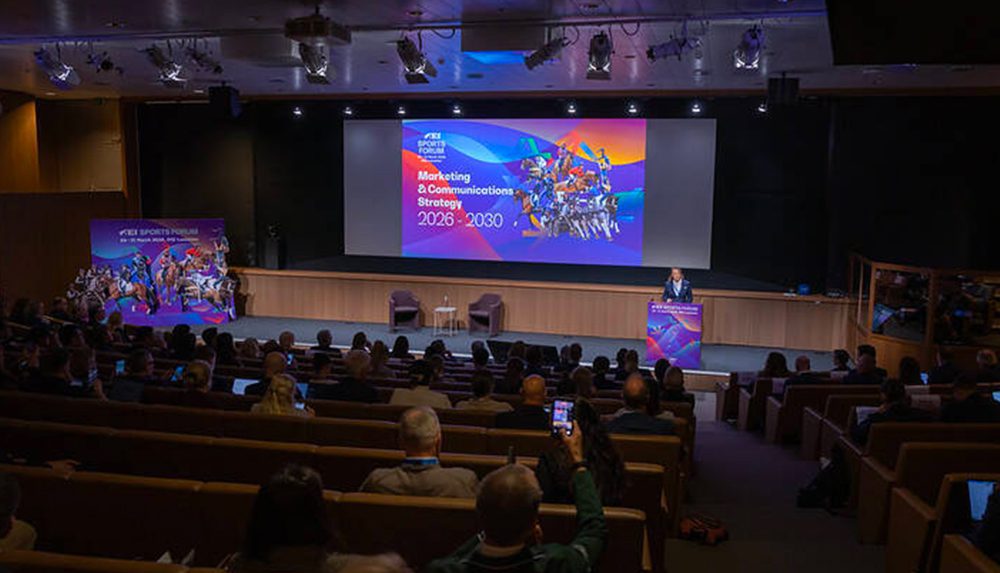
À Lausanne, le vernis institutionnel n’a pas suffi à masquer une réalité : le saut d’obstacles olympique cherche encore sa formule idéale. Entre simplification administrative, flexibilité sportive et contraintes du CIO, les discussions du FEI Sports Forum 2026 point toward a pragmatic evolution for Los Angeles 2028. No revolution, but a series of adjustments that could carry significant weight on the big day.
Substitutions: Still Locked Down, but Better Defined
No major overhaul here. Substitutions remain limited to the team competition, with a strict window: between the end of the qualifier and two hours before the final.
What’s new? Nothing spectacular, but a reaffirmed framework:
- only combinations already listed on the nominated entries list
- mandatory medical or veterinary certificate
- official validation required
In short, standard procedure, the kind of rule you only notice when it causes a problem.
Changes Before Competition: More Flexibility
This is where things shift a bit more.
Changes to rider/horse combinations become much more flexible before the events begin: :
- changes allowed until June 26, 2028 (official deadline)
- adjustments still permitted up to two hours before each qualifier
- no certificate required
- unlimited number of changes
The only restriction: staying within the initial list. And once horses are on site, no new ones can be added.
A more agile system, designed to adapt to unforeseen circumstances without opening the door to abuse.
Administration: Finally, Some Logic
This may be the real breakthrough.
Gone are the days of handwritten certificates. For Los Angeles:
- all entries will go through the FEI Entry System
- the certificate of capability will be generated automatically
A small detail? Not for federations. Less paperwork, fewer errors—and probably fewer headaches.
Team Final: A Door Slightly Opened
At Paris 2024, a team withdrawing from the final meant a lost spot.
In Los Angeles, the logic changes.
If a qualified team withdraws, the 11th-place team from the qualifier can be reinstated, up to two hours before the final.
A small adjustment, but a real sporting gain:
- more teams competing
- fewer incomplete finals
- extended suspense
Draw: Radical Simplification
Gone are double draws and complicated running orders.
For 2028:
- a single computerized draw
- one group
- conducted after the second training session
Simple, clear, efficient.
The Bold Proposal by François Mathy Jr.

Then came a notable statement from François Mathy Jr.
The president of the IJRC (International Jumping Riders Club) proposes:
- a format with 4 riders in the first round, 3 in the second (as in the League of Nations)
- integrating individual riders into the team competition
- revising the qualification system for the individual final
His assessment is clear:
the current system is fragile
a single round to select the 30 finalists is too limited
On paper, the idea is appealing—fairer, more robust, more sporting.
The IOC Barrier
However, the sport does not decide alone.
The IOC imposes strict quotas, blocking any major evolution.
Direct consequence:
impossible to increase the number of combinations
the format of 3 riders per team remains
End of the debate, at least for Los Angeles.
In the Background: A Sport Seeking Balance
What emerges from Lausanne is not a revolution, but an ongoing tension:
- making the sport more understandable
- improving fairness
- staying within Olympic constraints
Show jumping is moving forward in small, calculated steps.
Los Angeles 2028 will not transform Olympic jumping.
But these adjustments could refine its contours—simpler, more flexible, slightly fairer.
One question remains: how far can a sport modernize without altering its foundations?
(Photo cover © FEI/Germain Arias-Schreiber)