
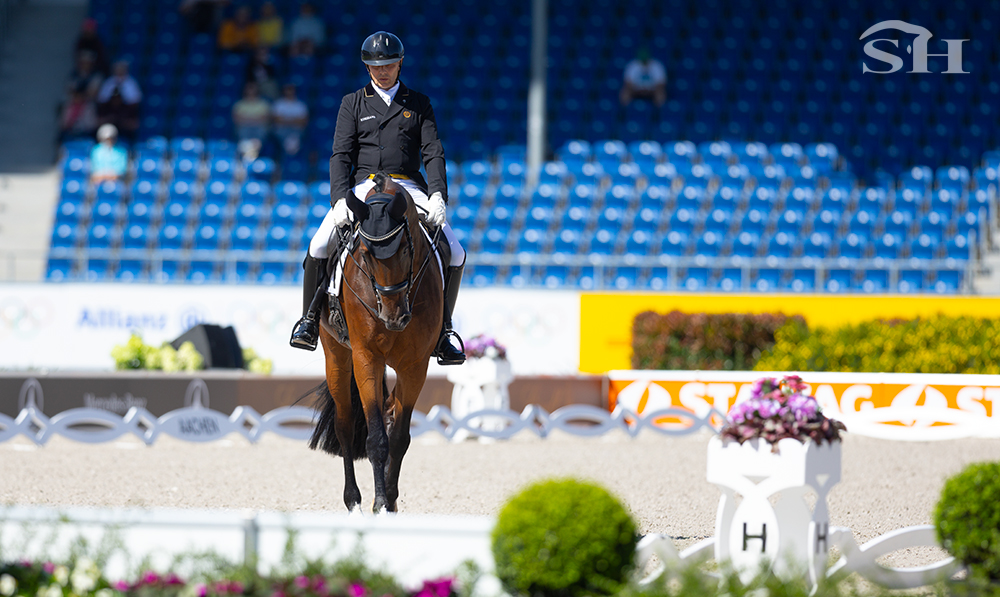
From 1 January 2027, dressage riders will have to get to grips with new international tests. No revolution in the compulsory movements, but an interesting evolution in the way the quality of the work is brought into focus. By introducing, among other changes, a circle with the horse stretching its neck forward and down in the Grand Prix, the FEI intends to give greater visibility to some of the discipline's fundamentals. Former Olympic-level international judge and former chair of the FEI Dressage Committee, Mariette Withages shares her analysis.

Twenty Metres that speak volumes
Between a piaffe, a pirouette and a series of one-tempi changes, it is ultimately a simple twenty-metre circle that constitutes one of the main new features of the 2027 Dressage Grand Prix.
After several months of consideration and practical trials, notably in Warendorf, Germany, the International Equestrian Federation has unveiled its new tests. While their overall structure remains relatively close to what riders have known for many years, the introduction of exercises designed to better assess the horse's relaxation, suppleness and balance is one of the guiding principles behind this revision.
« "They haven't changed very much. Here and there, they've switched the order of some movements, but these tests have been around for a long time. I can understand why they wanted to introduce a slight change, " explains Mariette Withages. " What's good is that, from Children all the way up to Grand Prix, they've added exercises where riders allow the reins to slip through their fingers. »
The difficulty lies in simplicity
Dans le Grand Prix, la principale nouveauté réside dans l’introduction de ce cercle de vingt mètres au trot durant lequel le cavalier devra progressivement laisser le cheval étendre son encolure vers l’avant et vers le bas, avant de reprendre le contact.
The exercise, which may be performed in either sitting or rising trot, will carry a coefficient of two. The horse must maintain its rhythm and balance throughout the movement, while the contact must be smoothly re-established.
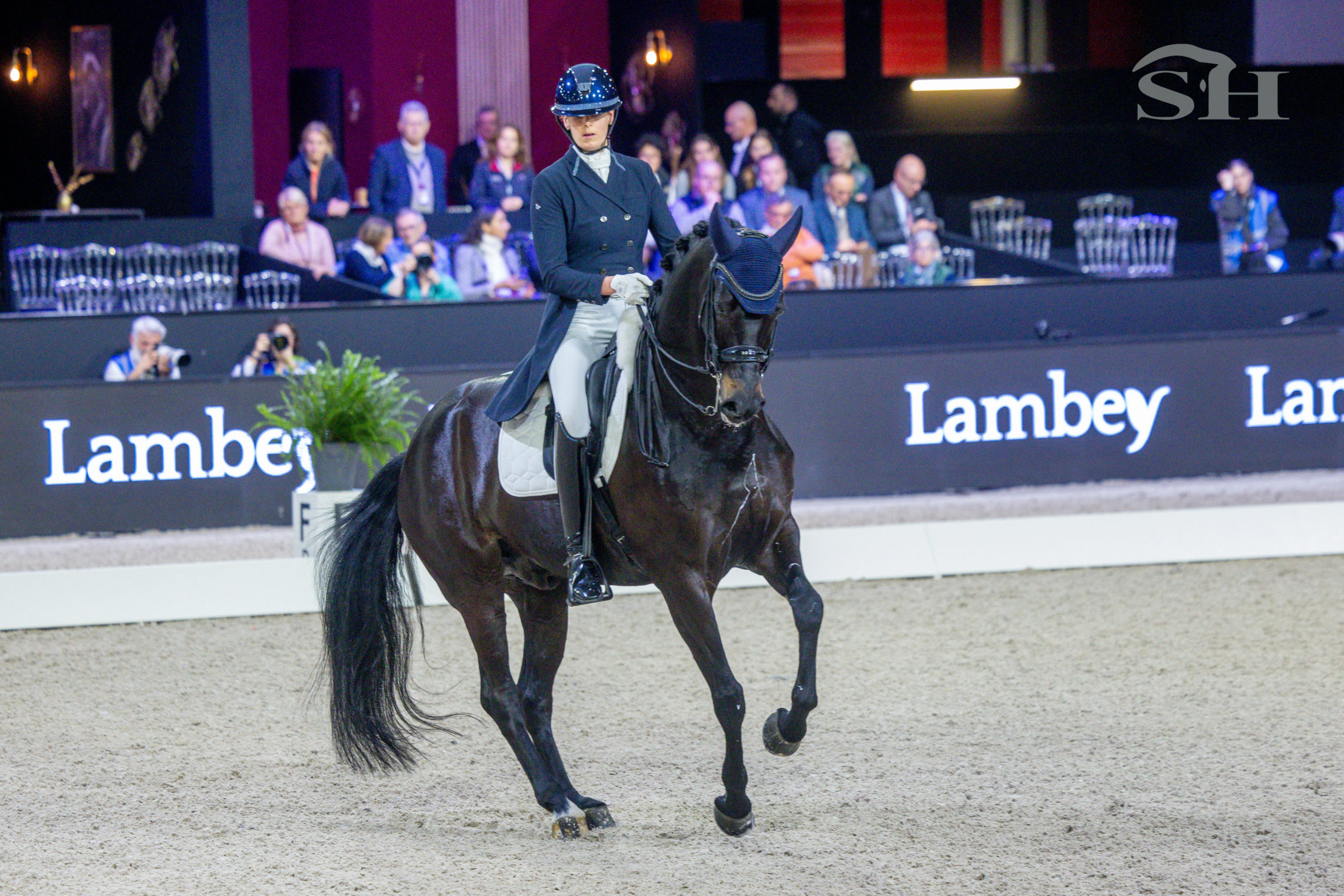
n the Grand Prix Special, riders will have to momentarily give the reins for three to four strides in collected canter, demonstrating their horse's ability to maintain its carriage and balance.
Two different exercises, but one common philosophy.
« It shows that the horse is confident, that it respects the rider's hand, follows the rider's hand and is relaxed ", Mariette Withages explains.
Although these exercises are part of everyday training for many riders, their inclusion in a Grand Prix test is particularly significant. The ability to move from collected work into a stretch of the neck, while maintaining the regularity of the gait and the quality of the movement, is an excellent indicator of the horse's training.
Making visible what judges already see
For Mariette Withages, however, these changes should not fundamentally alter the judges' work.
« A good judge sees all of this in every movement, in every exercise. For the judges, it doesn't change anything. »
Relaxation, the quality of the contact, balance and the horse's ability to carry itself are already among the criteria used to assess a dressage test.
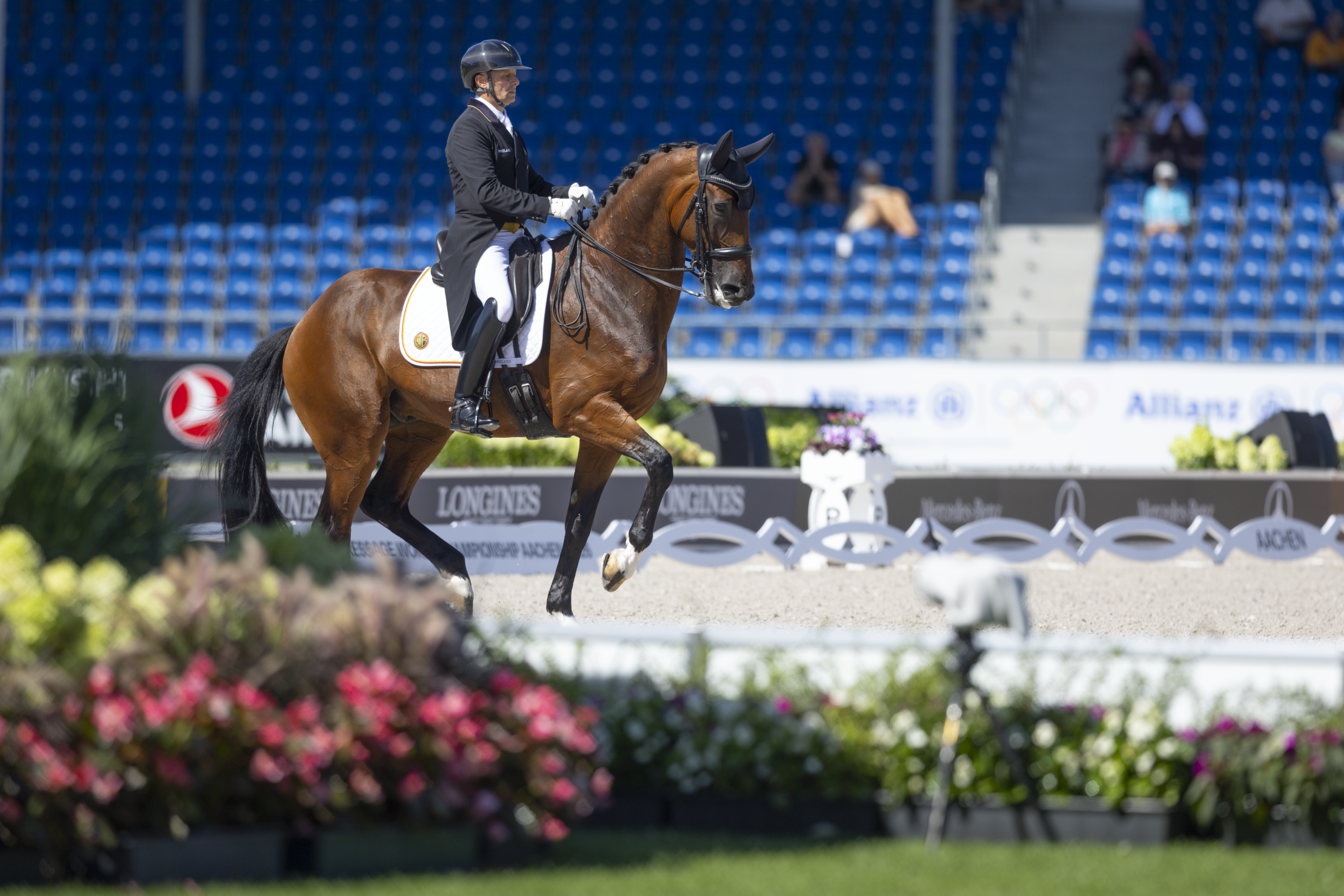
The value of these new exercises therefore also lies in making the judging criteria easier for spectators to understand. While certain technical subtleties may escape a less experienced observer, a horse's ability to follow the rider's hand and maintain its balance when the contact is released is much easier to recognise.
These few strides offer a tangible illustration of concepts that can sometimes be difficult to explain outside the world of dressage specialists. They contribute to a better understanding of the discipline and the work required to reach the highest level.
An adjustment rather than an upheaval
What will these changes mean for riders? Will they need to adapt their horses' preparation, rethink certain sequences or simply develop new habits?
Mariette Withages does not expect any major upheaval.
« "The tests maintain their level, the movements haven't changed and there is still a logical order to what they do. It doesn't change much. They just have to get used to the new test pattern. »
As with every revision of the tests, riders will nevertheless have to devote part of their preparation to mastering the new sequences. The position of a movement within a test is never insignificant. The exercise that precedes it, the one that follows it and the transitions required between the two are all part of the difficulty.
The challenge will therefore be less about teaching horses new movements than finding the best way to integrate them into the test, taking into account the individual characteristics of each horse.
Mariette Withages nevertheless believes that these exercises could prove more challenging for certain riders, particularly those who use Rollkur. The stretching of the neck and the horse's ability to naturally follow the rider's hand take on their full significance here. This is also one of the benefits of the revised tests: using the scoring system to encourage riding that prioritises relaxation and the quality of the contact.
A training philosophy, from children to Grand Prix
While the stretching circle in the Grand Prix naturally attracts attention, the changes are not limited to the world's elite.
Exercises involving stretching the neck or momentarily releasing the contact also appear in various tests for Children, Ponies, Juniors, Young Riders and the Small Tour. The tests for young horses are evolving too.
This approach has clear educational value. By incorporating these exercises at different levels of competition, the FEI makes mastering them part of a logical progression, both in the training of the horse and in the development of the rider.
The qualities sought at the highest level are therefore reflected in the earliest stages of a competitive career. A continuity that serves as a reminder that Grand Prix performance is built long before a horse begins learning piaffe, passage or one-tempi changes.
On the road to Los Angeles
With less than two years to go before the Los Angeles Olympic Games, these changes come at an interesting point in the international sporting cycle.
Riders will have several seasons to familiarise themselves with the new tests, while the first competitions of 2027 will provide an opportunity to see how they are incorporated into the performances of the world's leading combinations.
It will be particularly interesting to assess the impact of the stretching circle on Grand Prix results, given the coefficient of two assigned to it.
Beyond percentages and rankings, these new tests are above all a reminder that the difficulty of dressage does not lie exclusively in the complexity of the movements performed, but also in the ease with which horse and rider manage to link them together.
Evolving the tests without reinventing dressage: that, ultimately, is the philosophy behind this revision.
Find the FEI's 2027 dressage tests here