



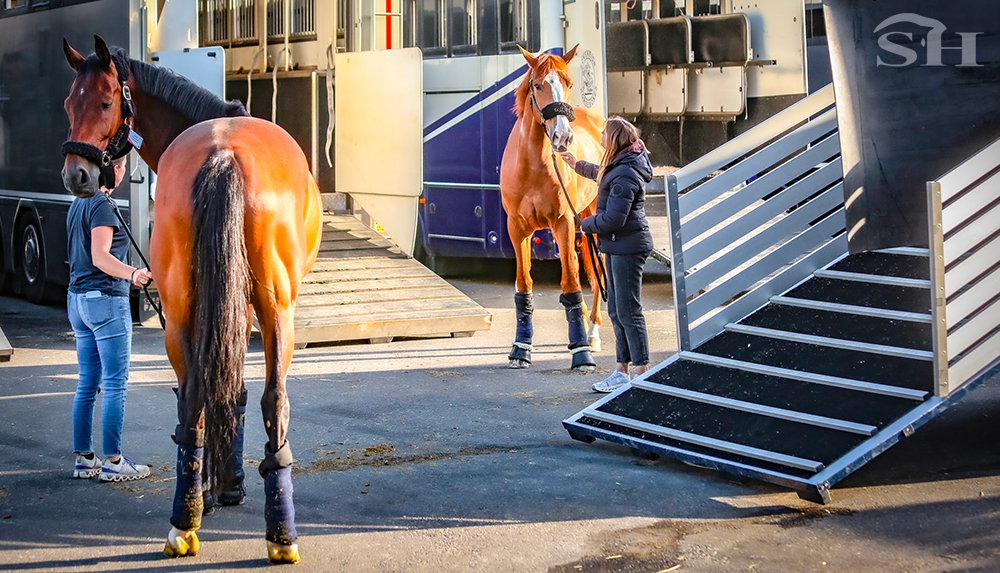
Free movement for horses within the Benelux? That’s basically over. Since the revision of the 2017 memorandum, the exemption from health certificates now only applies to very specific border regions. Everywhere else: paperwork from the Belgian Federal Agency for the Safety of the Food Chain (AFSCA/FAVV), an official veterinarian, and advance planning are back on the menu. And somewhere between Namur, Liège, Ternat, Luxembourg and Peelbergen, geography has suddenly become an elite sport.
Benelux is no longer an open bar
For years, the Belgian equestrian world enjoyed a practical little exception: for certain non-commercial movements within the Benelux, no health certificate was required. Competitions, leisure rides, sporting activities, cross-border grazing, you loaded the horse, crossed the border, and headed home without reciting the European animal health code.
That era has just taken a serious kick.
The AFSCA has confirmed the rules have changed: the exemption no longer applies to the entire Benelux, but only to specific border provinces. Outside those areas, a health certificate once again becomes mandatory. The circular that entered into force on May 12, 2026 officially repeals the old 2017 Benelux agreement.

The new map: welcome to the provincial maze
Without a health certificate, horse movements are now only allowed in very specific cases.
From Belgium to the Netherlands, the exemption only applies to horses coming from West Flanders, East Flanders, Antwerp, Limburg or Liège, and travelling to Zeeland, North Brabant or Dutch Limburg. Toward Luxembourg, only the Belgian provinces of Liège and Luxembourg still benefit from the derogation.
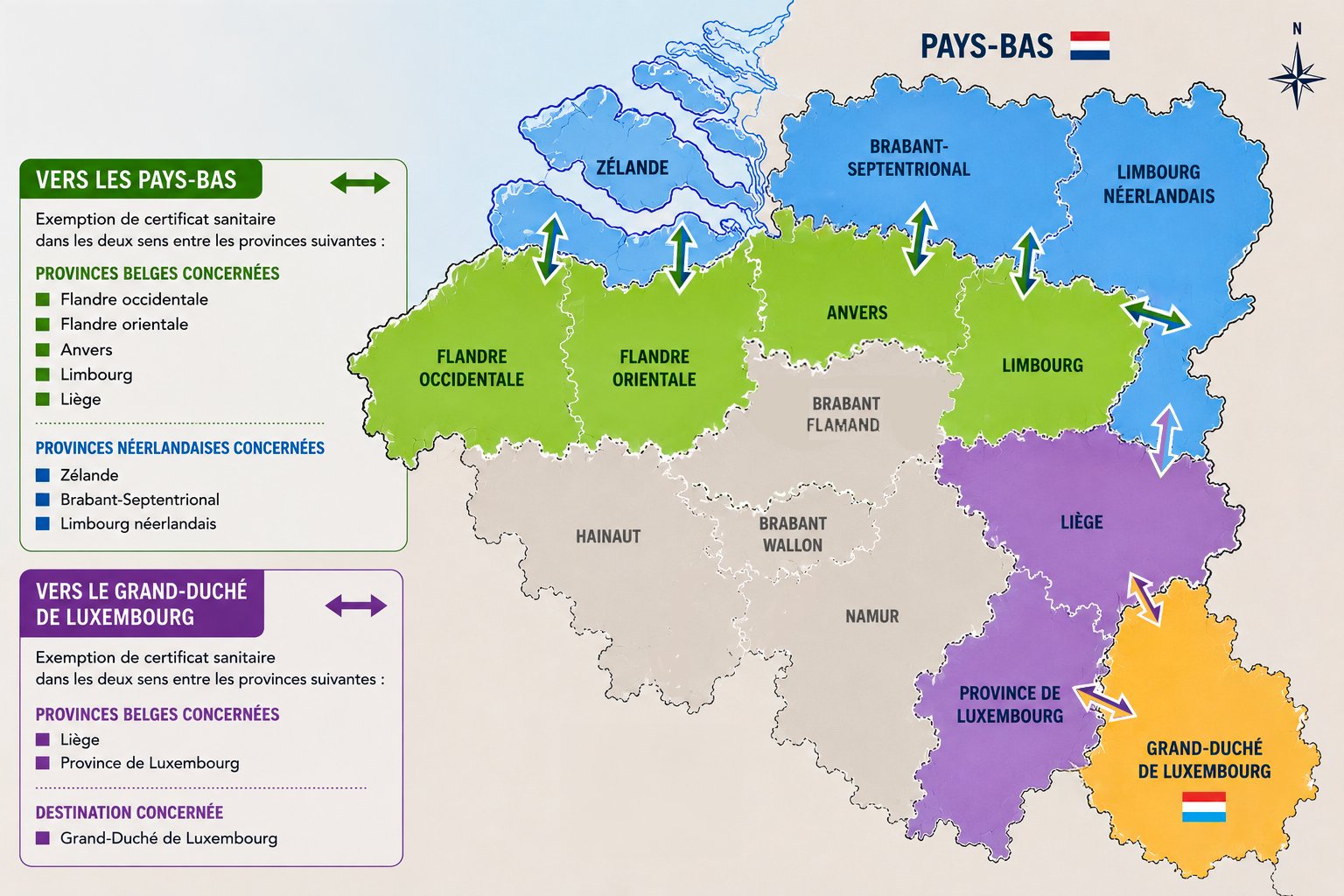
Everything else? Certificate required.
Lawyer Anne De Bie (Equilegis), sums up the trap perfectly: a horse travelling from Namur to Luxembourg must now go through the AFSCA process. A horse from the province of Luxembourg can still benefit from the exemption. Same country, different treatment. The law loves borders. Horses, considerably less.
We Won’t Be Able to Say: I’ll Just Load Up and Go to Luxembourg
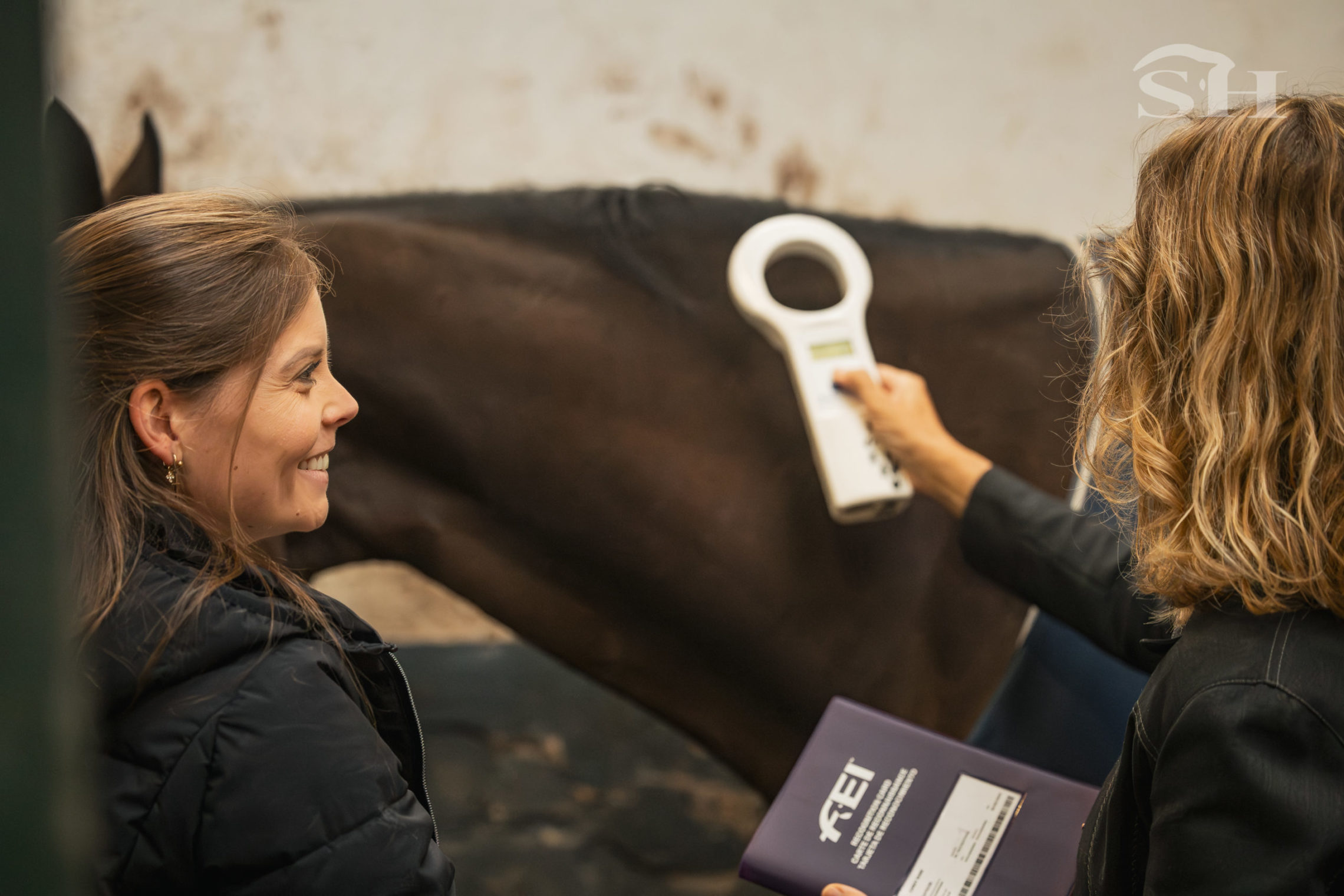
In practical terms, explains Alexandra Masuy ofAlma Equestrian Management, people will now have to do “exactly what we already do when travelling outside the Benelux”: request a health certificate through the AFSCA, have the horse inspected by an official veterinarian, and obtain an export document.
Which means spontaneous departures just got expensive.
Anne De Bie puts it bluntly: “We won’t be able to say anymore: I’ll load the horse in the truck and quickly head to Luxembourg.” The certificate is valid for a single journey, not for a month of total freedom. For riders, breeders, traders, stud-books and organisers, that means more anticipation, more costs and more delays.
According to Anne De Bie, the average price currently mentioned for an AFSCA certificate sits around €150 to €200. A minor detail? Not really — especially when several horses need to attend a stud-book inspection or an event abroad.
Central Belgium: the big loser of the new monopoly board
The reform is already creating some absurdly entertaining situations. A rider from Liège travelling to an authorised Dutch zone may still qualify for the exemption. A rider from Ternat heading to the exact same destination will need a certificate. Same event, two completely different realities.
Alexandra Masuy says it very simply: “It will really depend on where my client is based.” In other words, before checking your ring time, you’ll need to check your province of departure.
Anne De Bie also points to the border absurdities now emerging: Belgian owners forced to cross Luxembourg just to travel between two Belgian points, grazing fields literally split by a border, endurance or trail riders discovering that a long-distance ride could suddenly require sanitary paperwork. At this stage, no official clarification guarantees that all these situations will be handled with flexibility.
A grace period until June 30, 2026. Not eternal forgiveness
The AFSCA has introduced a transitional period running until June 30, 2026 inclusive. During that period, no sanctions will be imposed for non-commercial movements that complied with the old memorandum but fall outside the new border zones.
Translation: the industry has a few weeks to land safely.
After that, inspections may become a lot less educational and a lot more procedural. Anne De Bie speaks of major infringements, with risks of substantial fines and, depending on the situation, legal proceedings. In short: trying to outsmart the system with a horse truck and an equine passport could end up costing more than a badly planned competition weekend.
Animal health measure, or paperwork machine?
Officially, the AFSCA insists the health certificate is not “just another administrative document”: it certifies that a horse has been examined by an official veterinarian before departure and shows no symptoms of a notifiable disease.
On the ground, that explanation is landing less smoothly. Anne De Bie notes that many professionals also see this as a response to import fraud and some overly creative horse movement arrangements. In plain language: a few people played with loopholes, and now the entire sector gets the invoice.
And as usual, the average rider discovers they’re also paying for the artists of circumvention.
Conclusion: Tthe new obstacle is administrative
The reform does not put an end to horse movements within the Benelux. It puts an end to automatic reflexes.
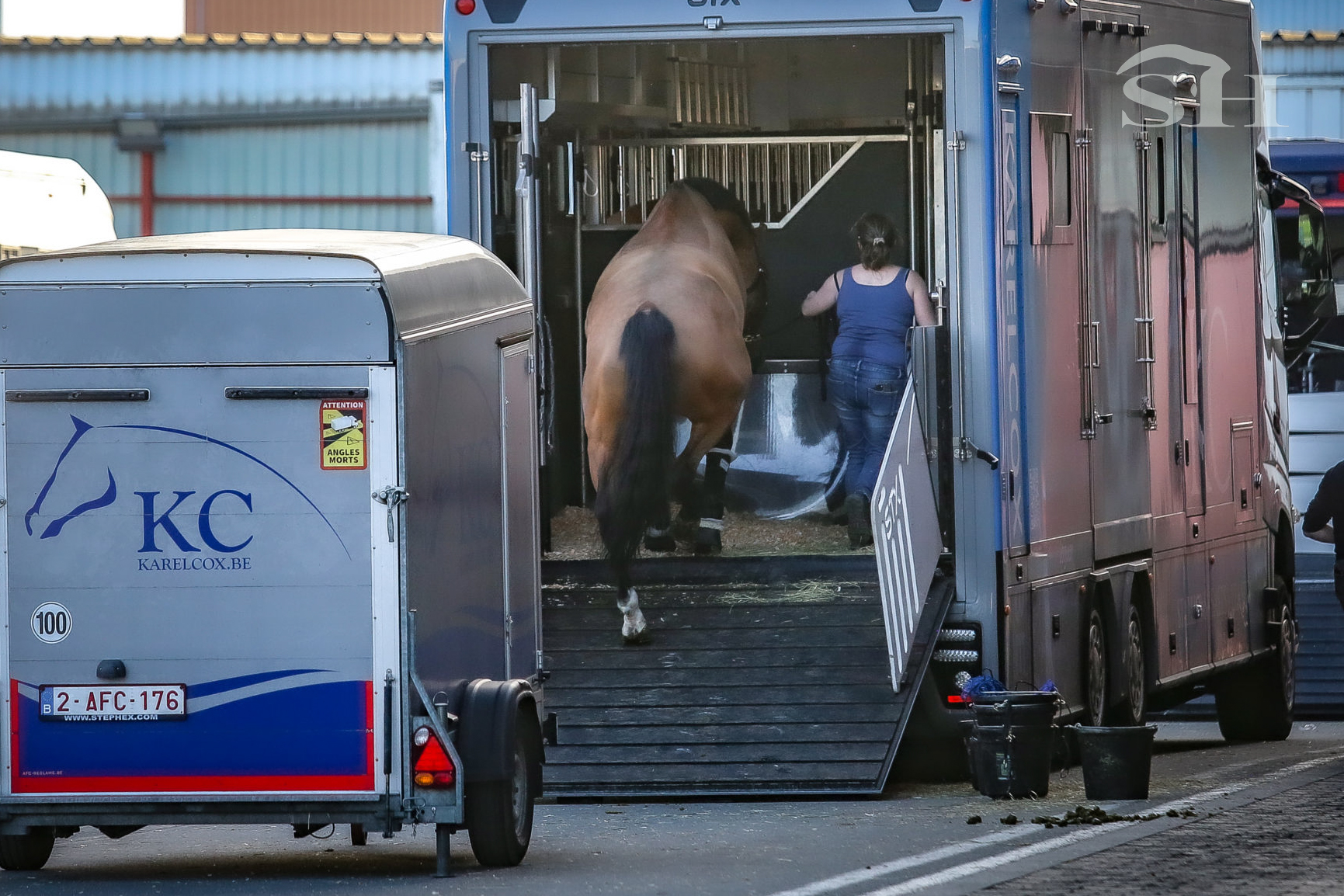
From now on, before loading the horse, people will need to check: province of departure, province of arrival, purpose of travel, certificate or exemption. The horse, meanwhile, will probably continue stepping into the truck without understanding why a competition two hours away suddenly feels like an import-export operation.
The Benelux had made borders almost invisible. The AFSCA just painted them red again.
Find the official AFSCA directive here.