


Let’s be honest: vaulting was one of those disciplines at the Aachen World Championships that you walk into with plenty of curiosity and a few gaps in your luggage. Then the music starts. A horse breaks into canter, a vaulter rises above it and, a few minutes later, you have already forgotten that you knew almost nothing about the whole thing. Among the world’s best, the Belgians gave us a pretty good thread to follow: Lauren Vanlerberghe and Jolien Aerts in the individual competition, then a squad built in eighteen months, with a few setbacks and a lot of work. Welcome to the circle.
First, you have to enter a stadium you usually know under a different face.
The one used for dressage at CHIO Aachen.
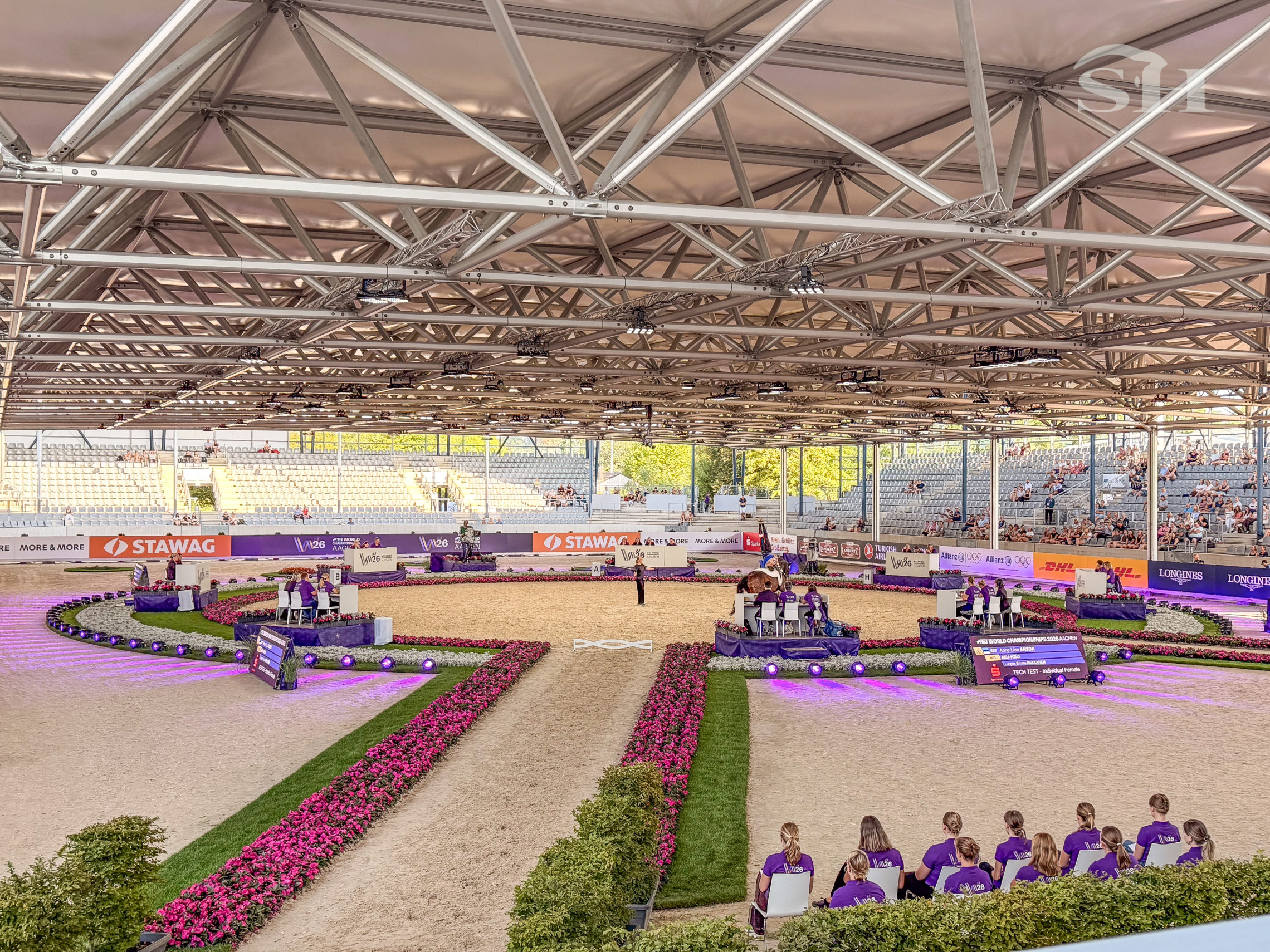
For the Worlds, it has been covered and transformed into a vaulting theatre. A lungeing circle in the middle, judges’ tables all around, flowers, coloured lights and that slightly strange atmosphere of familiar places that have changed jobs.
Vaulting, let’s be clear, is a bit of a discipline you step into with lead boots when you do not know much about it.
A few names, at least.
Lauren Vanlerberghe, fourteen-time Belgian champion. Jolien Aerts.
For the rest, you have to learn.
First lesson: do not say “team”.
On dit squad.
Poor fool.
Talking about a “team” to a vaulter would be a bit like talking about a cart to a driving competitor. Technically, you might reach the end of your sentence. As for your physical integrity, nothing is guaranteed.
And then the music starts.
And the show with it.
One hand on the handle, and off we go
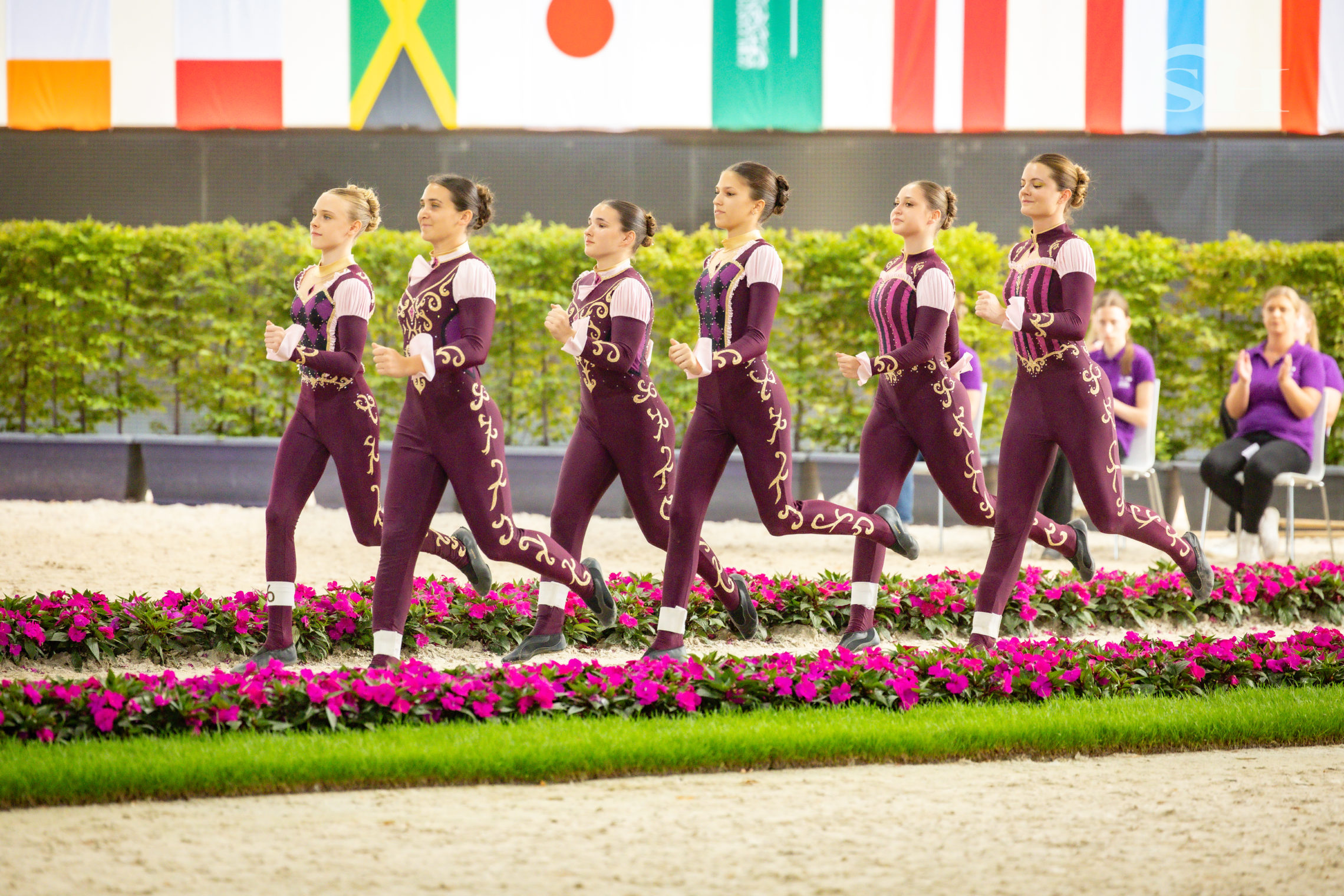
When it comes to the squad, they arrive with that funny gait made up of small, jerky jumps. Six girls moving perfectly together. Even the way they enter the arena has already been choreographed.
n the centre, the lunger.
The horse starts on their command. The vaulter, meanwhile, seems rather to obey the music.
On the Belgian side, the vaulting delegation is, incidentally, 100% female.
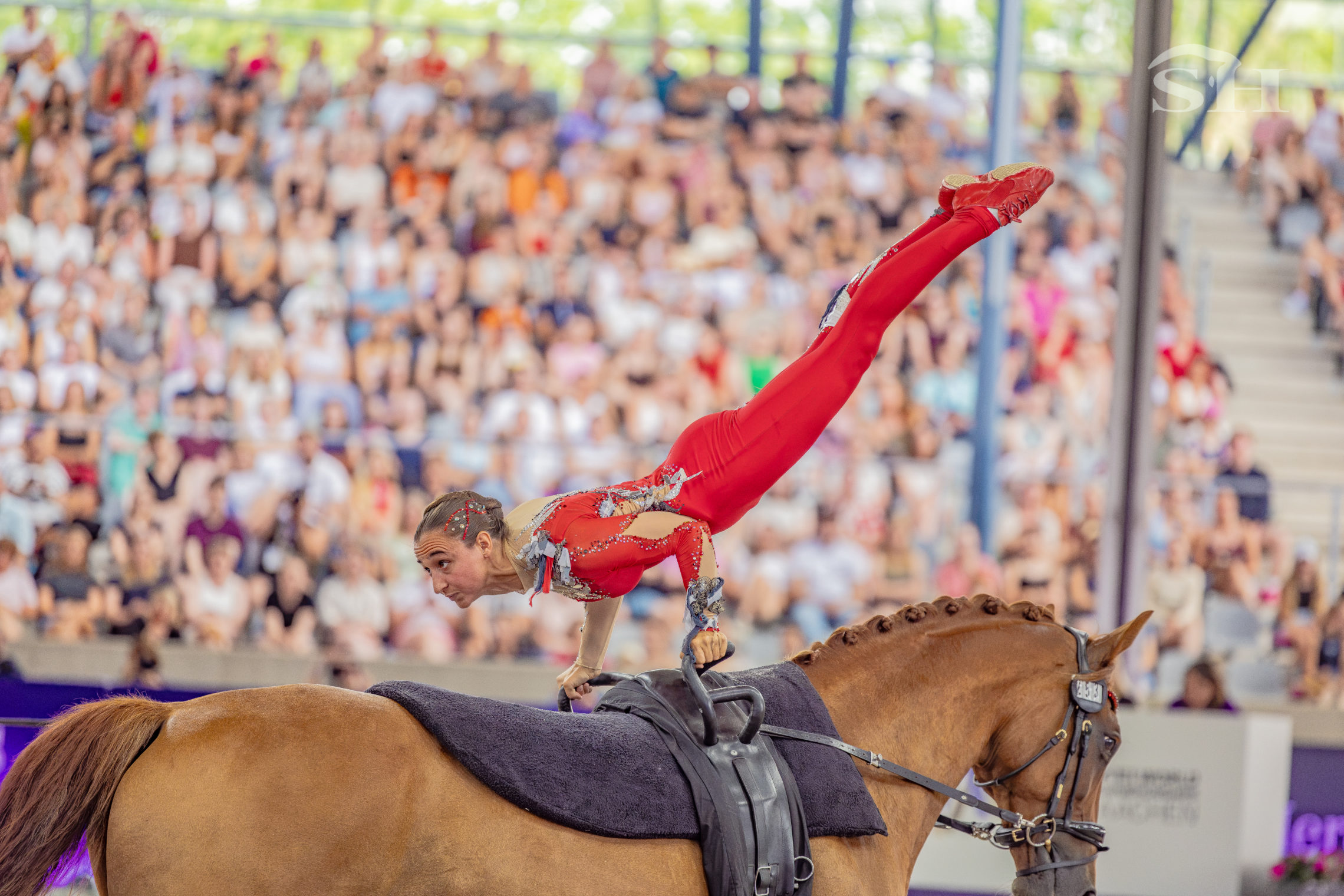
The athlete joins the circle, comes alongside the horse and starts matching her run to its canter. Same rhythm. Same cadence.
One hand on the handle.
Off we go.
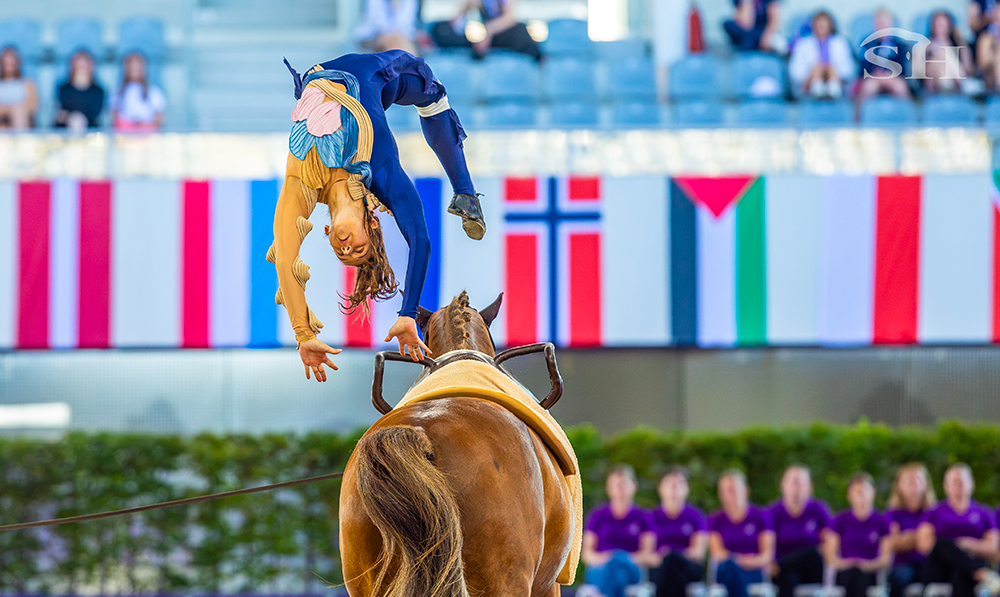
In no time, the vaulter is up on a horse that keeps cantering around as if having a human being standing on its back were a perfectly normal activity.
The week starts with the compulsory exercises. In individual competition as in squad.
And the term is rather well chosen: here, there is no way to hide a weakness behind a choreography or a well-placed artistic pirouette. The exercises are set. You have to do them. And do them well.
Then come the technical tests and the freestyles. The music takes up even more space, the programmes tell a story, the stands react.
And that is where the trap closes.
Because you get drawn in very quickly.
By the performances, first.
By the atmosphere, then.
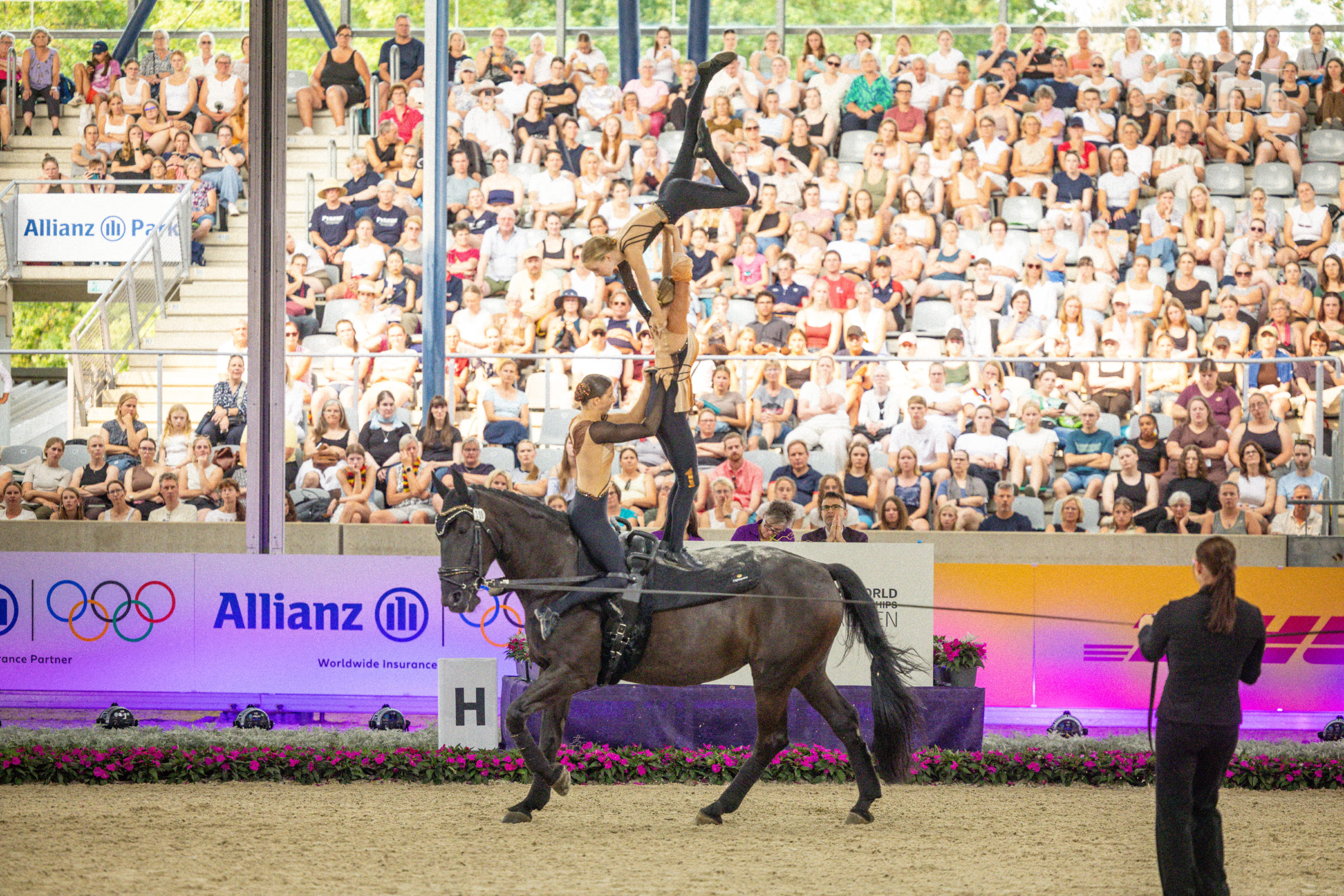
You start looking at the horse differently. You start to understand that a slightly different stride can throw off what is happening two metres above. You watch the landings. You try to understand why a certain figure lifts the arena up a notch.
In short, you start watching vaulting.
Really watching it.
And on the Belgian side, Lauren Vanlerberghe does not take long to give us an excellent reason to study the instruction manual a little more seriously.
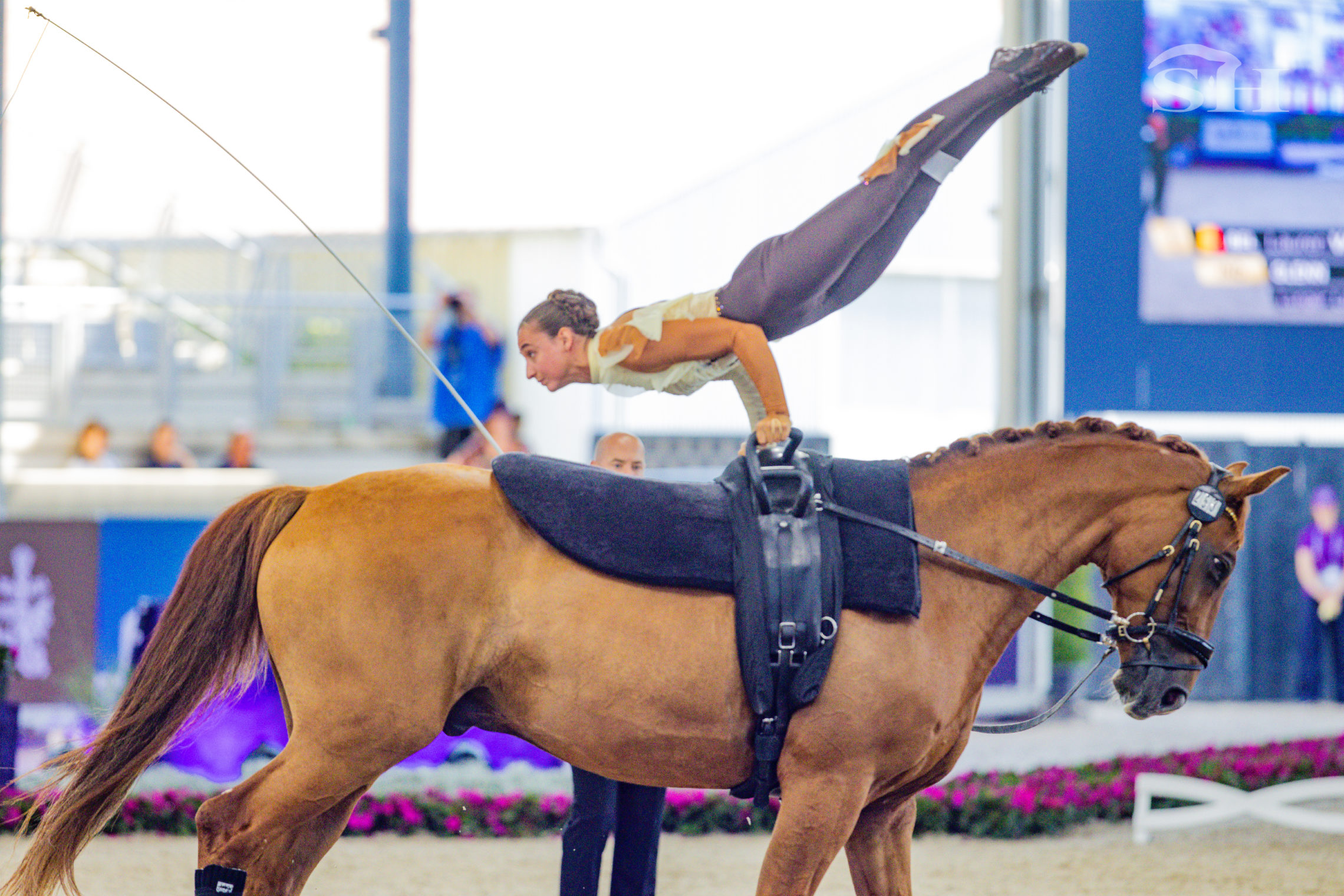
Lauren in her bubble
After her technical test, Lauren catches her breath a little.
The programme is demanding. Not just physically. In this class, unlike in the freestyle, certain elements must be performed.
No Plan B.
“The technical test is really difficult. You have to be good and you cannot really make a mistake. In the freestyle, if something does not work, you can do something else because you are not obliged to perform strictly defined exercises. Here, you have to do them. You have no choice,” she explains with a smile.
Her performance?
Rather good.
But Lauren knows exactly where she left a few tenths behind.
“The beginning was really strong. At the end, I heard in my music that I had to speed up a little and I was no longer perfectly on the timing. It could have been even better. But I am really happy with what we did, and the horse was good.”
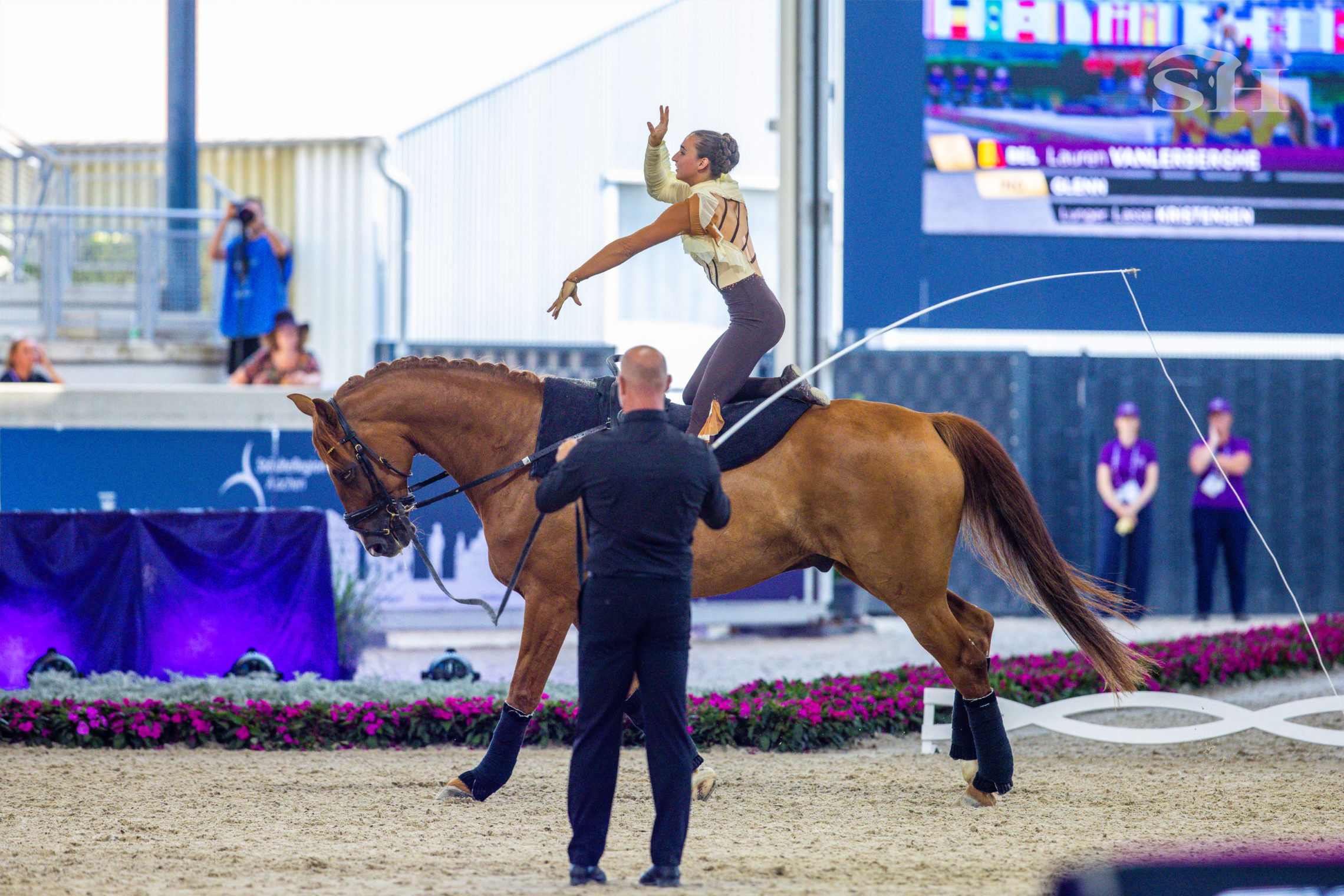
There is, however, one parameter the rules do not measure.
This is the World Championships.
In Aachen.
In front of stands full of people who, unlike us a few days earlier, know exactly what they are watching.
Lauren prefers to forget all of that once her programme begins.
“When I go in, I try not to think about it too much. I stay focused in my bubble. I also do it for the Belgians who are there to support us, and that is really nice. But I do not think too much about the big arena.”
The best way to manage Aachen?
Pretend Aachen is not Aachen.
First, build the horse
Because in all of this, there is one actor that the somersaults, balances and splits could almost make you forget.
The horse.
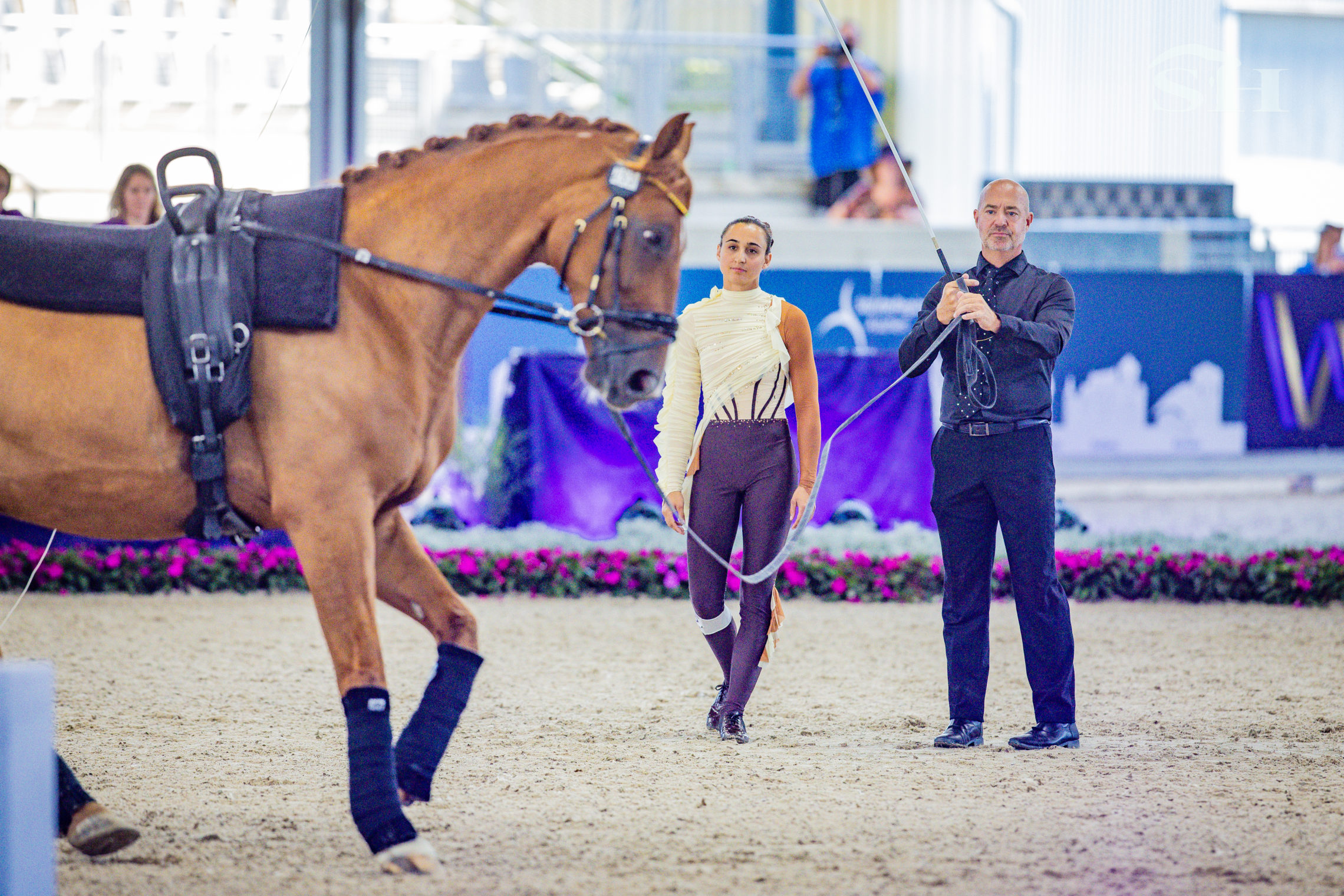
Without him, there is no vaulting.
And certainly no good vaulting.
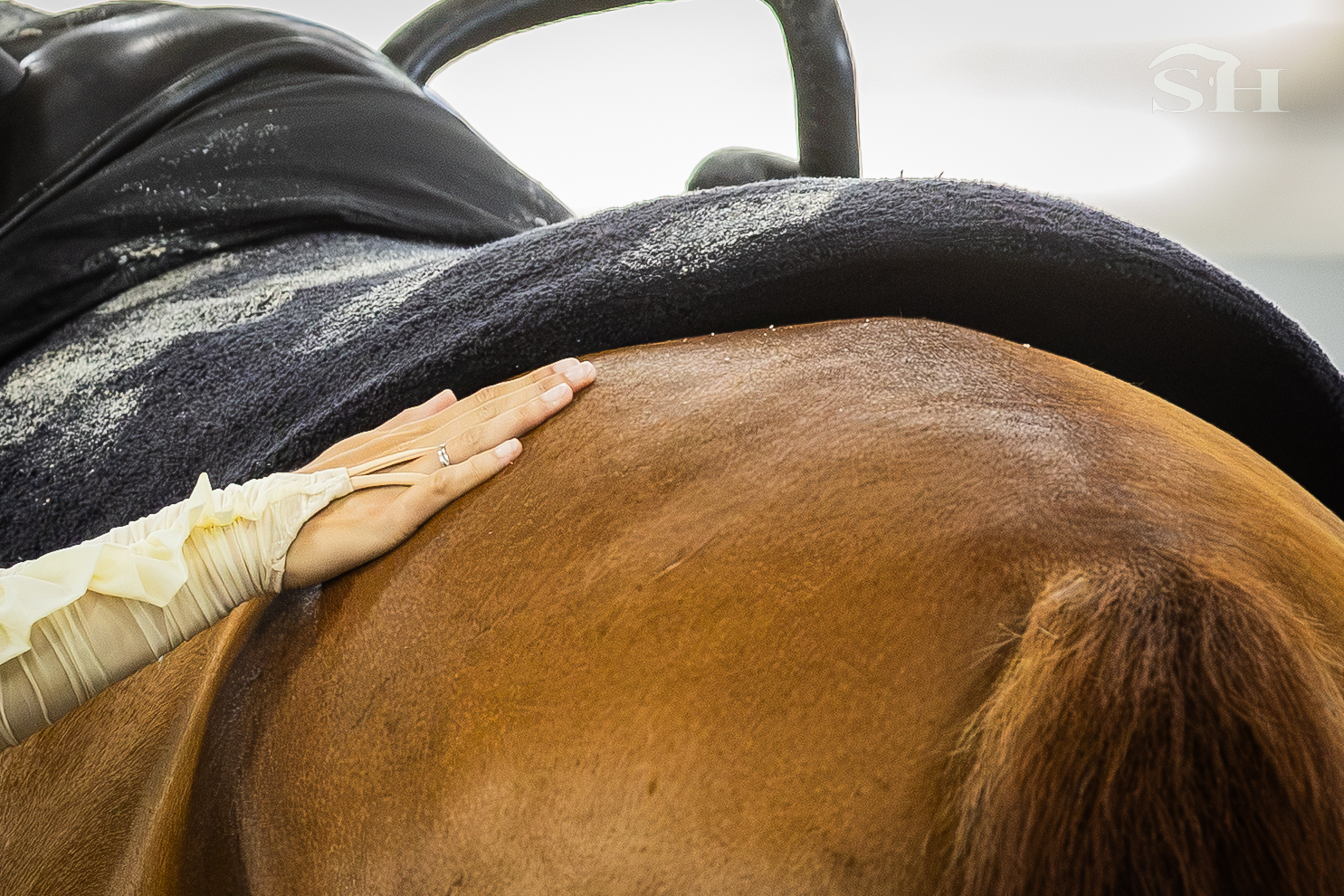
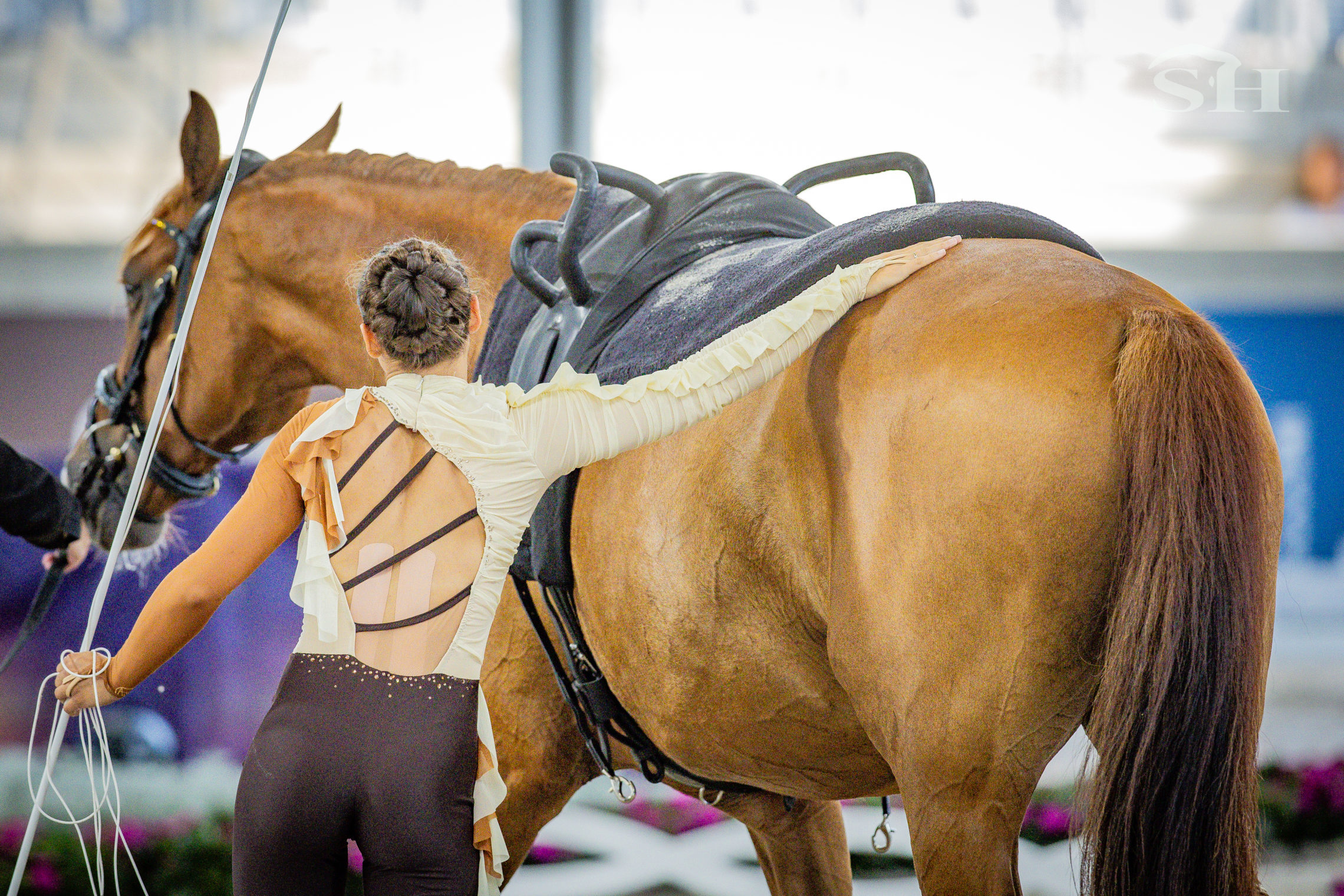
Lasse Kristensen, Lauren Vanlerberghe’s lunger, reminds us after the technical test. That day, the plan had been built first around the horse. The 25 minutes of preparation allowed in the dedicated area did not seem enough to them. So he needed to be ridden, loosened up, brought to carry himself better and, above all, arrive in the circle relaxed.
“We can help him, by riding him, to loosen up and find the right balance. He was relaxed and really good today. That gives her a much better platform for vaulting,” Kristensen explains.
Then comes the sentence that sums up the mechanics of the discipline quite wonderfully:
“First, we build the horse. Then she has her chance.”
And only after that, he reminds us, there is still one small detail: “You still have to produce a very, very good performance.”
That puts two or three things back in order.
A regular horse gives you cadence. Cadence gives you timing. And when your plan for the next thirty seconds is to stand, kneel or turn upside down on a cantering horse, timing is not exactly a decorative detail.
Almost everything is there.
A regular horse gives you cadence. Cadence gives you timing. And when your plan for the next thirty seconds is to stand, kneel or turn upside down on a cantering horse, timing is not exactly a decorative detail.
Then comes the freestyle.
And for Lauren Vanlerberghe, this one inevitably has a special flavour.
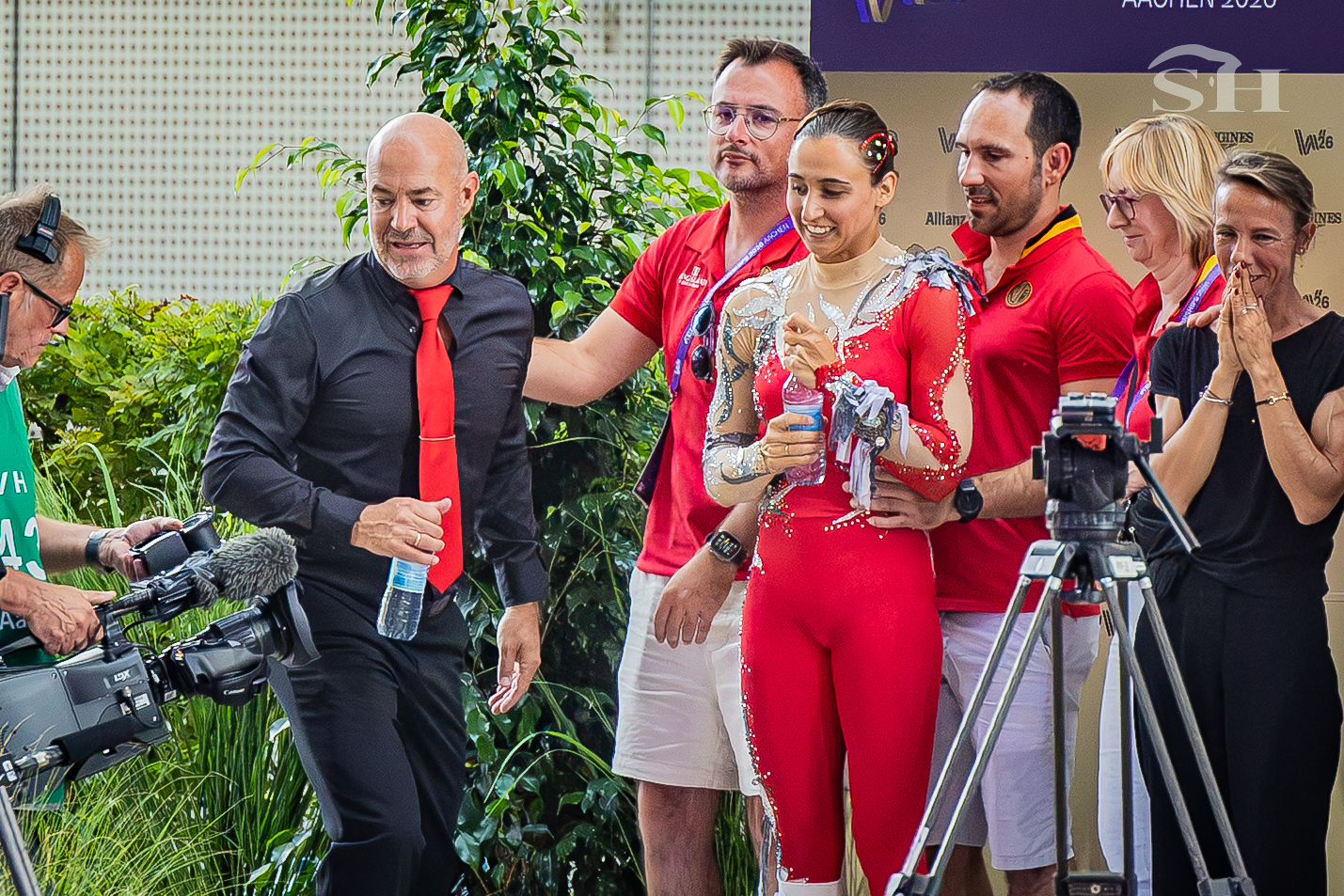
For her last major individual competition, Lauren finally looks at Aachen
The day before, Lauren had explained her method to us.
Do not look at the stands.
Stay in her bubble.
Forget the size of the arena.
The horse, the programme, the music.
Nothing else.
For her freestyle, she does exactly the opposite.
Because this performance is not quite like the others. These World Championships in Aachen are her last major individual competition. After years of fighting her chances alone on the horse, Lauren is preparing to close that chapter of her career.
So this time, she looks.
Really watching it.
« “It was very nice. It is incredible to enter this arena. This time, before getting on the horse, I really looked around me to enjoy all the public that was there. And I really enjoyed my last programme.” »
The sentence inevitably takes on another dimension when you know the context.
The day before, she had to block Aachen out.
This time, she mostly had to remember to enjoy it.
And when the music stops, the smile is there.
The result?
“Yes, yes, I'm happy.”
Before the championship, Lauren had set the bar high.
“My goal was the top 10. A top 15 would be perfect. I hope I can stay in the top 15, as in the other two rounds.”
It would be 16th. Never mind.
One last major individual competition, then.
But certainly not yet the time to pack everything away.
Because a few hours later, she has to come back.
With the girls. With the horse. The squad.
Eighteen months to build a squad
The real Belgian collective adventure of this week is there.
Eighteen months earlier, the idea started to take shape: building a squad capable of representing Belgium in Aachen.
Easy to write.
A little less easy to do.
The project was launched by former French vaulter Nicolas Andreani.
CV: world champion in 2012, World Cup winner in 2013 and 2014. Not exactly a rookie.
But that was exactly what was needed to guide the group.
« “It was a project that was close to my heart. Eighteen months ago, I tried to motivate the troops, so to speak, so that Belgium could finally present a team.” »
Lauren became one of its driving forces. Some of the girls do not come from the same club and agreed to swallow up the kilometres every weekend so that this addition of individuals could become something collective.
« Everyone gave something, did their part of the job », Nicolas sums up.
And there was plenty of job to do.
Because trouble did not exactly wait for an invitation.
The horse was injured two months before the deadline.
Another one had to be found in Germany.
Then, three weeks before the Worlds, Evelyne dislocated her elbow.
The top six had to be changed.
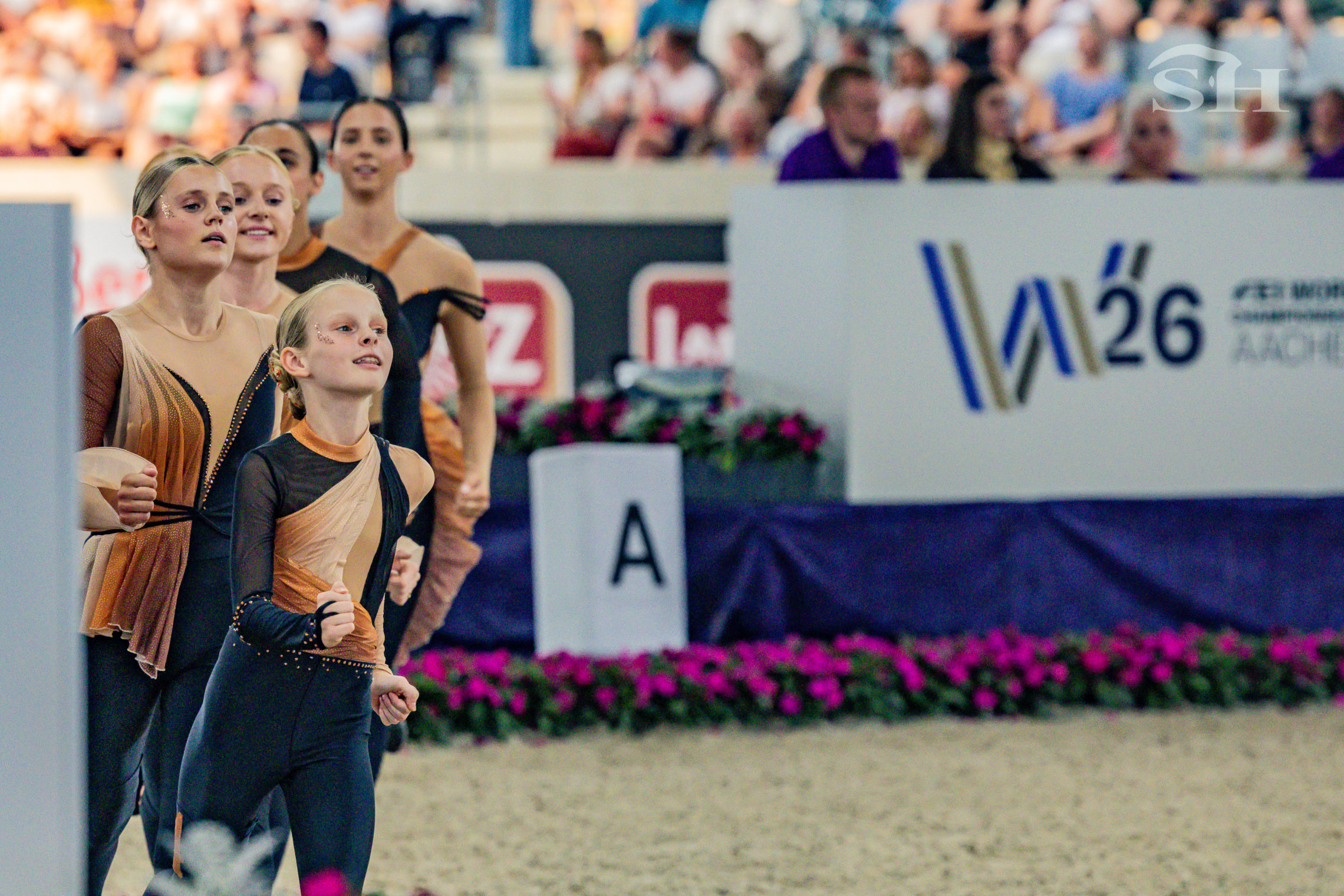
And changing a vaulter in a squad three weeks before a World Championship is not the same as replacing a name on a team sheet.
You have to touch the freestyle.
Review the figures. The positions. The automatisms. The landings. Three weeks before Aachen. Lovely atmosphere.
« Despite all these setbacks, the girls managed to hold firm with perseverance and to work in order to present something today that is of a high level .” Nicolas says.
And that is exactly what strikes you when they enter the arena.
This group is not there simply to enjoy the setting.
There is a real programme.
And it is pretty serious.
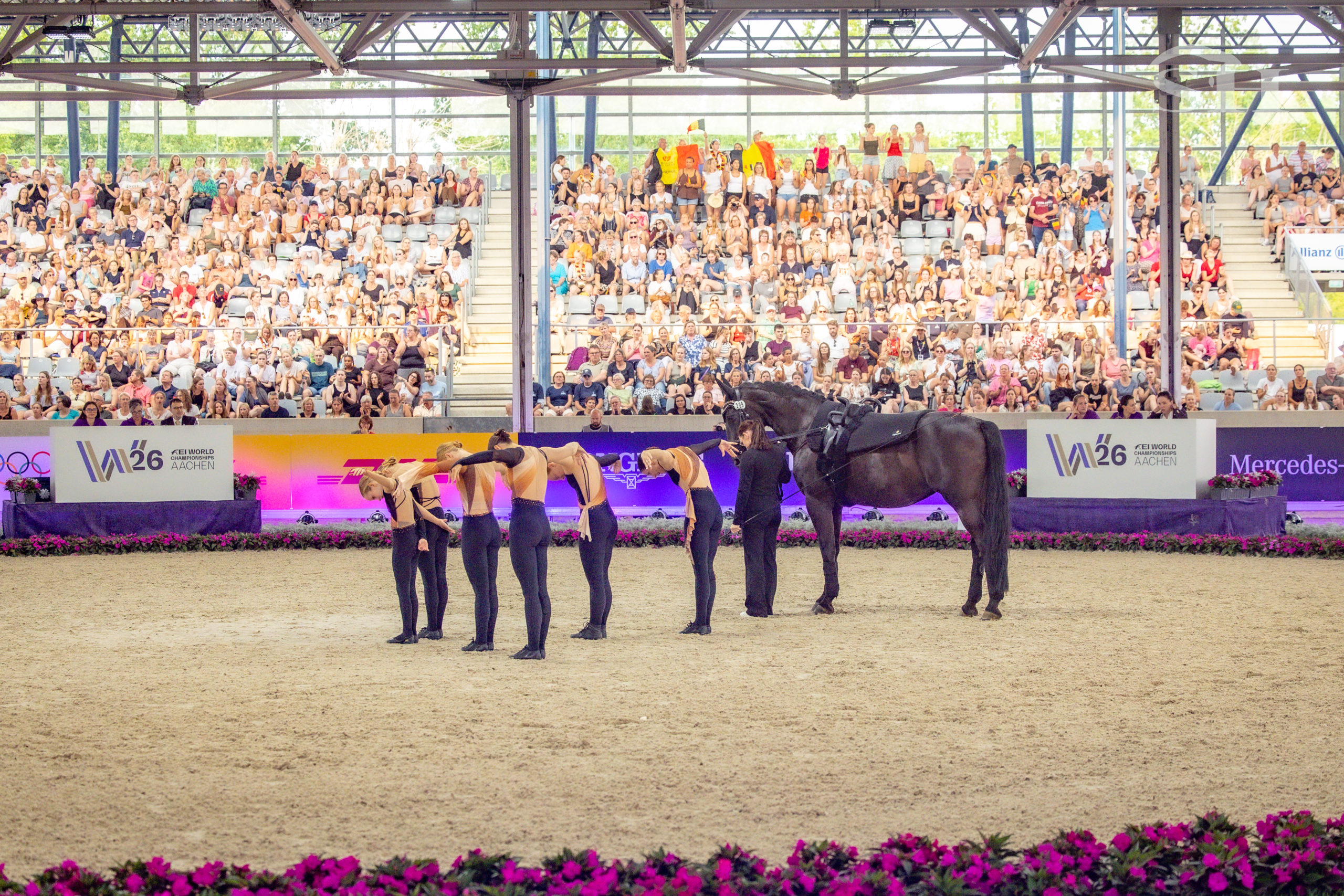
Six individuals, one programme
That was the whole gamble, in fact.
Taking several good individual vaulters and managing to make them work together.
“We have very good individual vaulters, very good vaulters within this team. The gamble was to make sure all these individuals could get along as a team. And I am very proud of them.”
That’s it.
Even Nicolas says “team”.
We give up.
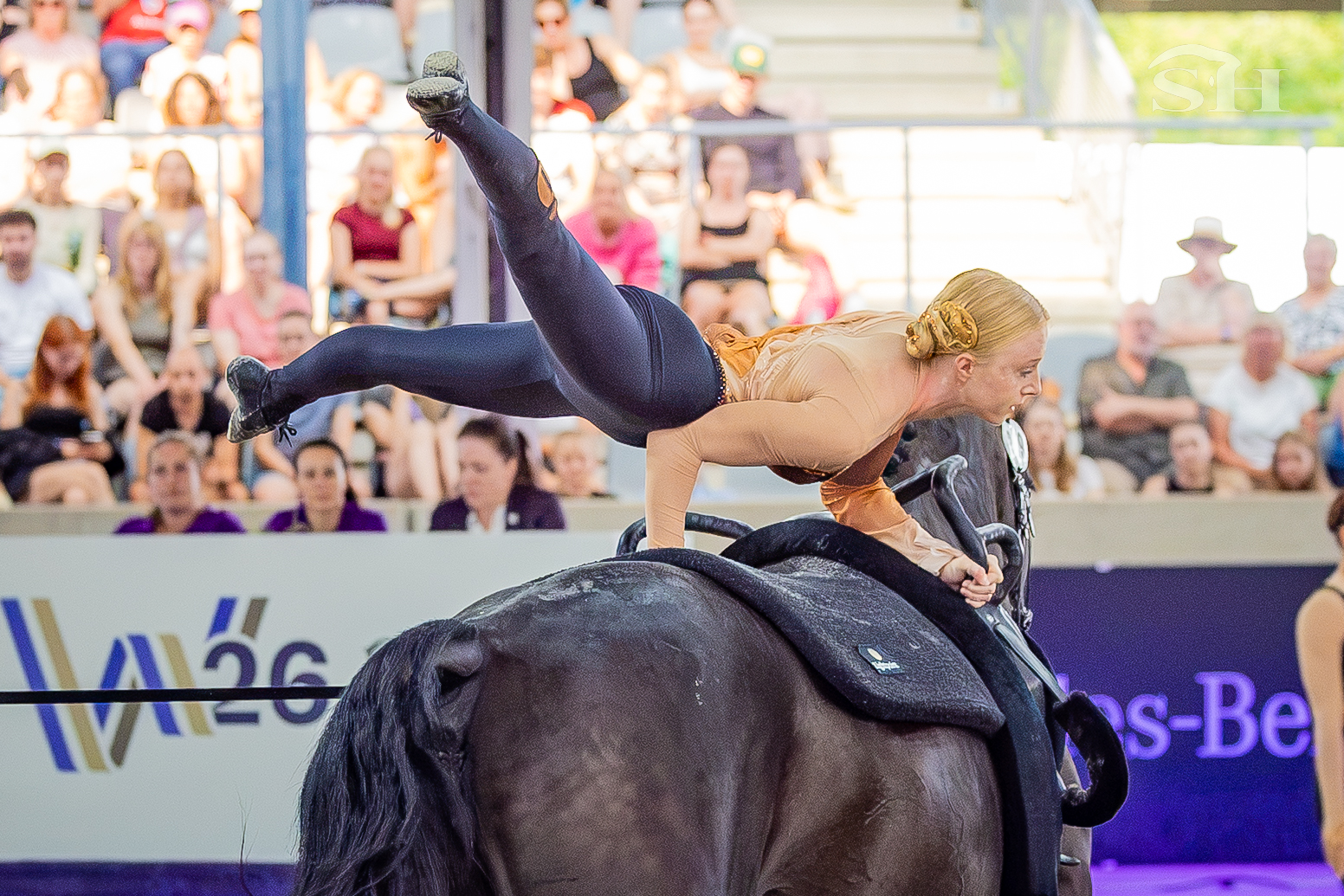
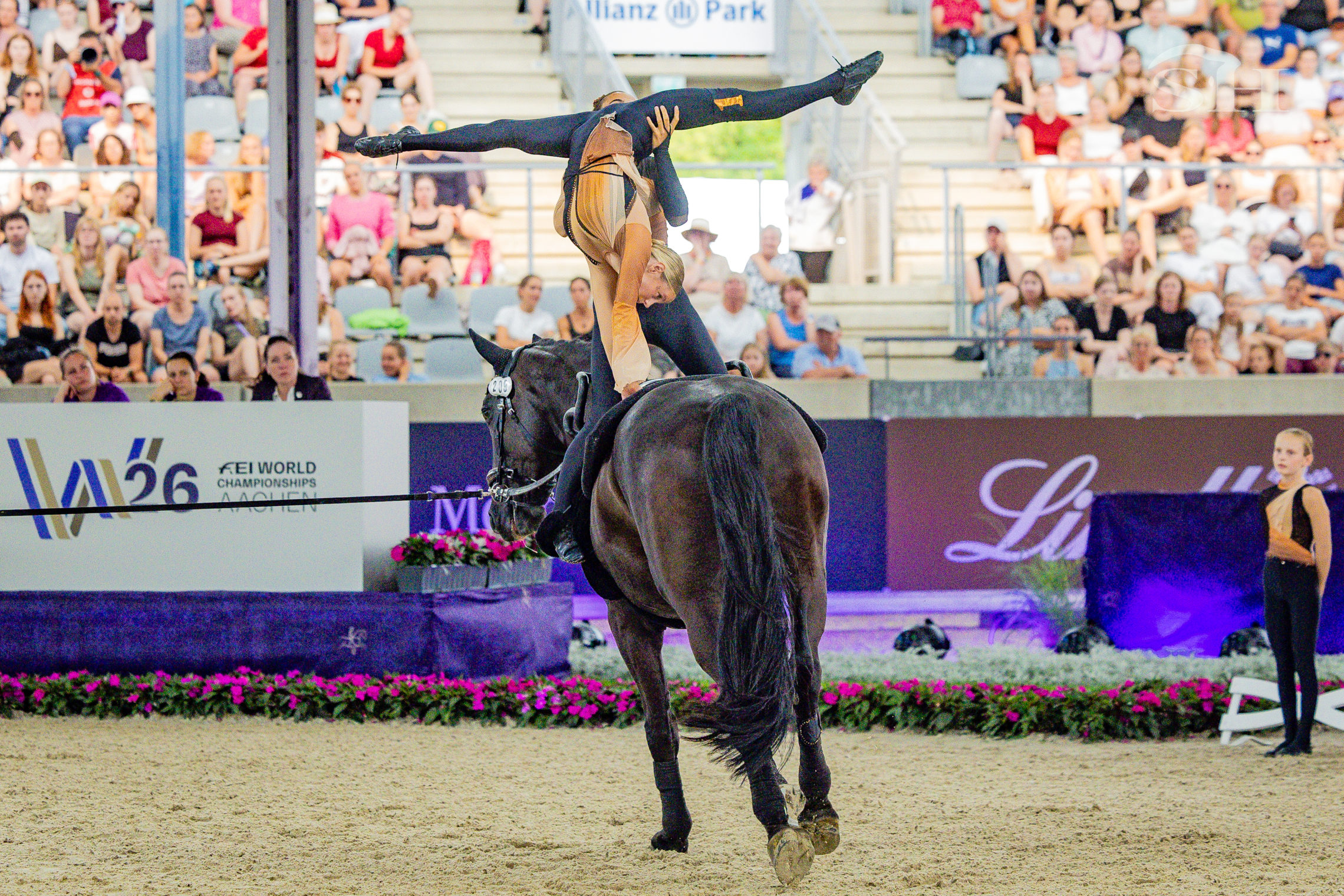
Technically, the Belgian programme does not play small.
Bodies rise, descend, stack up and cross each other. Some figures already require a few seconds for our brain to understand who is holding whom and, above all, how all these people plan to come back down.
A few hours earlier, Lauren had summarised the squad’s ambitions without any big declarations.
“We simply want to produce our best performance because I know our squad can present a very beautiful freestyle. We have already shown it in international competitions. I just want us to manage to do the same thing here, in this arena.”
Not come to learn.
Not simply enjoy being there.
Do their programme.
Their real programme.
And then comes THE figure.
Houston, We Have Lost Auke
Auke Talpe takes off.
Literally.
A launched somersault.
She leaves the horse and goes flying through the air.
Nicolas would later talk about a “five-metre flight”. We will leave him responsible for the measurement, since no one had the excellent idea of pulling out a measuring tape in the middle of the freestyle.
But visually, the message lands.
Auke flies, and two of her teammates are waiting behind to catch her.
In the stands, the Aachen crowd then does something it is normally asked not to do in the middle of a performance.
It explodes.
An ovation.
In the middle of the freestyle.
With a horse still cantering in the middle.
Not necessarily the idea of the century from an equestrian point of view.
But emotionally, it is hard to blame anyone.
“Emotions, sometimes, you cannot control them,” Nicolas says. “We gave them such emotions that there was a beautiful ovation in the middle of the freestyle.”
Let us immediately reassure any heart patients: no, nobody had decided to try the figure for the first time on a Saturday afternoon at the World Championships.
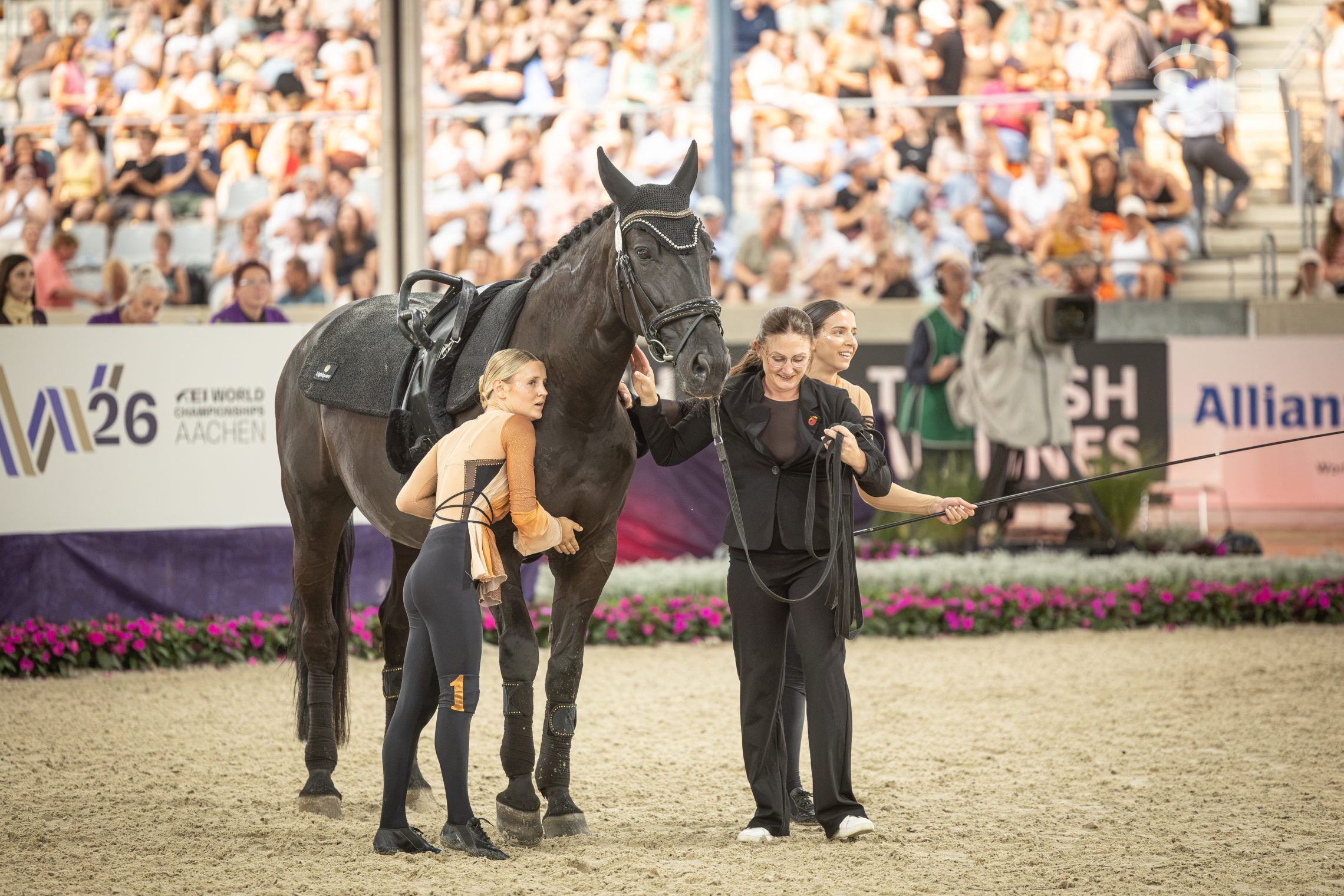
“Everyone was ready for it, the lunger, the horse and the vaulters alike. You could see that there were two girls behind to catch, to catch our vaulter.”
Yes.
Thankfully.
“For the one who did the somersault, I think it will remain an engraved and memorable memory.”
For those who watched it too.
“Touch the jury’s heart a little”
And the scores?
Nicolas does not hide his pleasure.
“I did not think we would get scores like that at a championship for a first national team. Of course, you can always do better. There are small mistakes. The perfect programme does not exist. Even when you are world champion, you can always do better.”
What he looks at most are the technical marks.
Because they say whether the programme really stands up beyond the show.
“When I see the technical marks, it means we managed to work in the right direction and touch the jury’s heart a little.”
The public had already delivered its verdict a few minutes earlier.
Right in the middle of the programme.
And somewhere, our view of vaulting had already changed too.
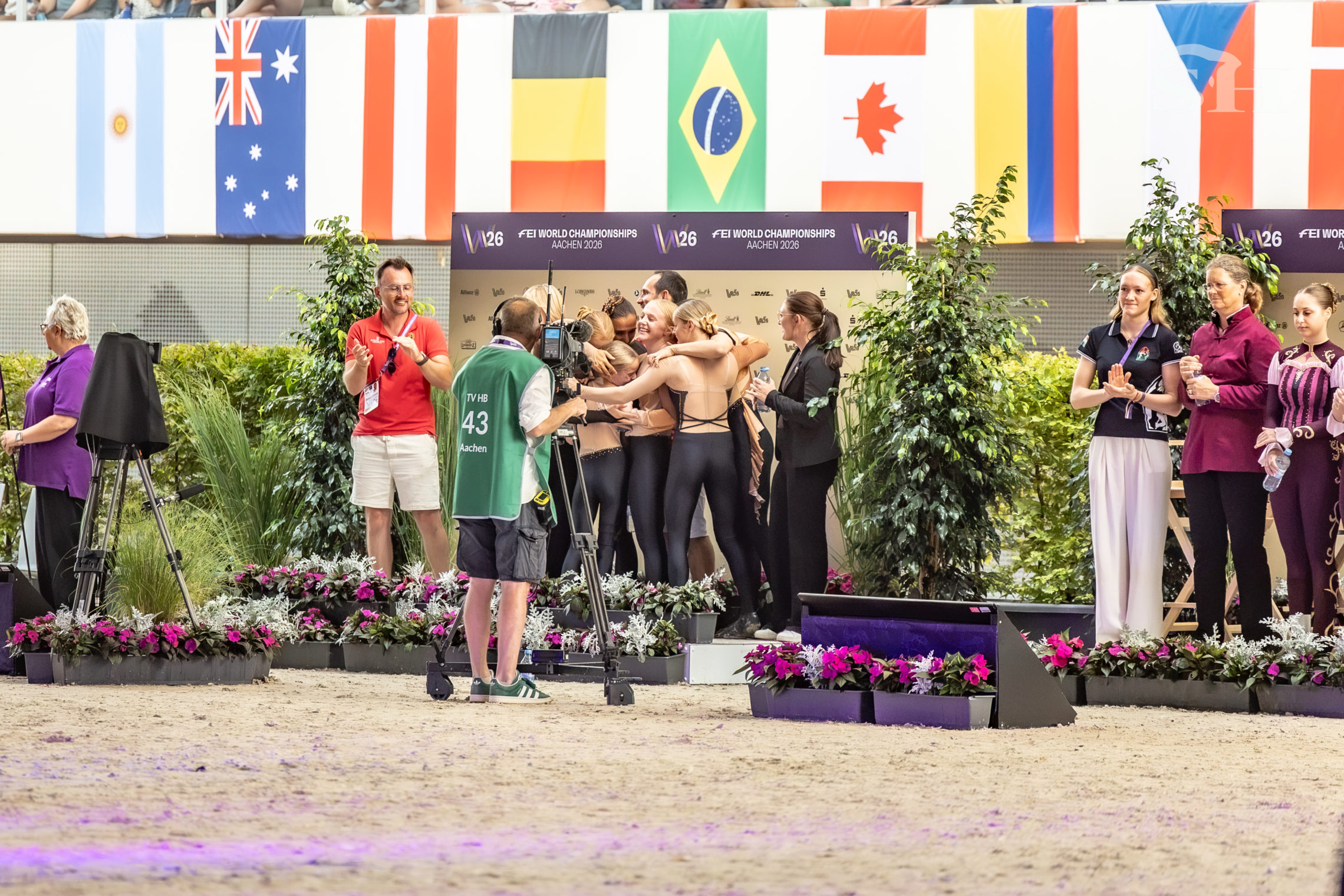
The most dangerous thing, in the end, is going to watch
A few days earlier, we had entered this stadium with that polite curiosity sometimes reserved for disciplines we do not master.
We knew Lauren Vanlerberghe.
Jolien Aerts.
A few basic principles.
And for the rest…
Let’s just say there was work to do.
Then we watched.
he Belgians, obviously, because they were our thread to follow. But also the others. The world’s best. The differences between programmes, the horses, the figures, the landings, the completely different ways of occupying that same circle.
And little by little, something changes.
You start looking at the marks.
Comparing the performances.
Understanding why an irregularity from the horse can disrupt a figure two metres higher up. Why the compulsory exercises forgive nothing. Why the freestyle allows something else to be told. Why the lunger is absolutely not just there to “make the horse go round”.
And why taking six good vaulters is not enough to build a good squad.
That is probably also what makes a successful World Championship for a discipline that lives less often under the spotlight than showjumping or dressage.
Bring in someone who knows almost nothing about it.
Give them music.
Send a horse off in canter.
Show them the world’s best doing fairly unreasonable things on top of it.
And find them three days later waiting for the judges’ marks.
The Belgians gave us an excellent thread to follow in order to learn to love all of this.
In the end, the most dangerous thing about vaulting may not be getting on the horse.
It may be going to watch your first class.