
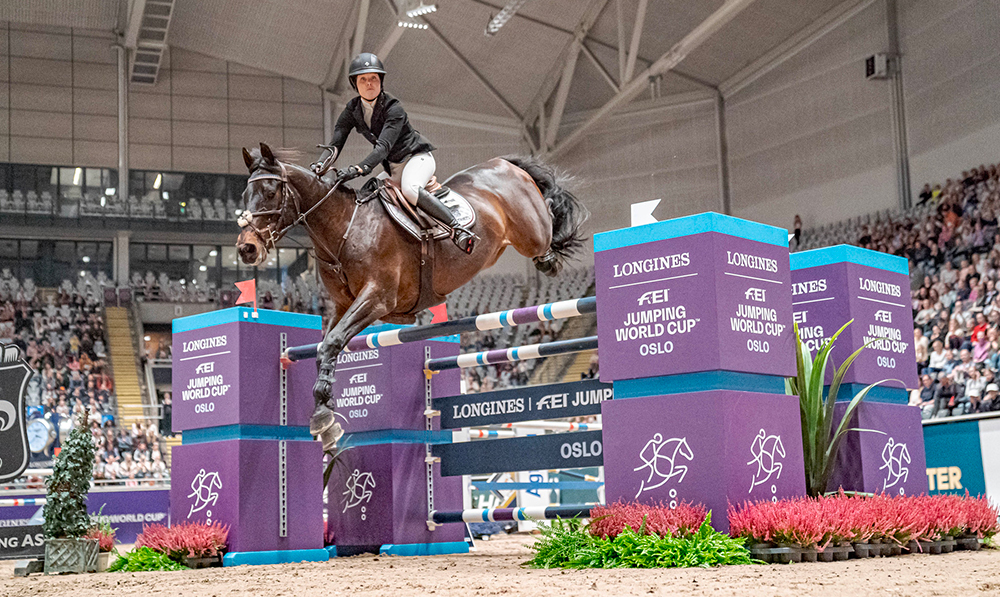
The season of major outdoor shows is drawing to a close, horses are returning to the halls and riders are getting reacquainted with millimetre-perfect lines. This Sunday, 11 October, Oslo kicks off the 2026-2027 Longines FEI Jumping World Cup Western European League. A competition born in 1978 in the mind of a Swiss journalist, which has since become one of the monuments of world showjumping. And a Norwegian leg which, for more than thirty years, has made a speciality of launching hostilities. With, this year, a nice nod to history: the final will be held in Gothenburg, where it all began.
Winter Is coming, and so Is the serious business
Barely have the last major outdoor meetings wrapped up and European showjumping already has a date with winter. Direction Oslo, where the circuit’s best riders return to covered arenas, tight turns and that very particular indoor-show atmosphere. This Sunday, the Norwegian capital opens a new World Cup season, with Gothenburg already in its sights.
Indoor has its own codes. Some horses transform there, others tense up. Riders have to adjust their riding, and sometimes their ambitions too. You can shine all summer on Europe’s finest arenas and discover, in October, that a more compact arena brings very different problems.
In Oslo, points will already have to be put on the board. Because while the Gothenburg final, scheduled for March 2027, still feels a long way off, tickets to Sweden will not be handed out on reputation.
The World Cup is a competition of patience, calculation and consistency. A circuit where you need to know how to win, but also how to choose your battles. And where a bad afternoon in Scandinavia can end up weighing heavily when the accounts are settled.
Max Ammann, the journalist who wanted his world cup
To understand how it all began, you have to go back to a time when international showjumping did not yet look anything like the calendar we know today.
We are in the 1970s. The major shows exist, the champions too, but showjumping is still missing a real circuit capable of linking several competitions around a common goal.
A Swiss journalist, Max Ammann, then began to imagine a format inspired by what already existed in other sports, particularly skiing. The initial idea was ambitious: to bring the major shows together in an international competition, like a Formula 1 championship. But the constraints linked to transporting horses quickly forced a different structure. It would be a league system, with qualifying legs and one major final.
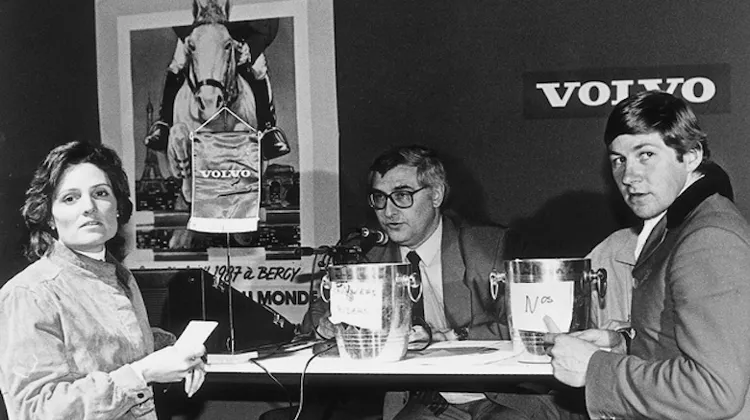
In 1978, Ammann presented his project to Fritz Widmer, Secretary General of the International Equestrian Federation. The idea made its way to Prince Philip, Duke of Edinburgh and then president of the FEI, who received the Swiss journalist at Windsor. The project earned his support, and that of Volvo, the competition’s first major partner.
The first season was launched in 1978-1979. And it was in Gothenburg, Sweden, that the very first final took place, won by Austria’s Hugo Simon with Gladstone.
What followed reads like an inventory of world equestrian heritage. Ian Millar and Big Ben, John Whitaker and Milton, Rodrigo Pessoa and Baloubet du Rouet, Meredith Michaels-Beerbaum and Shutterfly: all combinations who helped turn this final into one of the most coveted titles in showjumping.
Some built their legend there. Others saw their chance slip away because of a rail, a refusal or a few seconds too many.
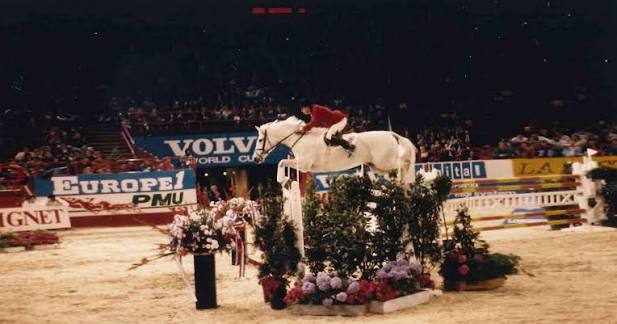
And then there are those who, like John Whitaker, could almost have opened a Volvo dealership with all the cars won back when the Swedish manufacturer offered one to the winner of each leg.
Nearly half a century later, the format has evolved, the sponsors have changed and the circuits have multiplied. But Ammann’s idea is still standing. Not bad for a project born in the mind of a journalist.
Oslo, thirty-five years of history and a few deep-rooted habits
In the history of the World Cup, some cities have earned a special status. Gothenburg, of course, with its inaugural final. London, Mechelen or Bordeaux, which have become landmarks of the European winter. And then there is Oslo.
The Oslo Horse Show was founded in 1991 inside the Oslo Spektrum, in the heart of the Norwegian capital. From 1992, the show joined the World Cup circuit and gradually established itself as one of the major fixtures on the Scandinavian calendar. After moving to the Telenor Arena from 2009, the event settled in 2025 at X Meeting Point, in Hellerudsletta, north of Oslo.
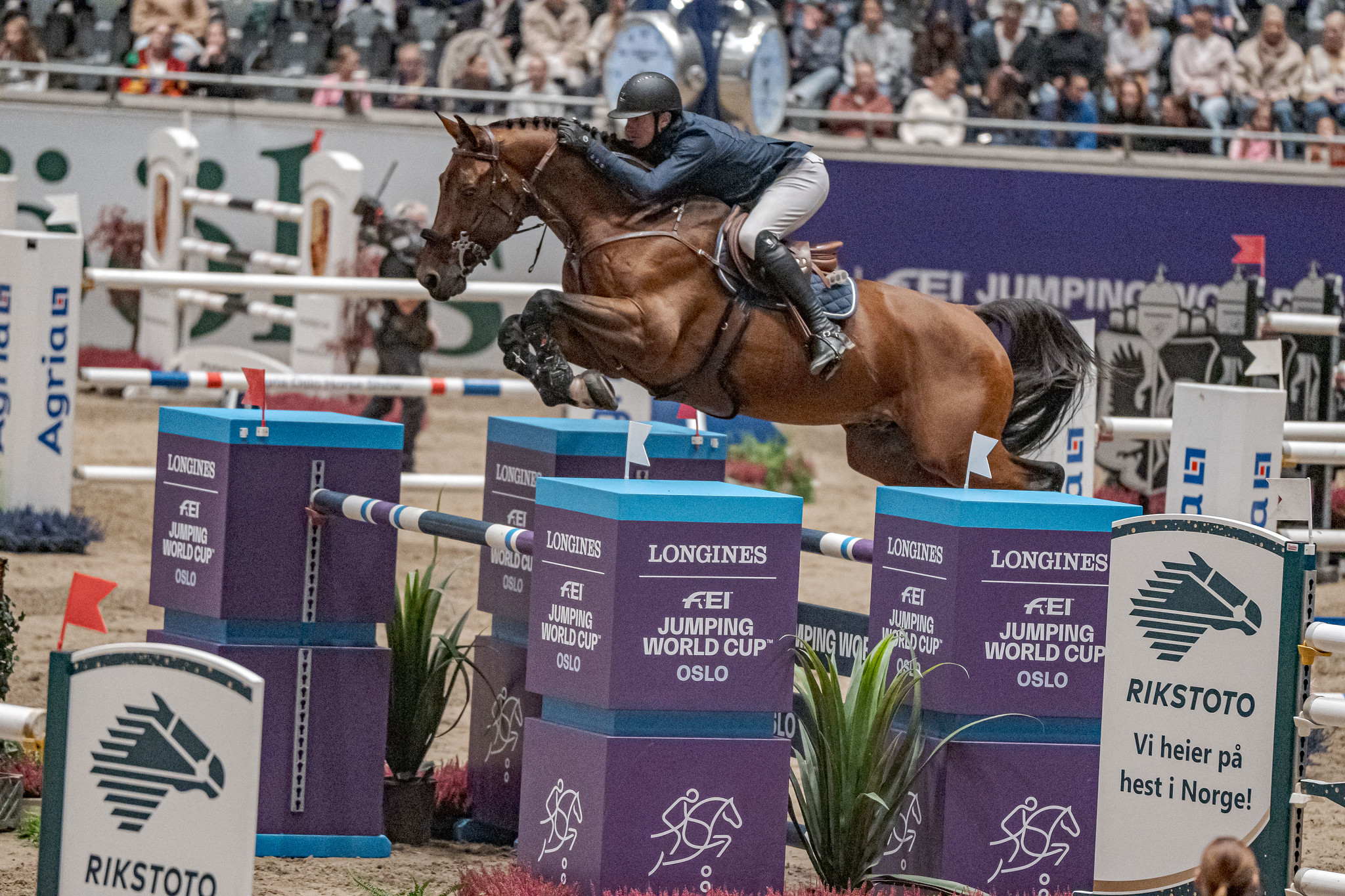
Over the years, the biggest names in showjumping have all taken their turn there. Belgians, in particular, remember Gregory Wathelet’s victory with Bond Jamesbond de Hay in 2024, after a perfectly controlled jump-off. A reminder that the black, yellow and red riders also know how to enjoy the Norwegian winter. Especially when they leave it with a win.
Thirteen legs, one destination
This 2026-2027 season, the Western European League will feature thirteen legs across ten countries. After Oslo, the circuit will move on to Lyon, Verona, Stuttgart, Madrid, La Coruña, London and Mechelen, before resuming in January in Basel, Leipzig and Amsterdam. Bordeaux and Helsinki will complete the calendar.
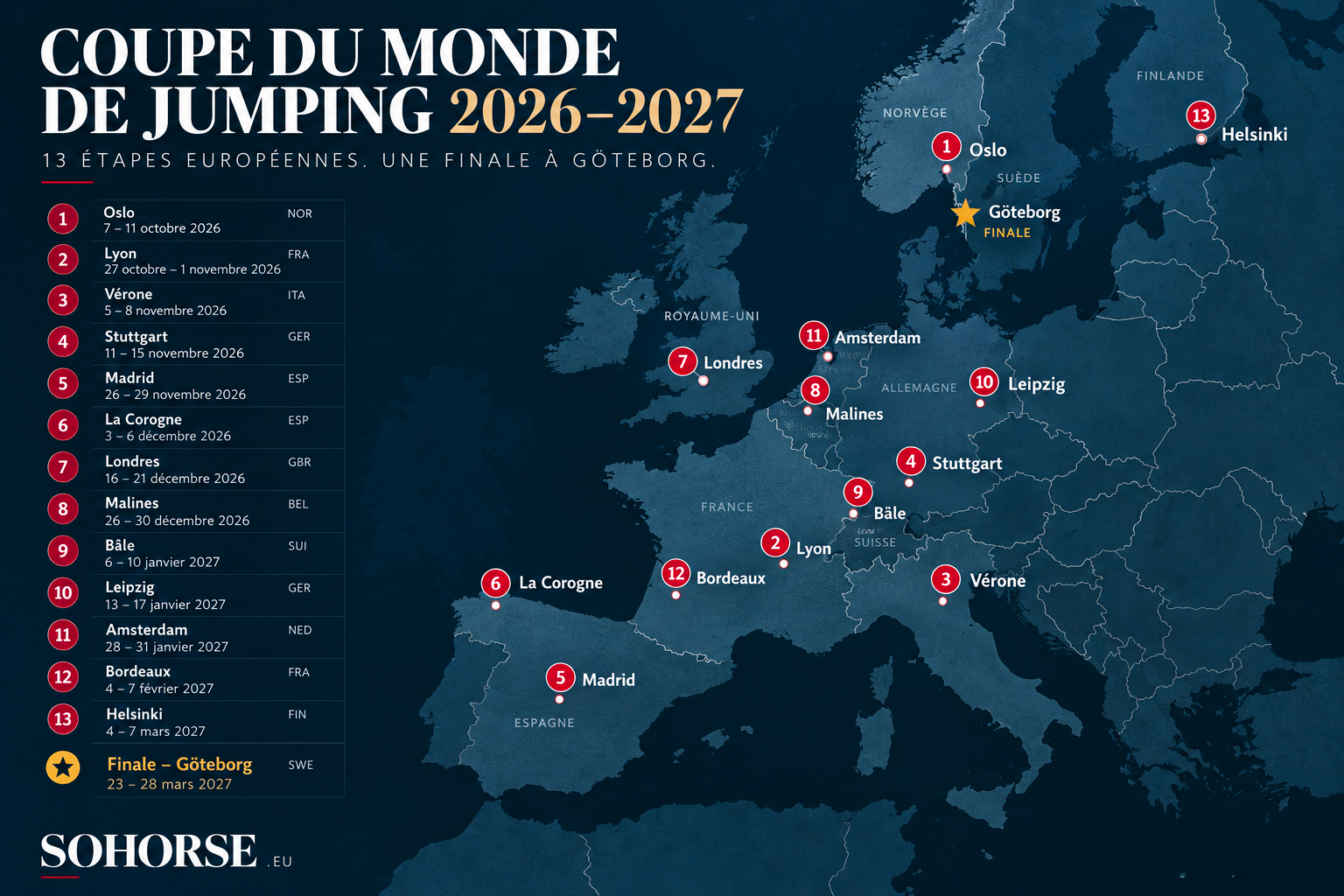
A packed programme, which will force riders to make choices.
Only each rider’s seven best results will count towards the overall standings. A format that allows riders to choose their shows, but leaves very little room for repeated underperformances.
At the end of the road lies the Gothenburg final, scheduled from 23 to 28 March 2027. A particularly symbolic return to the source, since the Swedish city hosted the very first final in history in 1979. The Gothenburg Horse Show will also celebrate its fiftieth anniversary in 2027.
To get there, simply lining up fast rounds will not be enough. Riders will have to manage their horses’ form, travel, recovery and the other sporting goals of the season.
That is also what makes the World Cup interesting. Unlike a championship contested over a few days, it forces riders to build a campaign. A single victory can create momentum, but consistency is often what makes the difference.
Guerdat, von Eckermann and Spits: Oslo is not just making up the numbers
For this opening leg, the Norwegian line-up is enough to make mouths water. Steve Guerdat, freshly crowned individual world champion in Aachen last August, will be there. The Swiss rider knows the World Cup particularly well: he has already won three finals and could become the first rider in history to claim a fourth.
Facing him, there will be some serious customers. As many candidates to succeed Kent Farrington. Henrik von Eckermann, Martin Fuchs and Marcus Ehning, all former winners of the final, are also among the entries. Suffice to say, no one is planning to ease into the season.
And the Belgians will not be there to admire the scenery. Grégory Wathelet, Koen Vereecke, Mathieu Bourdeaud’Hui, Ignace Philips, Kasper de Boeck, Aaron Tijskens and Thibeau Spits. The individual world silver medallist and team silver medallist in Aachen this summer will also be in the start list. At just 24, the Belgian arrives with a new status and the chance to confirm, from the very first indoor outings, that he now belongs among the big boys.
Between indoor specialists, former winners and the new generation, the battle promises to be stacked. And while the season is long, a win in Oslo is always a pretty elegant way of letting the competition know you are not just there to rack up air miles.
A World Cup that refuses to grow old
International showjumping has changed enormously since 1978. Prize money has grown, horses have become increasingly specialised athletes, calendars have become more packed and private circuits have reshuffled part of the deck.
And yet the World Cup remains apart.
On Sunday, the first winner of the season will add their name to the Norwegian roll of honour and take an early lead in the race to Gothenburg.
There will still be several months of competition, thousands of kilometres to cover and a few jump-offs capable of turning a ranking on its head.
The World Cup begins a new season. Forty-eight years after its birth, it still has that ability to bring the best together around the same obsession: being there when the accounts are settled in spring.
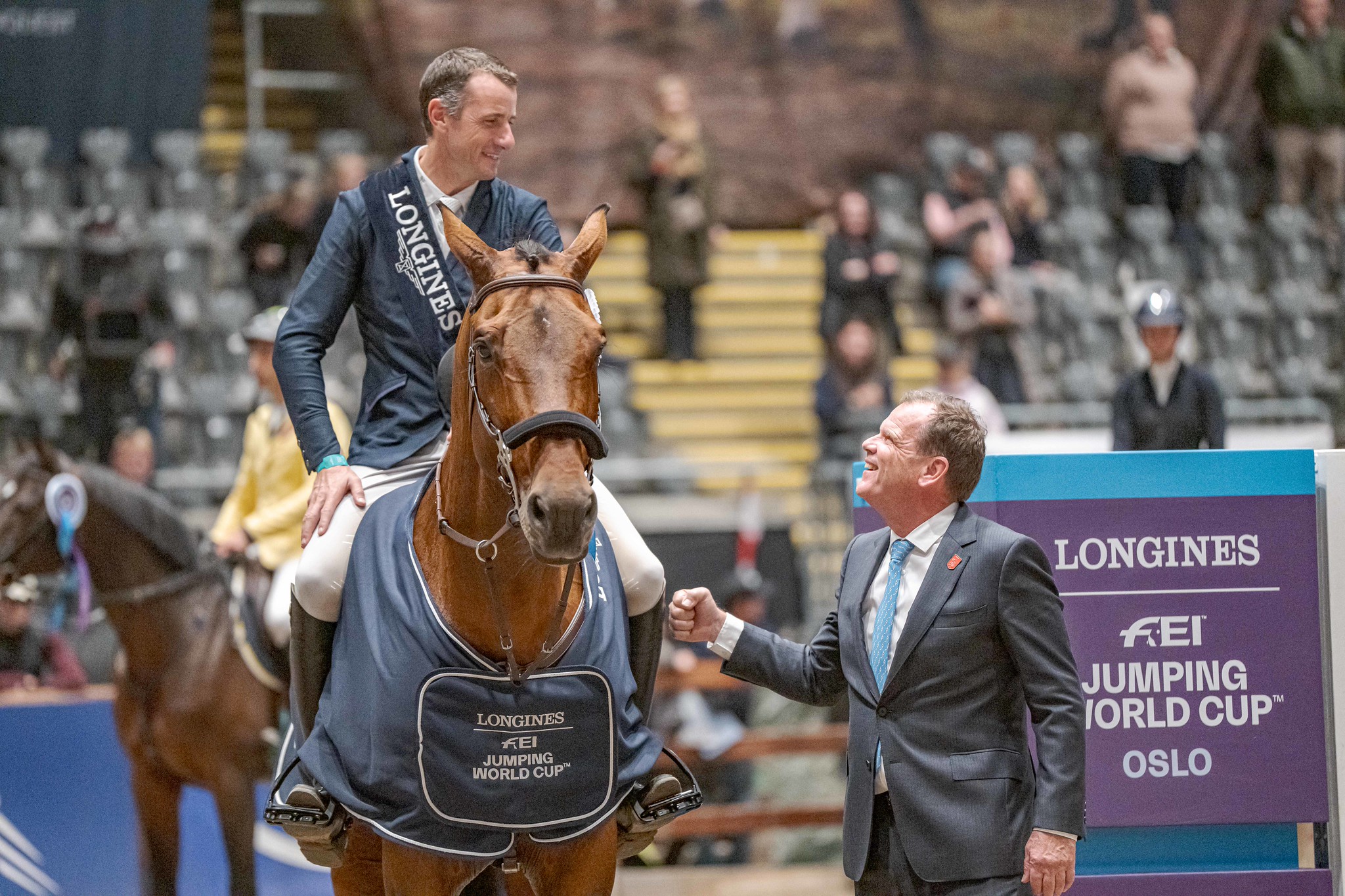
(Photo cover: Victoria Gulliksen (NOR) & Mistral van de Vogelzang. ©©FEI/Kim C Lundin)