

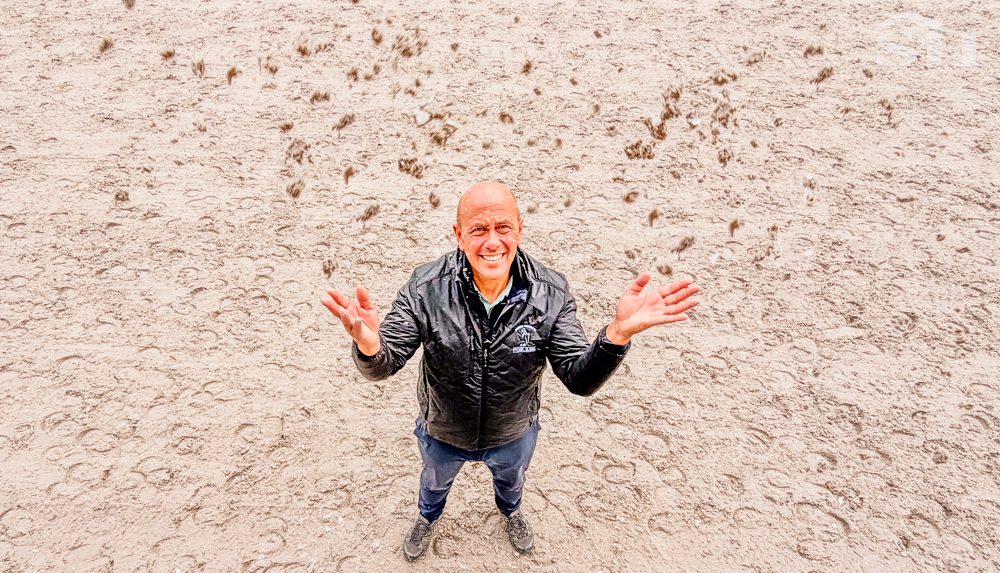
He has never been world number one. He has never won a 5* Grand Prix. And yet, without him, a large part of the international circuit wouldn’t run smoothly. Bart Poels, a craftsman working in the shadows, shapes the arenas where champions shine. From Kampenhout to the Olympic Games, this is the portrait of a man who turned sand into a science… without ever losing the feel.
Sand in his veins
In the Poels family, it all starts in a sand quarry. Literally.
A father, sand as far as the eye can see, and a boy climbing onto a pony at age 12. The scene is set.
In Kampenhout, a small Belgian stage turned into an improvised laboratory, Bart gets his hands dirty. Local competitions, first arenas, first mistakes too. Back then, no algorithms, no sensors. Just instinct. Mostly his father’s.
“Like a cook,” he says today. Except here, you don’t mix vegetables,you mix grain sizes.
In 1991, the quarry is sold. The patriarch, Guido, makes a clear decision: it will be arenas, full time.
Leipzig, the snowball Effect
There’s always a turning point.
For Poels, it comes in 2002. Leipzig. World Cup.
First major project. First global exposure. And then everything accelerates. Planes, containers, time zones. The sand from Kampenhout now travels more than some riders.
“Tchak, tchak, tchak,” he says, moving his finger from side to side. Translation: things explode in every direction.
Today, his playground stretches from China to the Emirates, via Prague and Shanghai. With one constant: adapting the recipe.
Because an arena in Hong Kong, under tropical humidity, has nothing to do with a rectangle in the desert of Dubai.
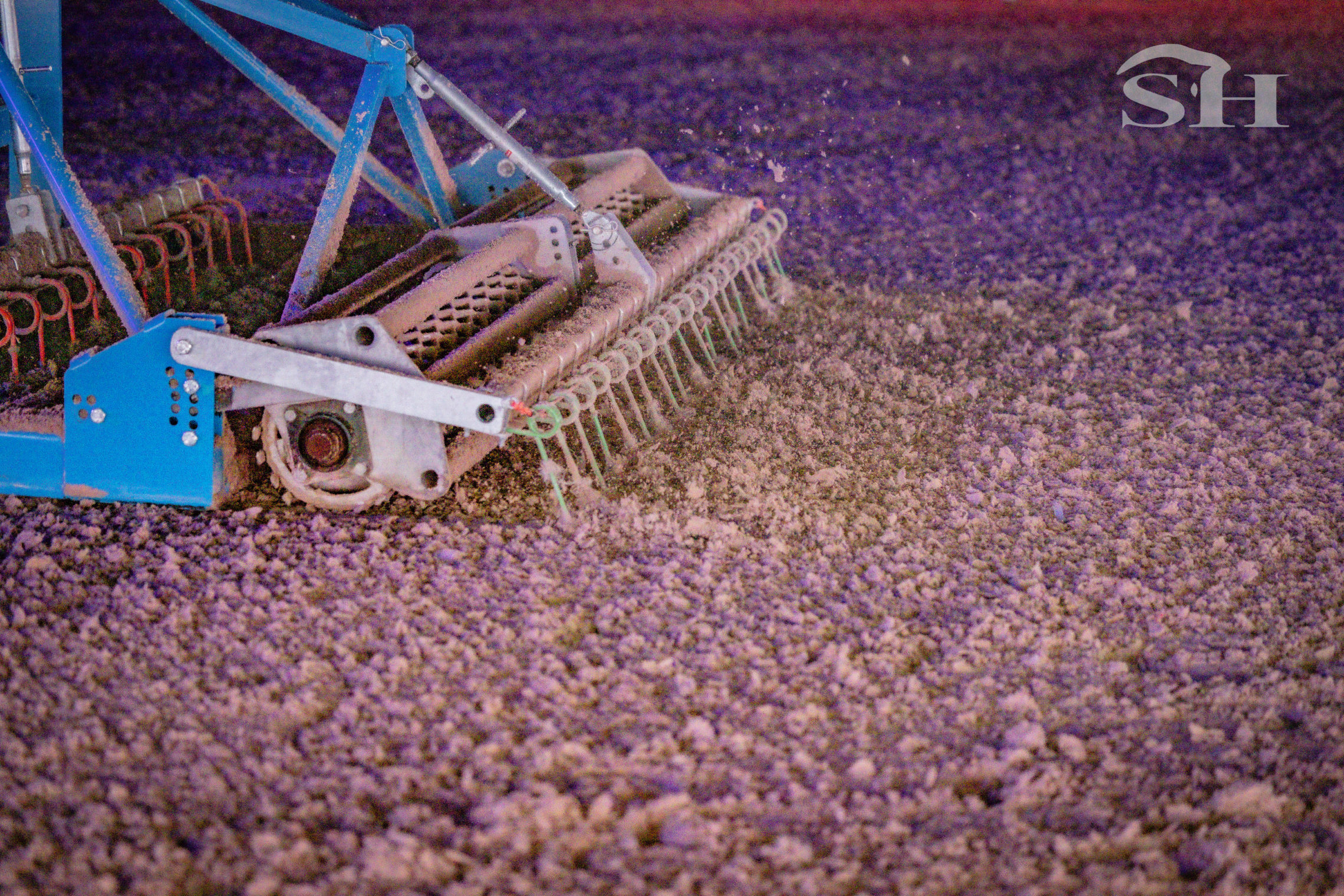
An arena, a living organism
For Poels, an arena is never fixed.
It’s living matter.
Too dry, it slips. Too wet, it sticks. Too hard, it breaks. Too soft, it exhausts. And in the middle of it all, 600 kilos of horse landing after a 1.60m effort.
“If the horse doesn’t feel good, it won’t show its potential.”
There it is.
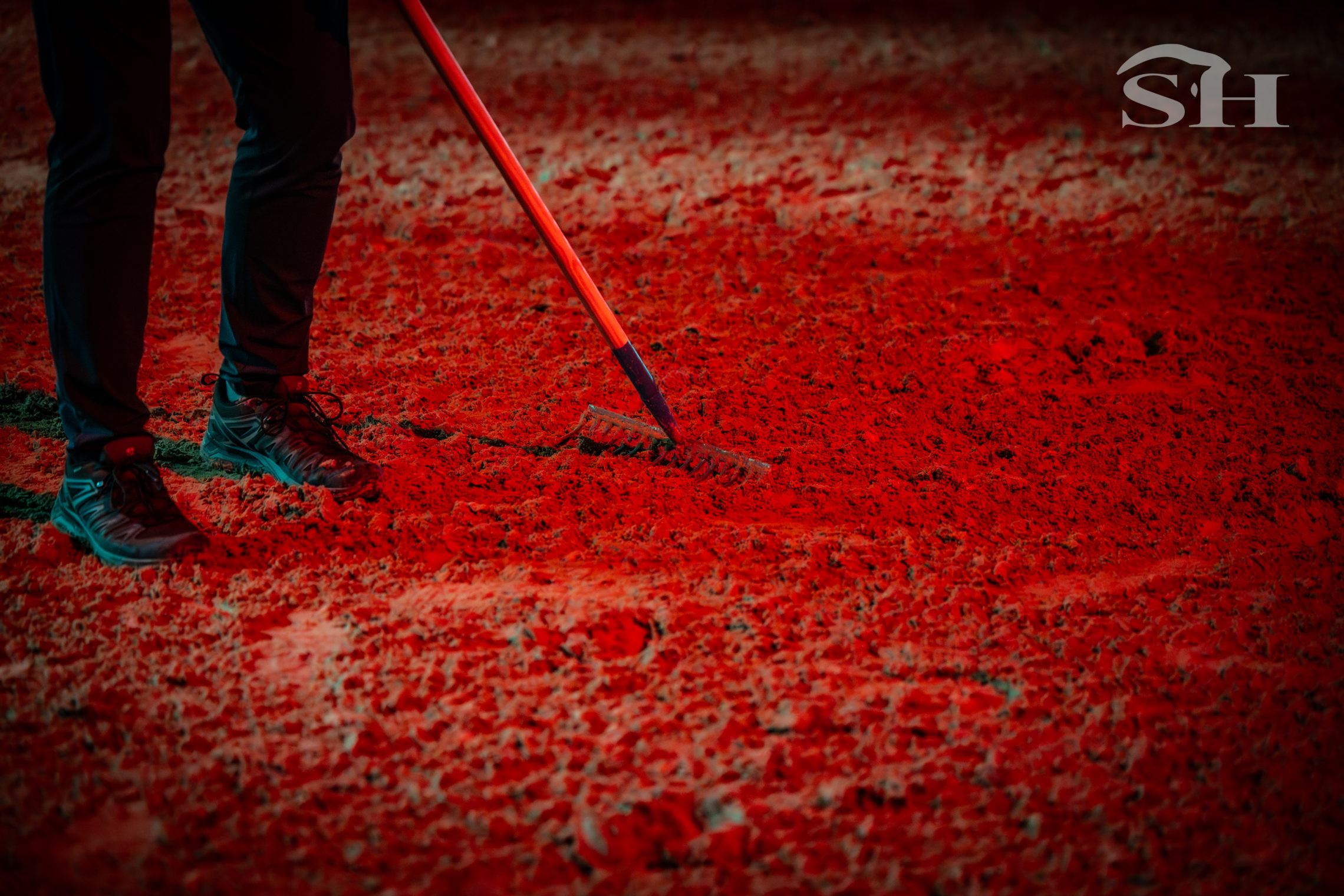
So adjustments are constant. Water. Fibers. Geotextiles. Testing. Again. Always. At home, two arenas serve as a permanent laboratory, one to validate, the other to compare.
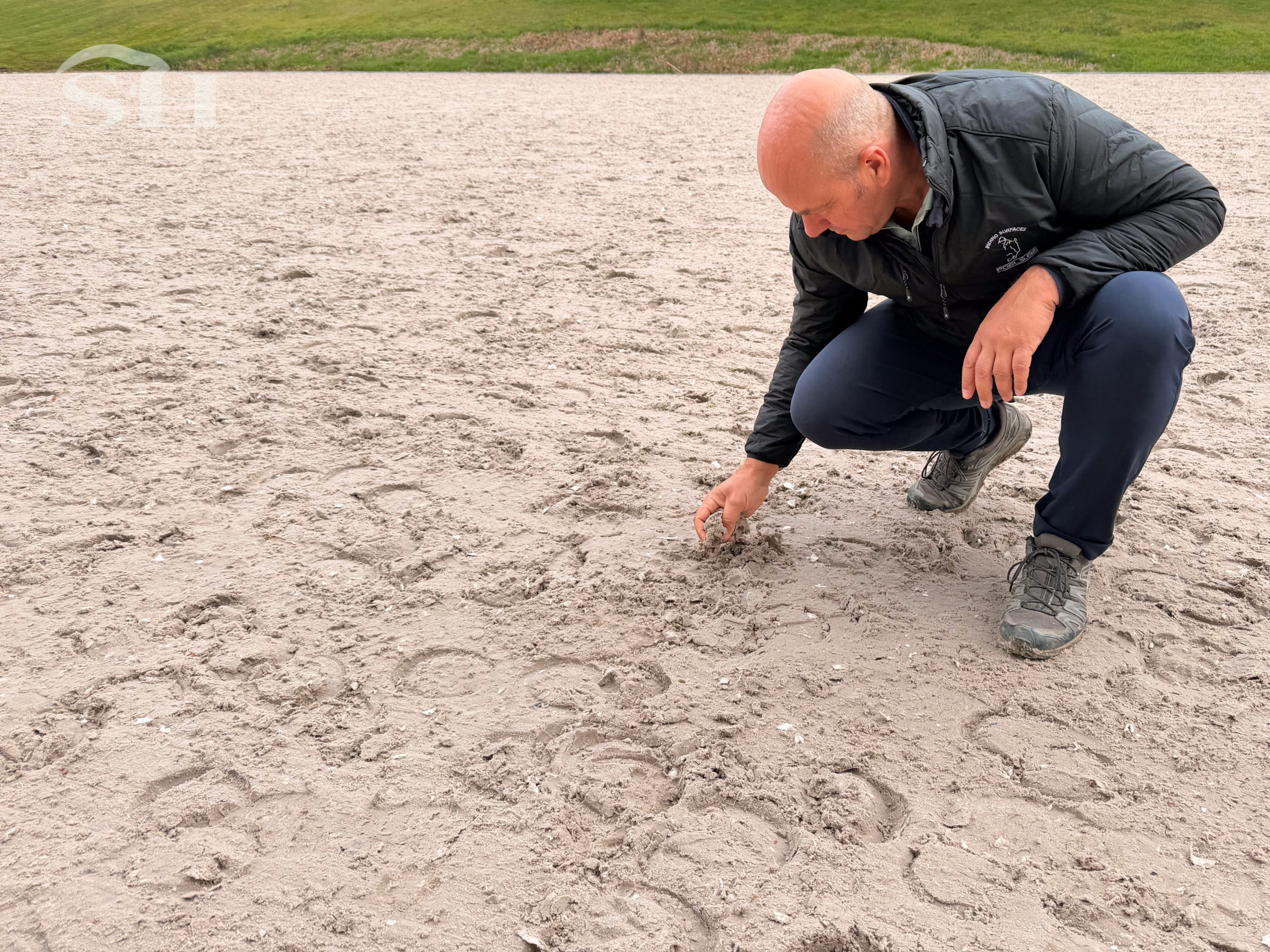
Nothing is left to chance. Even if everything starts with a feeling.
And the more difficult a horse is, the quicker it’s put onto the arena. To see its reaction. Not the horse’s, the ground’s.
From Feel to Data
The profession has changed. Radically.
Yesterday: nose, hand, experience.
Today: microscopes, testing machines, precise analyses.
Every type of sand is examined. Round, angular, semi-angular. Each grain tells a story—and above all, a behavior.
Poels receives samples from all over the world: China, the United States, the Middle East. He tests, compares, validates… or rejects.
Because no, white sand is not “just white sand.”
And sometimes, when local material isn’t enough, it has to be imported. By boat. In hundreds of big bags.
In Hong Kong, some arenas require more than 300 bags. Others reach 1,000. XXL logistics for millimetric precision.
The Olympic Man
Three Olympic Games to his name: Hong Kong (2008), London (2012), Paris (2024).
Not bad for someone who still describes himself as a “regional 1.25m rider.”
His role: to guarantee fairness. The first and the last rider must jump under the same conditions. Otherwise, everything collapses.
Mandatory breaks when the surface overheats. Constant adjustments. Permanent monitoring.
Here, mistakes don’t exist. Or rather, they come at a high cost.
Choosing to stay small
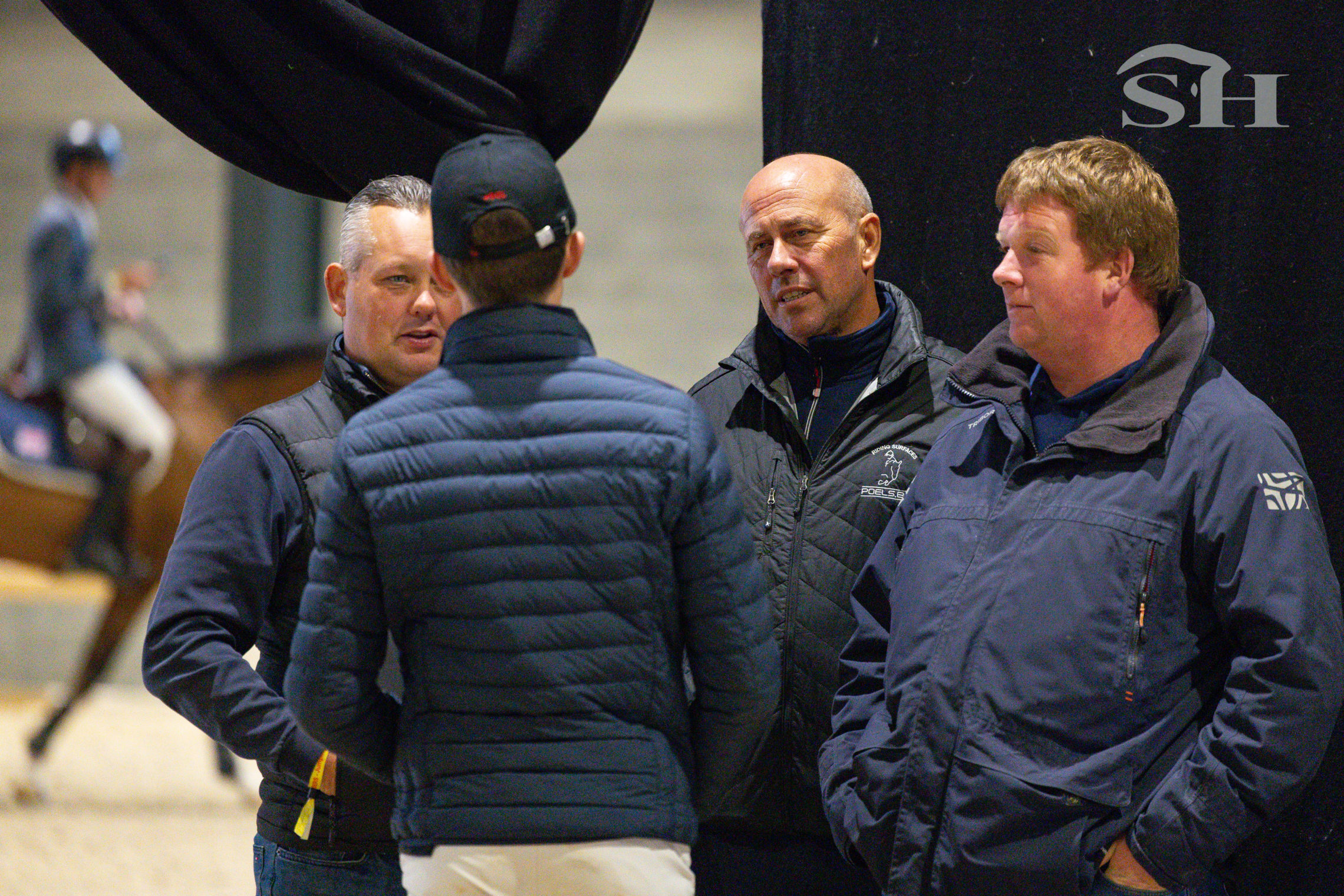
Six people. That’s all.
In a world of multinationals, Poels champions flexibility.
“The big ones are like the Titanic. We’re a zodiac.”
A perfect image.
Responsive. Agile. Able to say no. Able to test. Able to adapt.
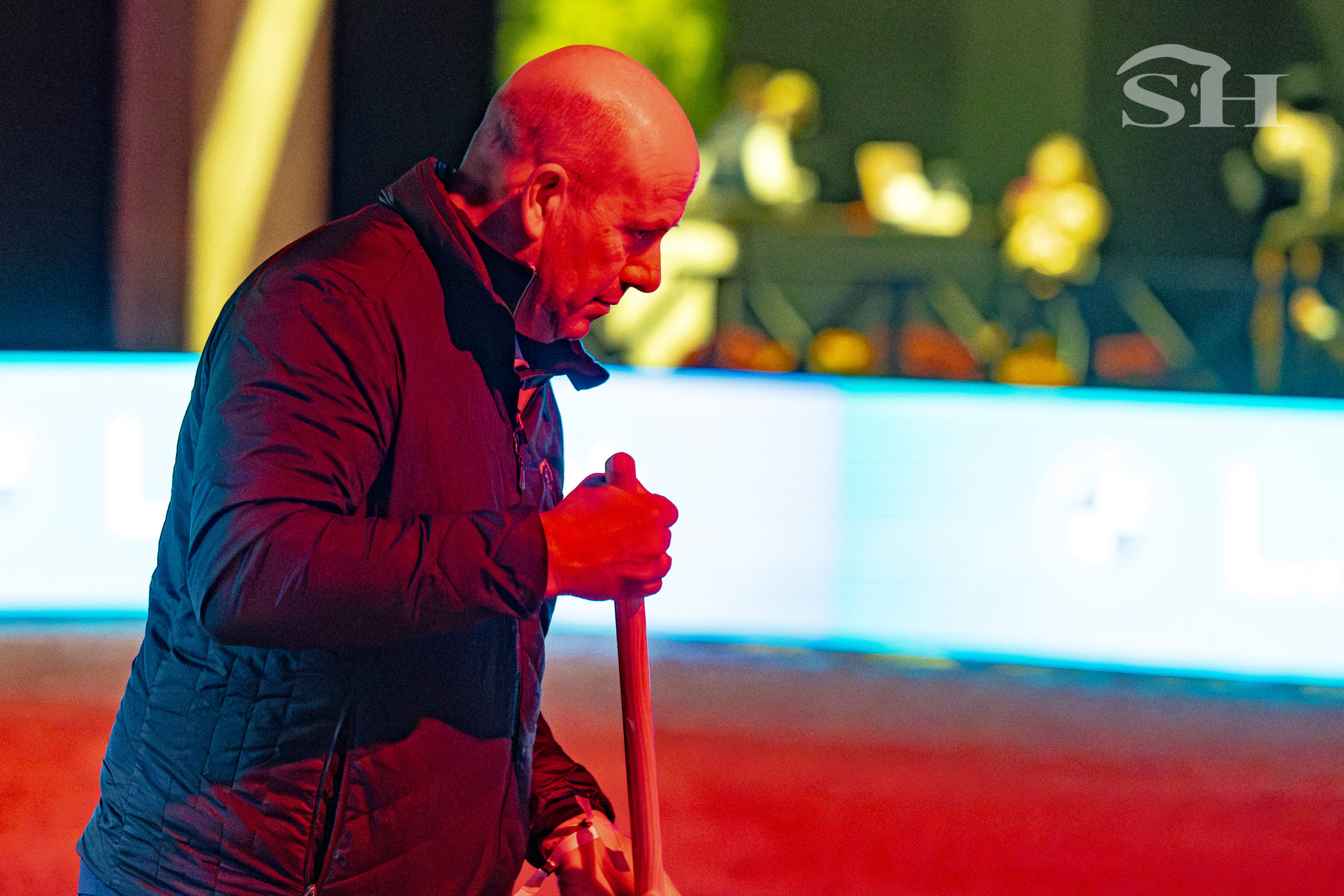
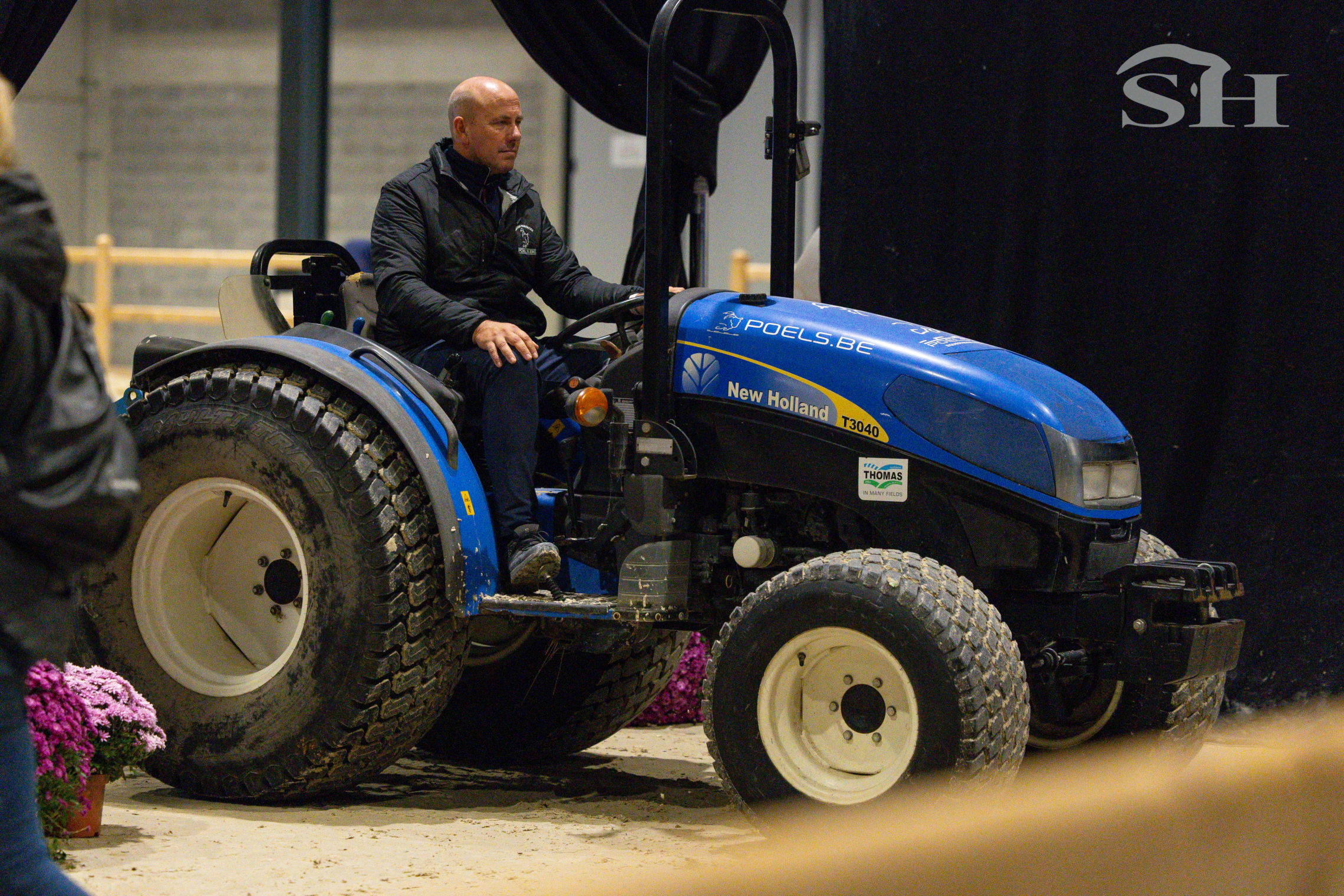
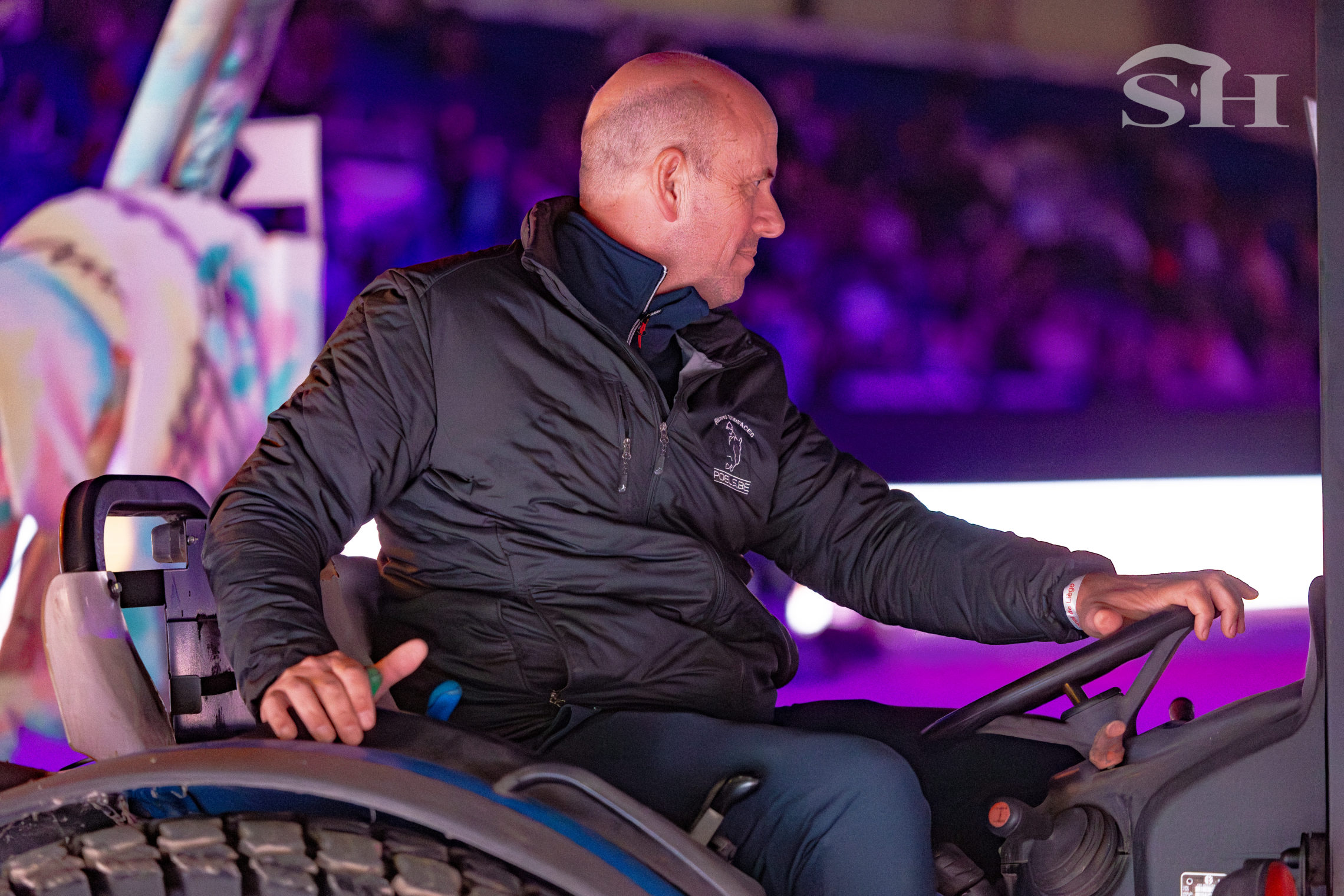
And above all, able to be on the arena itself, driving the tractor. Because credibility with riders is earned that way too.
The future: between ecology and scarcity
The next challenge is already here: microplastics.
Fibers, geotextiles… everything is being questioned. Ecology is entering the arena. And sand itself is becoming an increasingly rare resource.
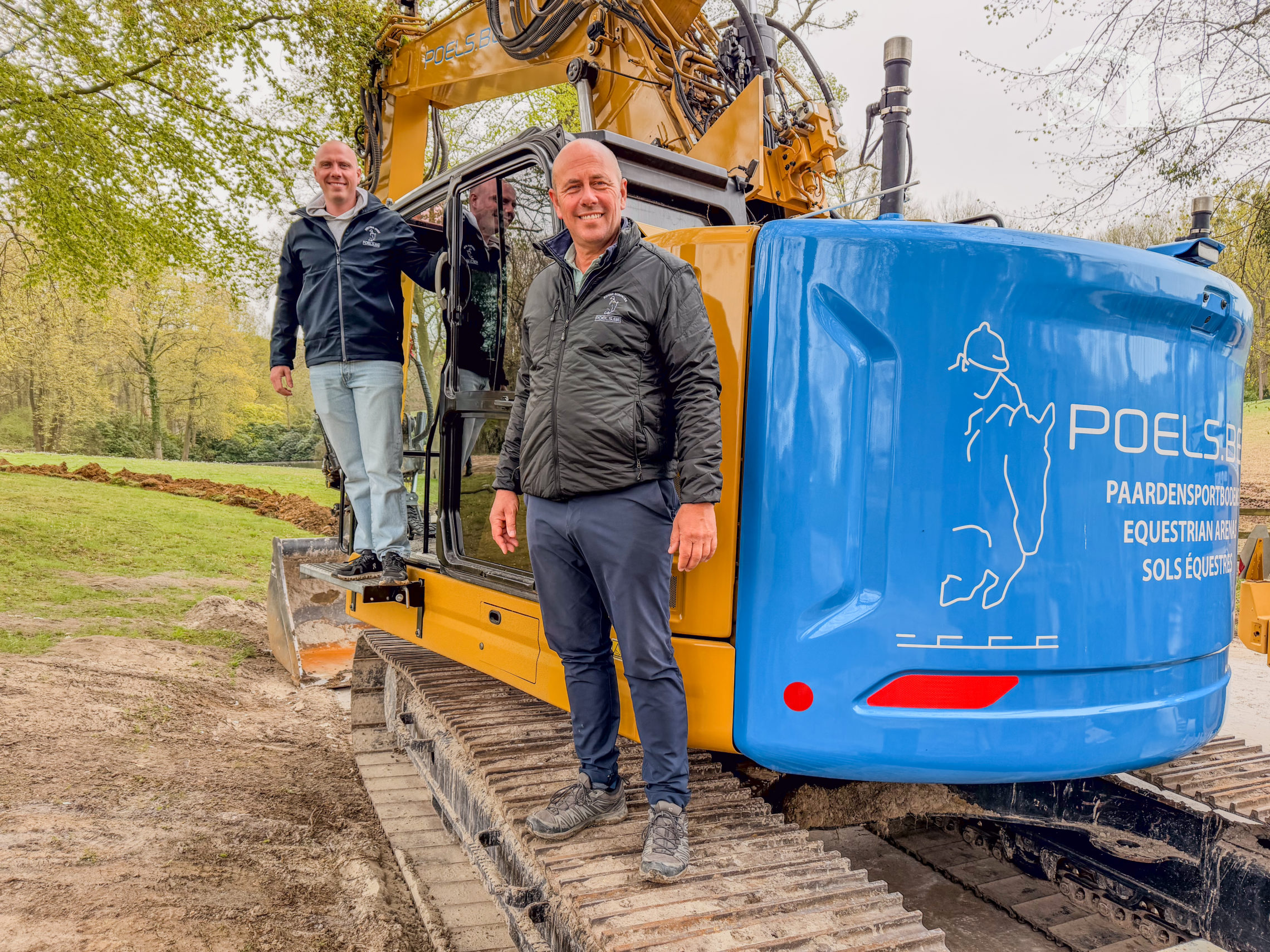
The profession will evolve again. Inevitably. The third generation already has its hands in the sand. The next chapter will be for Tibo. A little later.
But one thing will not change:
the need for balance.
Bart Poels doesn’t seek the spotlight.
He prefers the surface, the one that silently determines the fate of a round.
And while riders raise their arms, he watches. Adjusts. And starts again.
Because deep down, in this sport, everything begins… with the ground.