


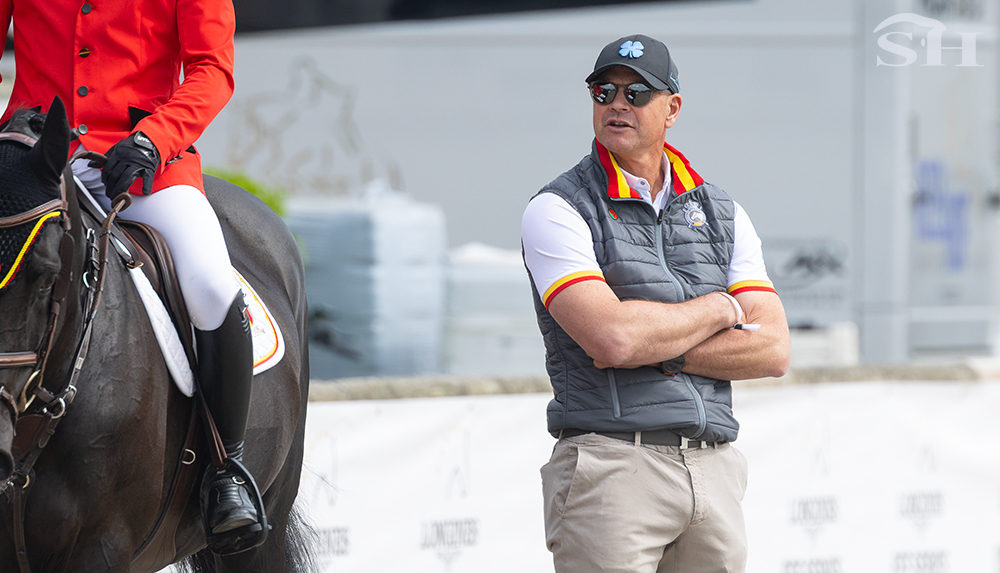
Six months. Barely enough time to replace the carpet in a federation in crisis. Yet since taking over the Spanish jumping team, François Mathy Jr has already brought a bit of order back to a house still shaking after the Paris Games. Last weekend, the Belgian even highlighted his first major achievement: victory in the 3* Nations Cup in Lisbon. More than just a trophy, almost a symbol. The symbol of a group of riders finally moving in the same direction again.
Lisbon, a first trophy and the first real signal
A Nations Cup alone doesn’t transform a sporting program. But it often says a lot about the state of a team. And for Spain, the success in Lisbon felt less like a flash in the pan and more like the first positive progress report.
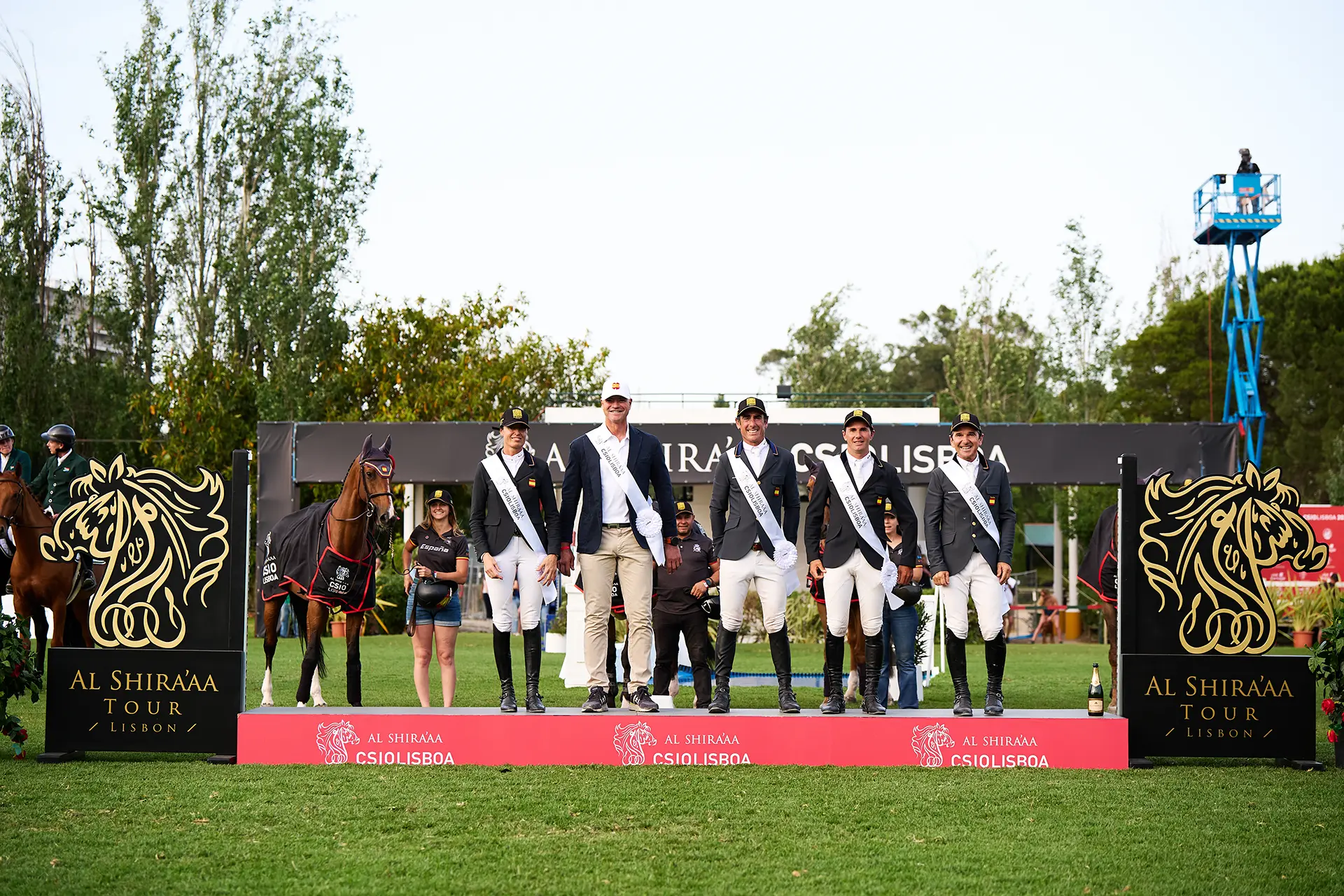
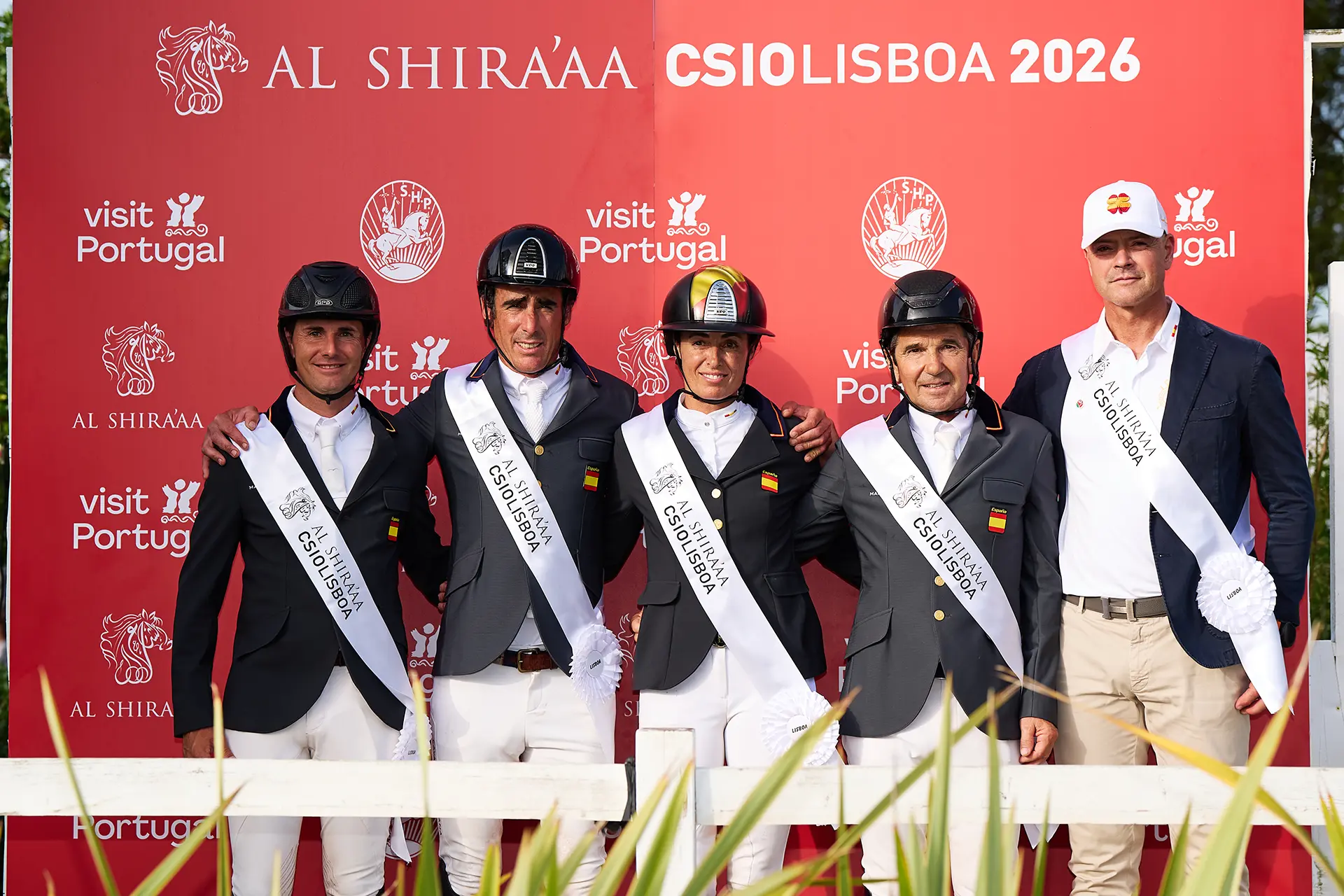
With a squad made up of Pilar Lucrecia Cordon, young Pello Elorduy Ibarzabal, de Kevin Gonzalez de Zarate Fernandez and Jesus Garmendia Echevarria, Spain secured a victory that already validates part of the work launched by Mathy.
« I’m super happy with last week’s result the Belgian says. Before stressing what seems to have become his number one priority: the atmosphere. “It’s a bit the result of a really good team spirit and all the riders fully committing themselves.” »
For several weeks now, the man from Liège has been navigating a brutal calendar: Lier, Lisbon, St. Gallen, Deauville, Sopot… Four Nations Cups in three weeks, invitations to manage, horses to preserve, and above all, a road already leading toward Aachen and the World Championships.
The kind of puzzle where a chef d’équipe spends more time on the phone than sleeping.
Repairing the post-Paris fallout
When Mathy arrived in Spain, the issue was more mental than technical. After Paris, several riders had drifted away from the federation. Some no longer even wanted to hear about the national team, while others were considering changing nationality altogether.
« When I arrived, there was a certain tension. Some riders were in disagreement with the Federation and no longer wanted to compete for the team, ” he explains.
is method? No revolution. No grand speeches. Just dialogue. A lot of dialogue.
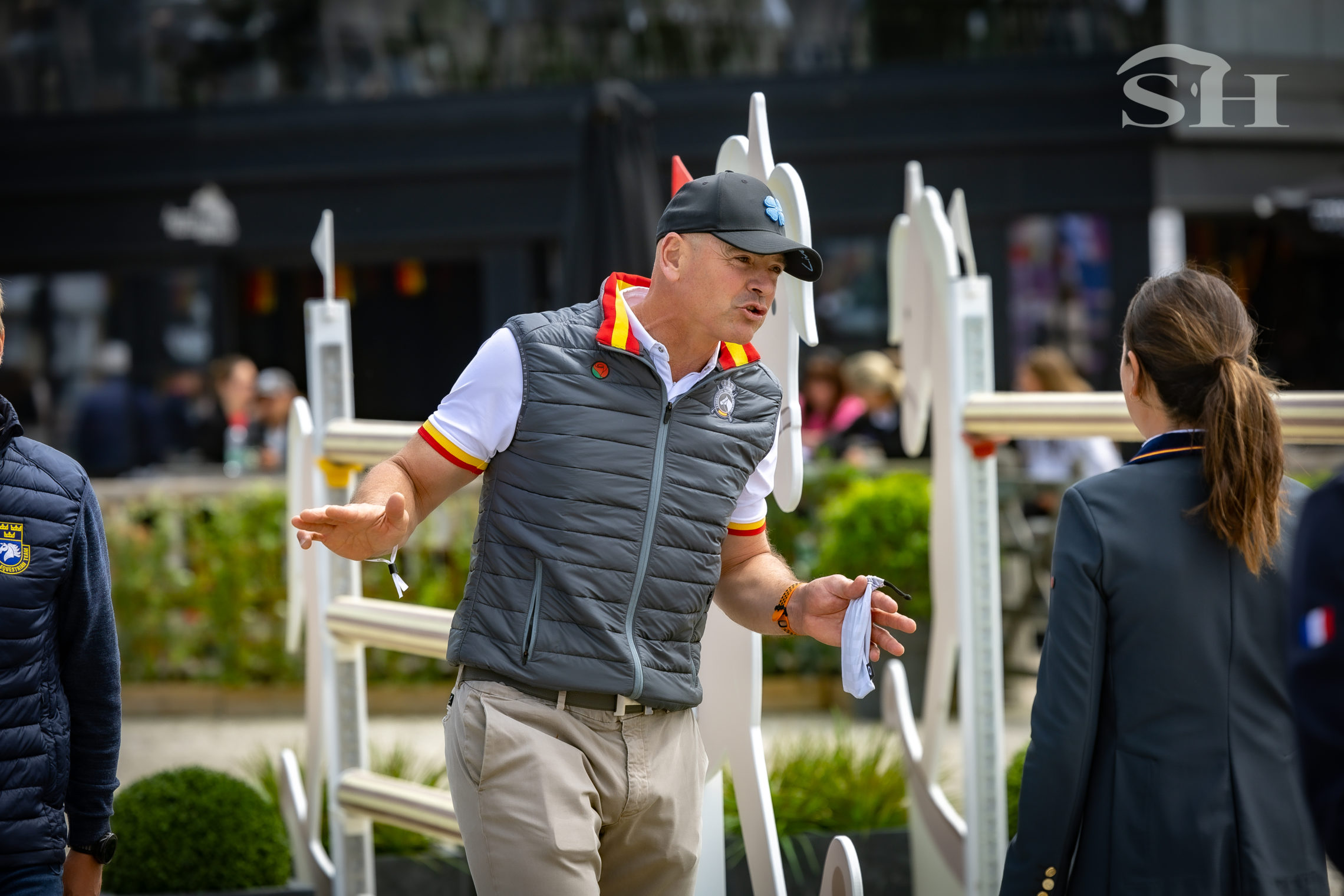
Even before officially taking up the role, the Belgian met the riders one by one. Not to settle old scores from previous seasons, but to bring everyone back around the same project.
« My idea was to say: “We move on. We stop looking backwards and start looking ahead.” »
The message seems to have landed. Today, almost all the key riders have rejoined the Spanish setup. And Mathy hasn’t given up hope of bringing the last few lost sheep back into the fold. In a sport where egos sometimes travel business class, that’s no small detail.
The Belgian uniting the Spaniards
Paradoxically, the fact that he’s foreign, though perfectly bilingual, may actually have worked in his favor.
« The fact that I was completely outside the groups or clans helped ,” he admits. “ And I already knew a lot of the riders from competing alongside them. »
The comparison with Belgium is no coincidence either. Mathy himself points to the Belgian system, where a foreign chef d’équipe can sometimes bring more objectivity and less internal politics.
The result? The Spaniards seem to have rediscovered a word not always naturally associated with modern Nations Cups: collective.
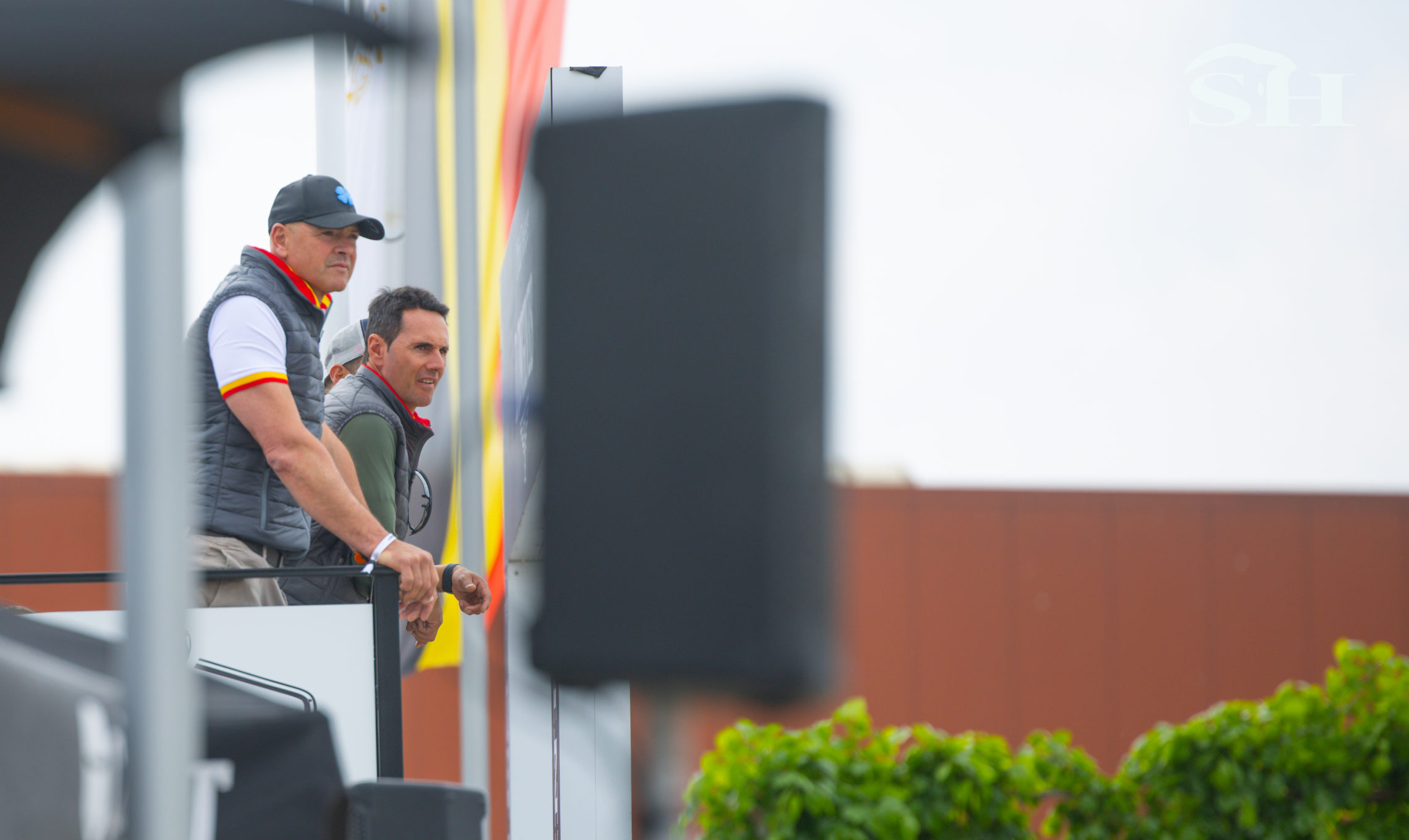
Team dinners. Conversations around the paddock. Shared work. Nothing revolutionary on paper, but rare enough these days to deserve mentioning.
And one promise has already been kept: " I said that after the first Nations Cup win, I’d be the one paying the next day. Well… that’s already happened. »
The restaurateurs of Lisbon thank Spain.
Opening the door to younger riders
The other major project for Mathy is renewal.
The former Belgian rider wants to broaden Spain’s base, create opportunities for less established profiles and prepare the future rather than endlessly recycling the same names.
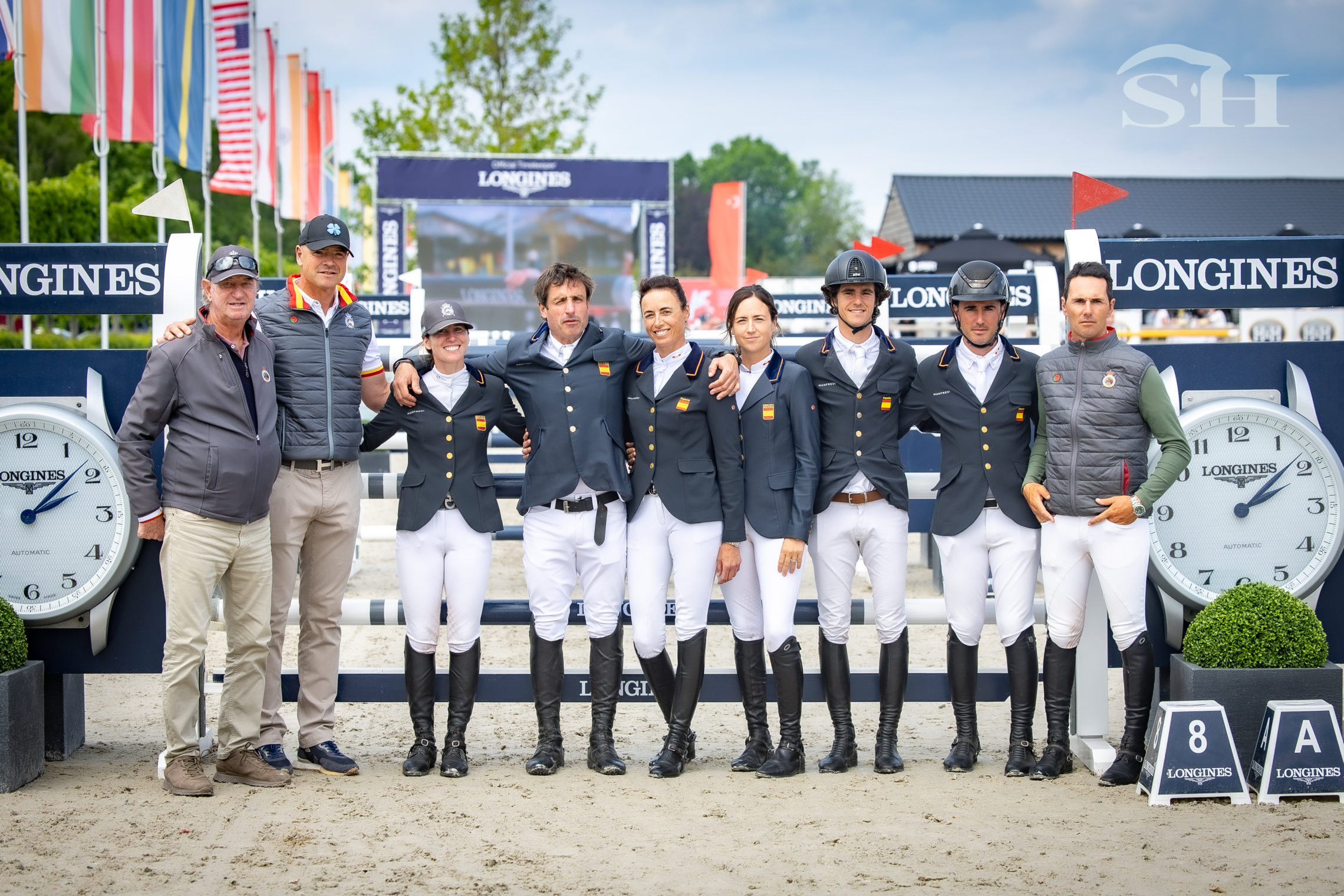
The success in Lisbon tells that story too: alongside experienced riders like Pilar Cordon and Jesus Garmendia, Mathy has already started injecting younger or less established combinations into top-level international competition.
“I’m trying to give opportunities to younger riders,” he explains. “This year, I really want to open doors.”
The EEF circuit, with its requirement to include an U25 rider, perfectly supports that strategy. And a few surprises are already beginning to emerge. Mathy notably mentions Imma Roquet Autonell, impressive recently in Hamburg, as well as several riders seen in Rome and Madrid.
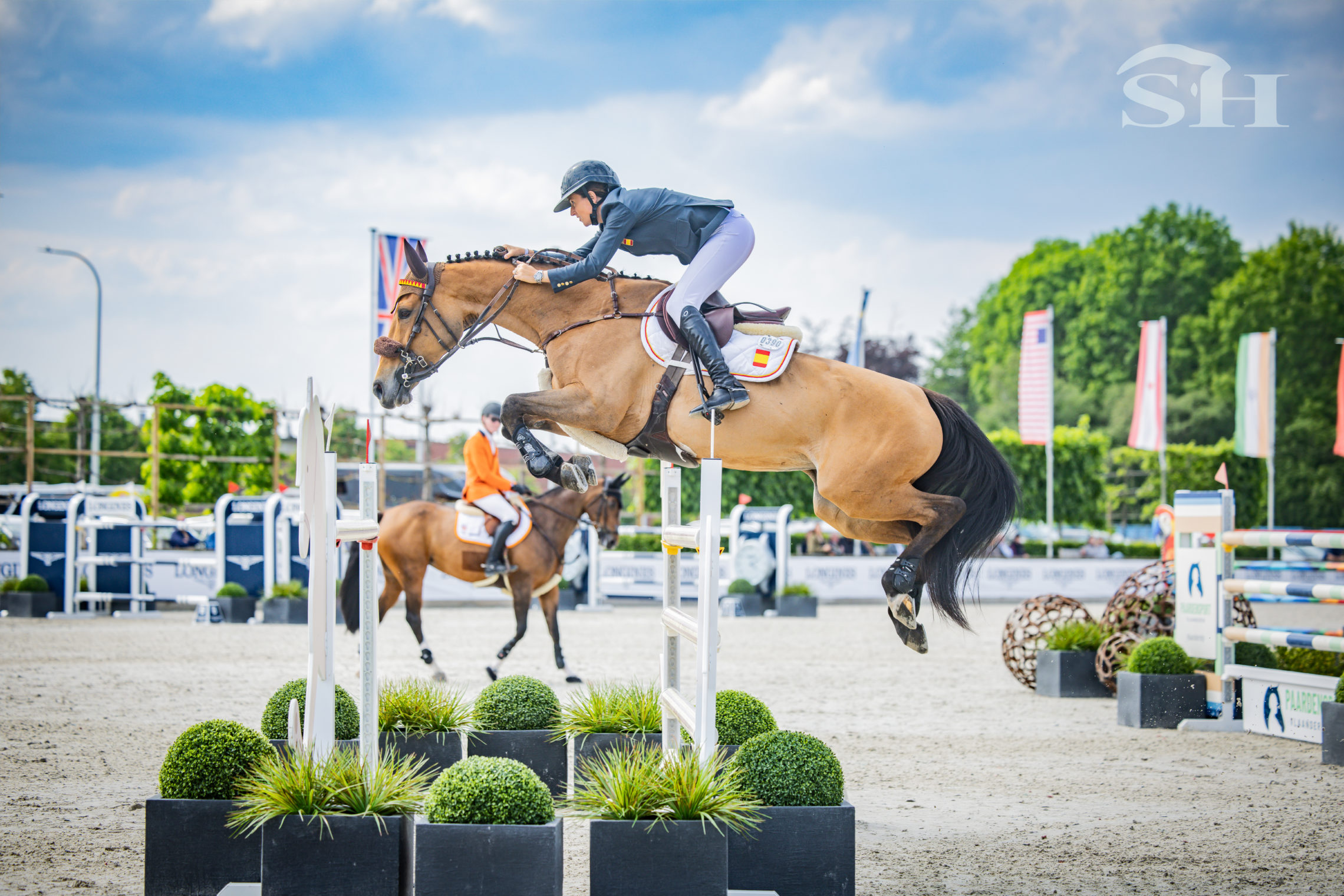
Le potentiel existe. Mais le patron des troupes espagnoles garde les pieds sur terre.
Because Aachen is not a show like any other.
The Aachen wall
Among team managers, there are dreamers and there are those who look at the fences before the statistics. Mathy clearly belongs to the second category.
« The first factor is: which horse is capable of jumping Aachen? »
It’s a statement that cuts through the polished language often heard from federations. He refuses to send horsesinto the lion’s den.". Even with flattering results on paper.
« Without it becoming a bad experience or something destructive ,” he adds.
Meaning: four double clears in Nations Cups do not necessarily mean survival against Aachen’s green monsters.
So the Belgian is preparing his selection pragmatically. A long list of twelve combinations in early July. Then the real selection at the end of the month, after St. Gallen, Falsterbo, Hickstead and Dinard.
Spain does not enjoy the same number of invitations as Belgium or Germany. So every invitation matters. Every round too.
Six months later, a team breathing again
Of course, nothing is fully solved yet. Spain remains an outsider at major championships. And nobody turns a fragile collective into a war machine in six months.
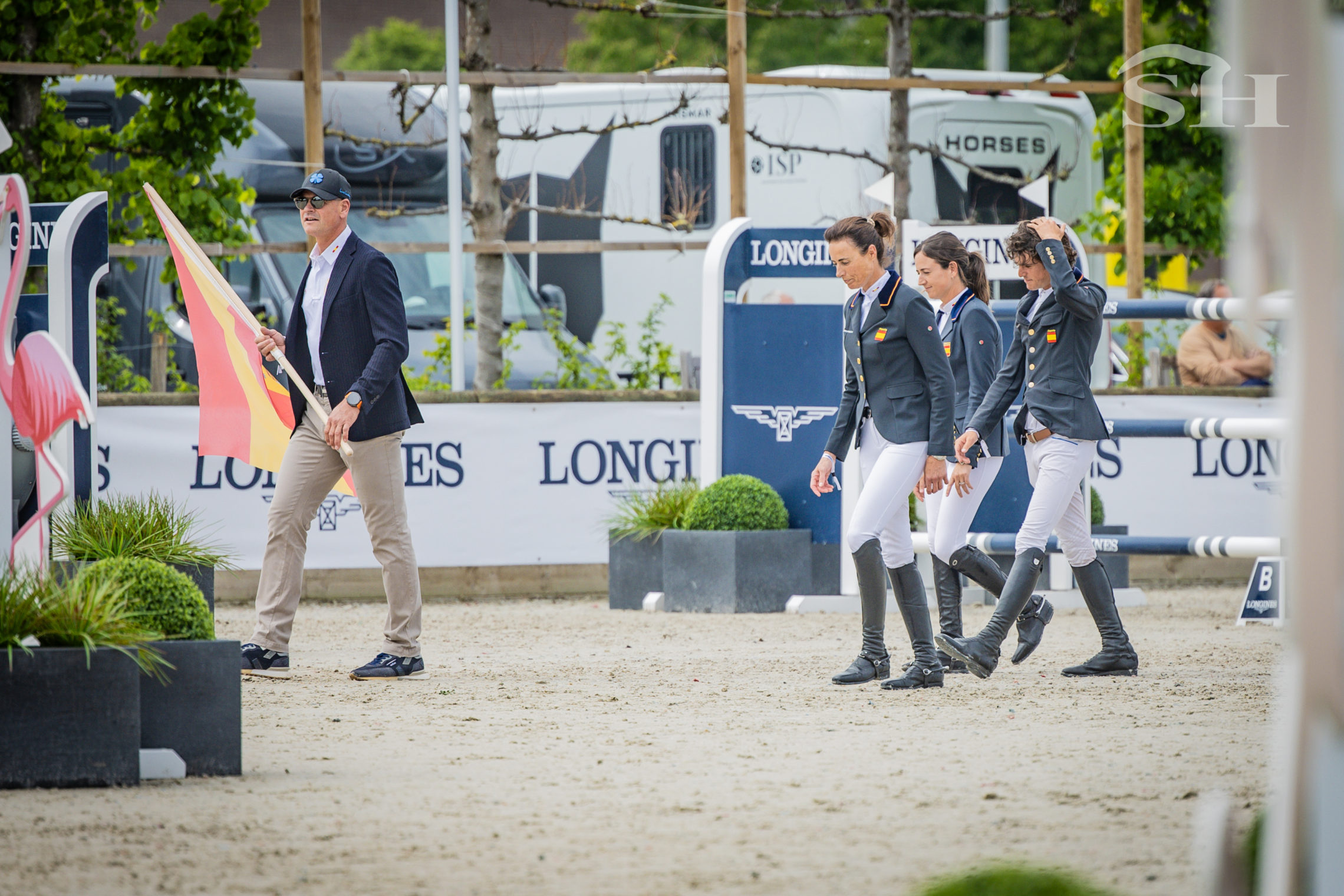
But François Mathy Jr’s first assessment already tells a story: a reconnected team, riders back in the project, a healthy atmosphere restored and a first collective victory already secured.
Sometimes, before winning medals, you simply need to want to wear the same jacket again. And apparently, that’s exactly where Spain is right now.