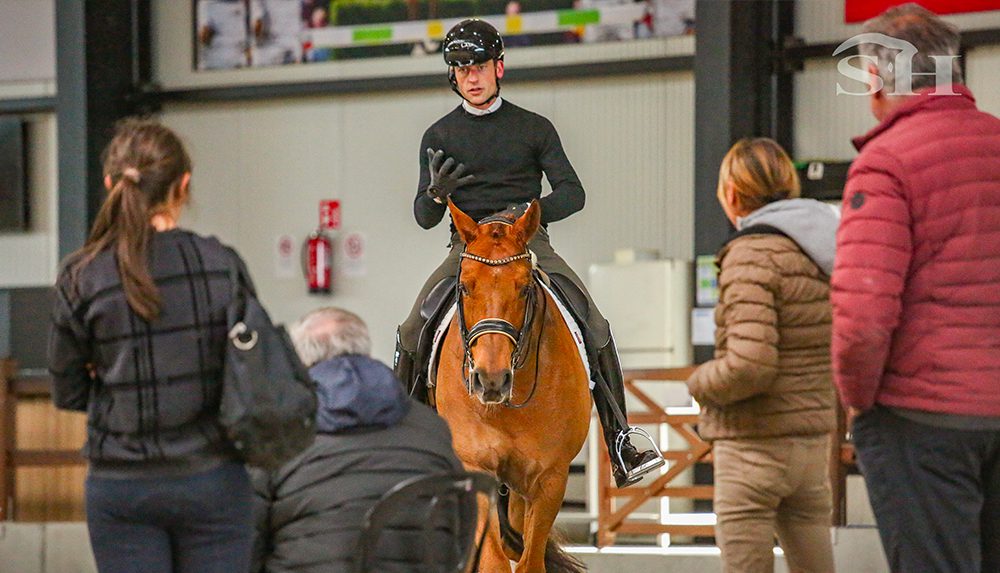
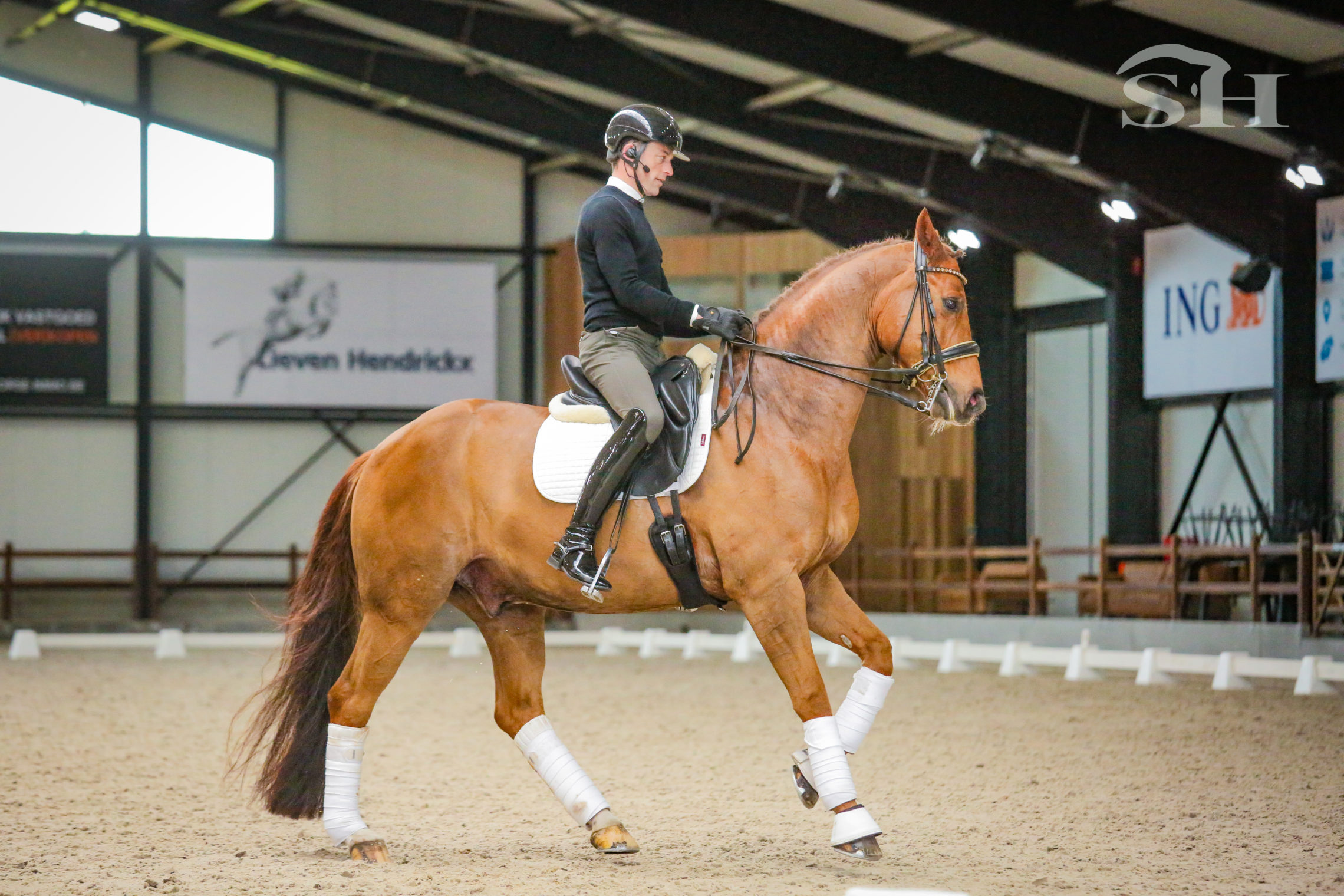
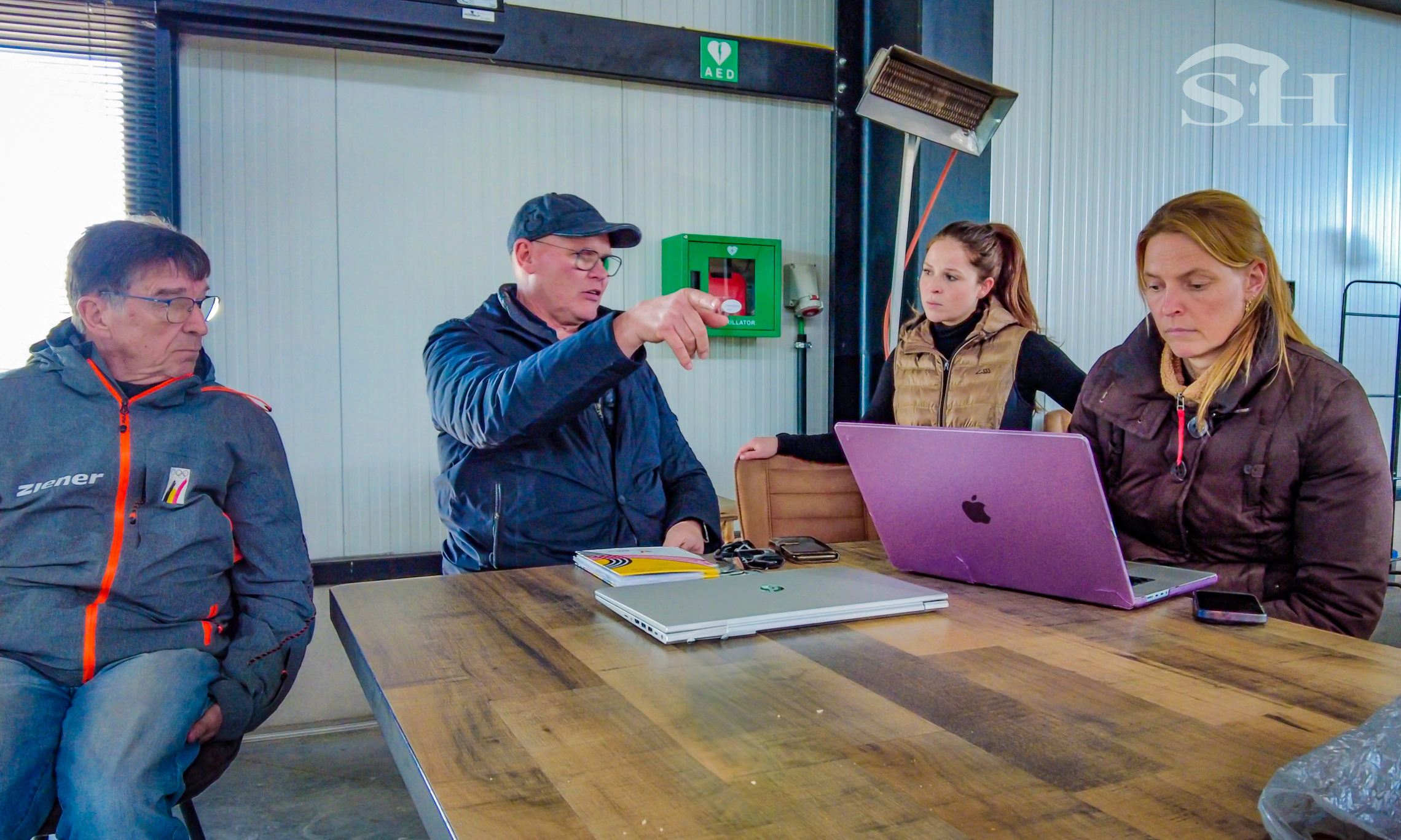
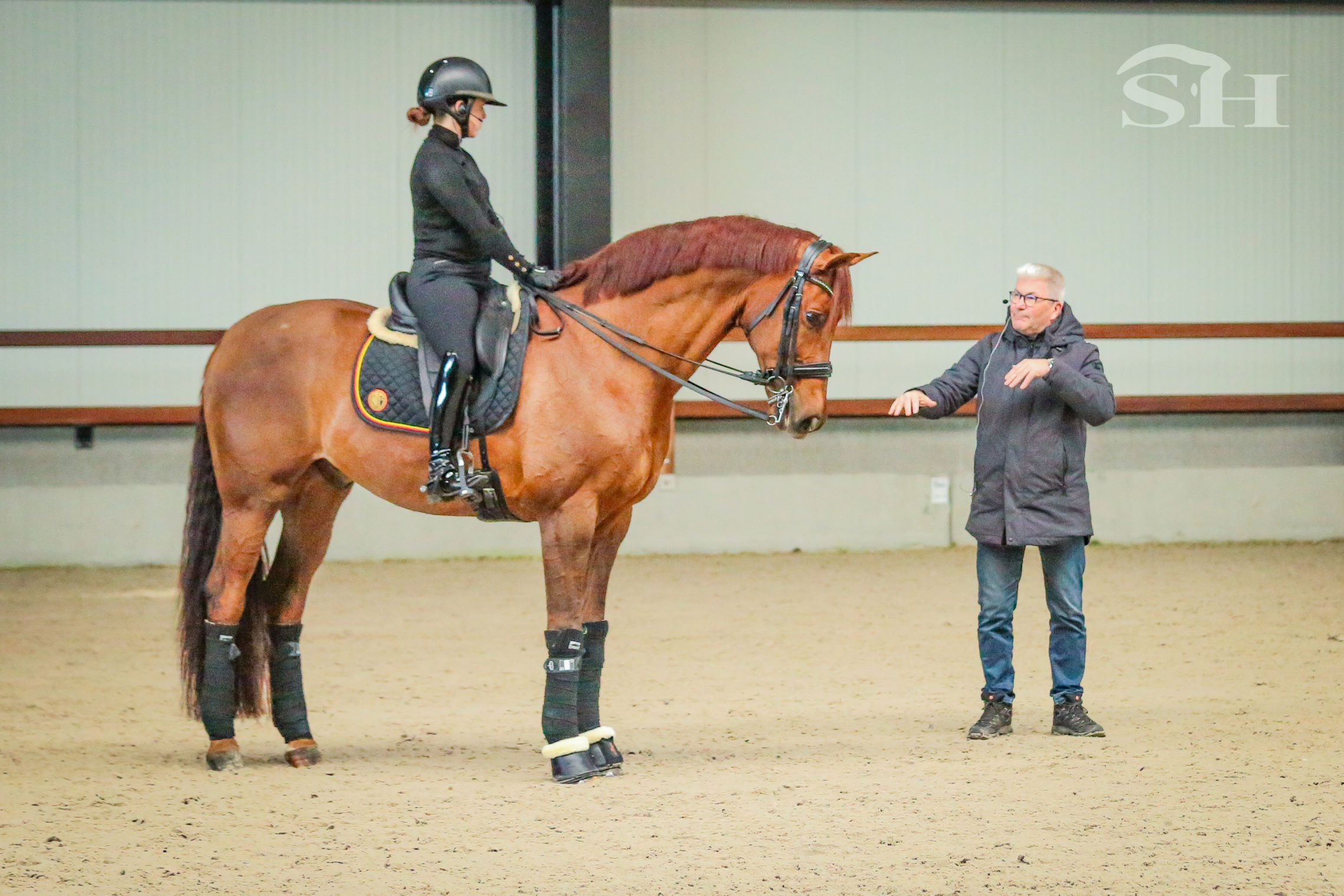
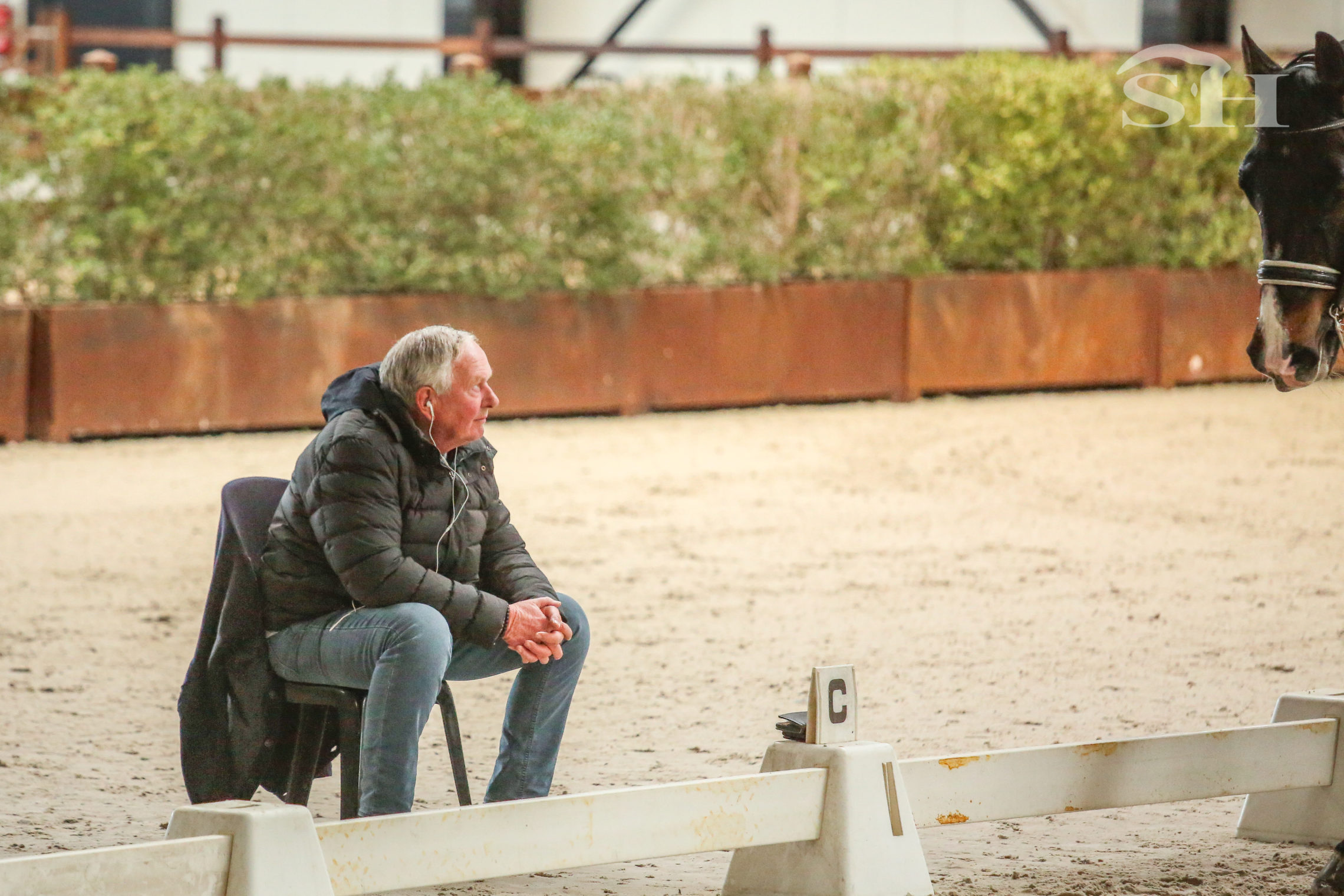
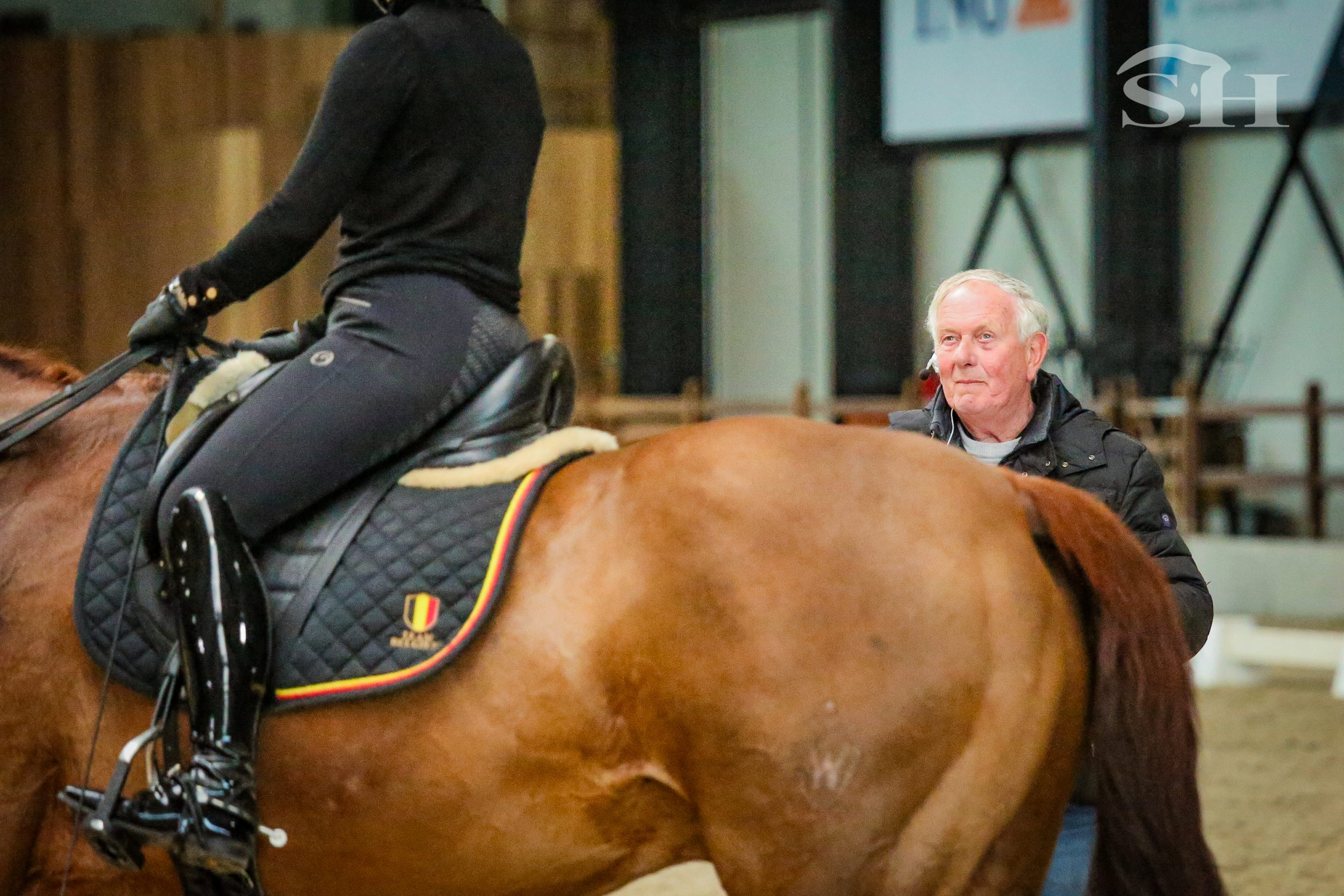
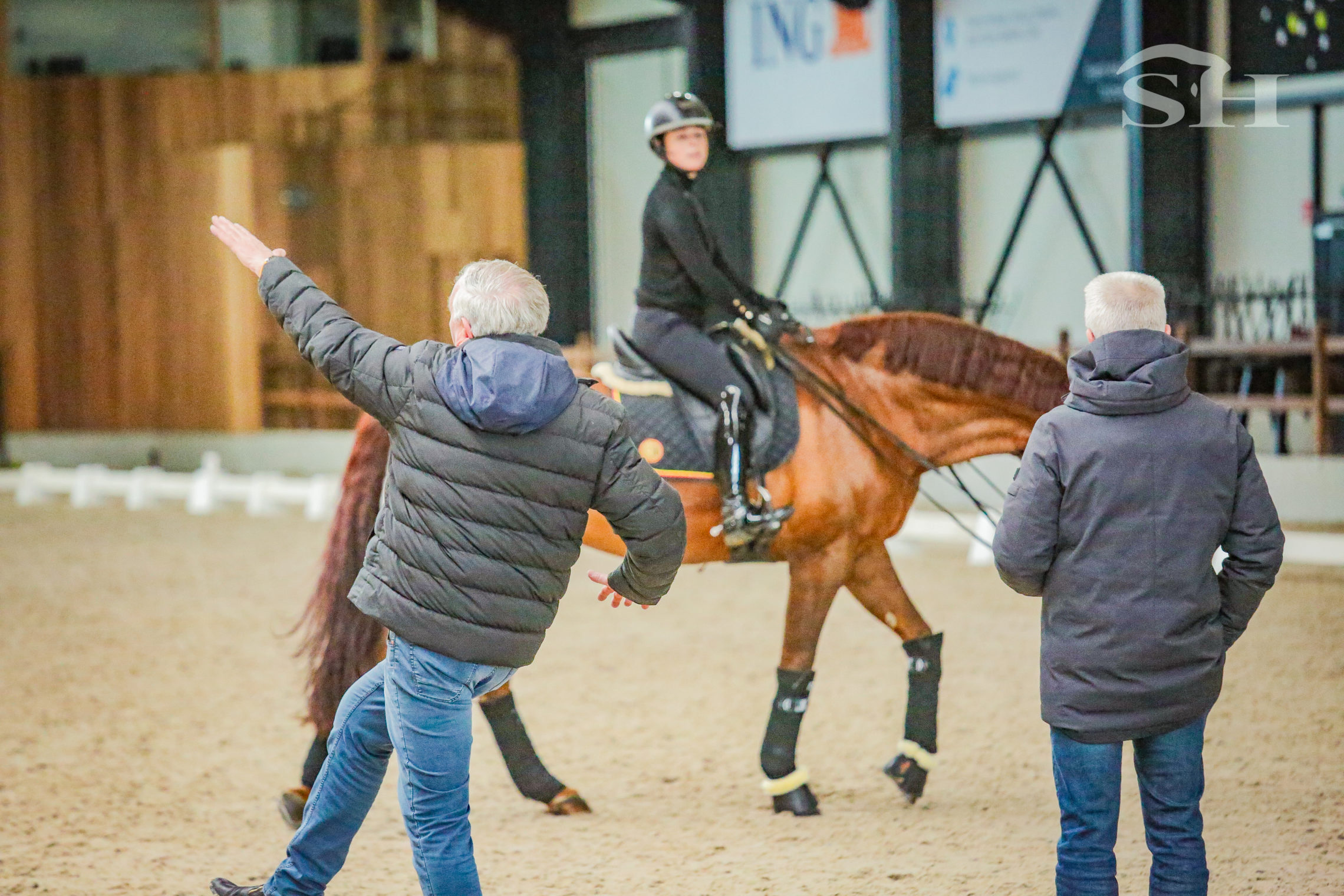
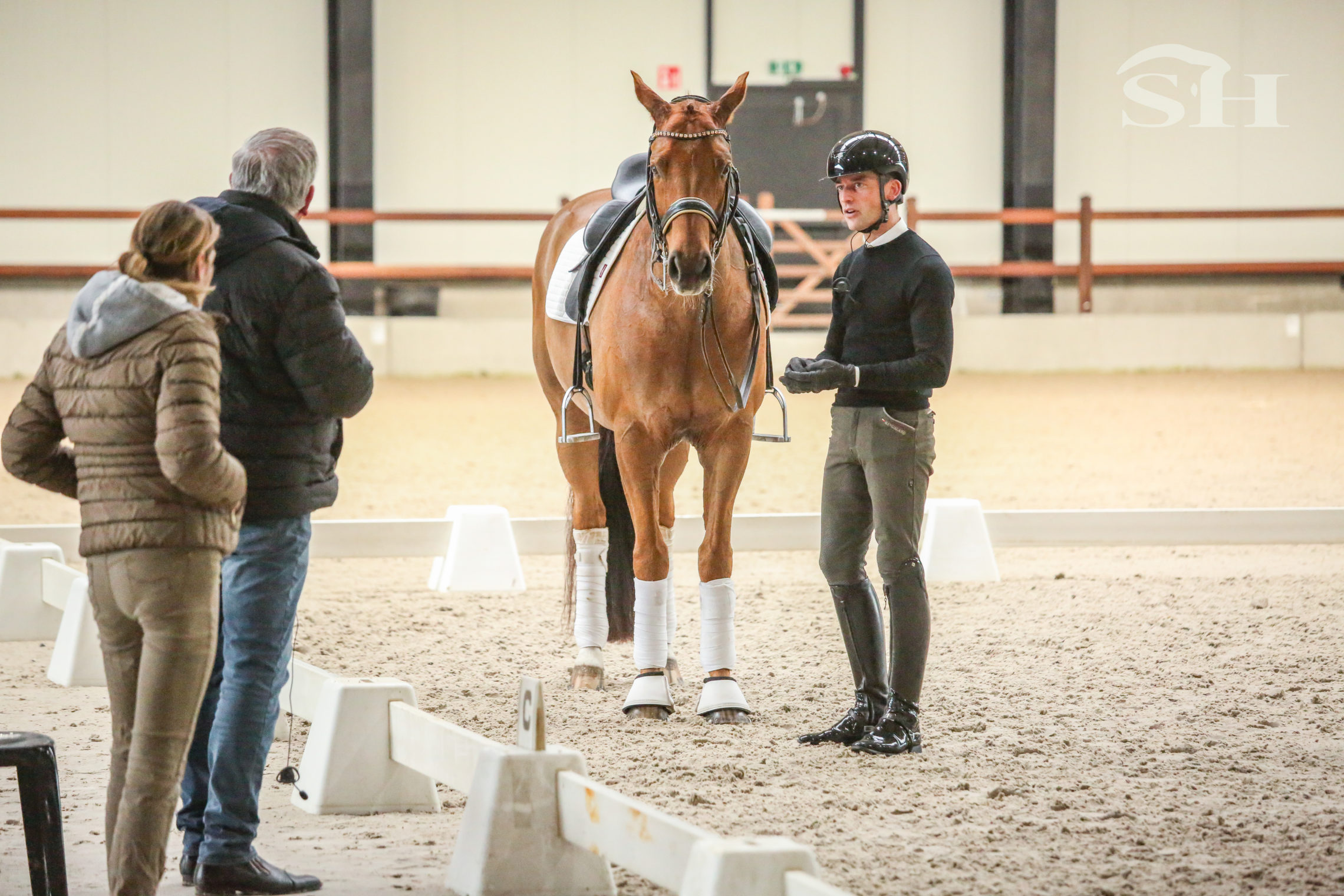
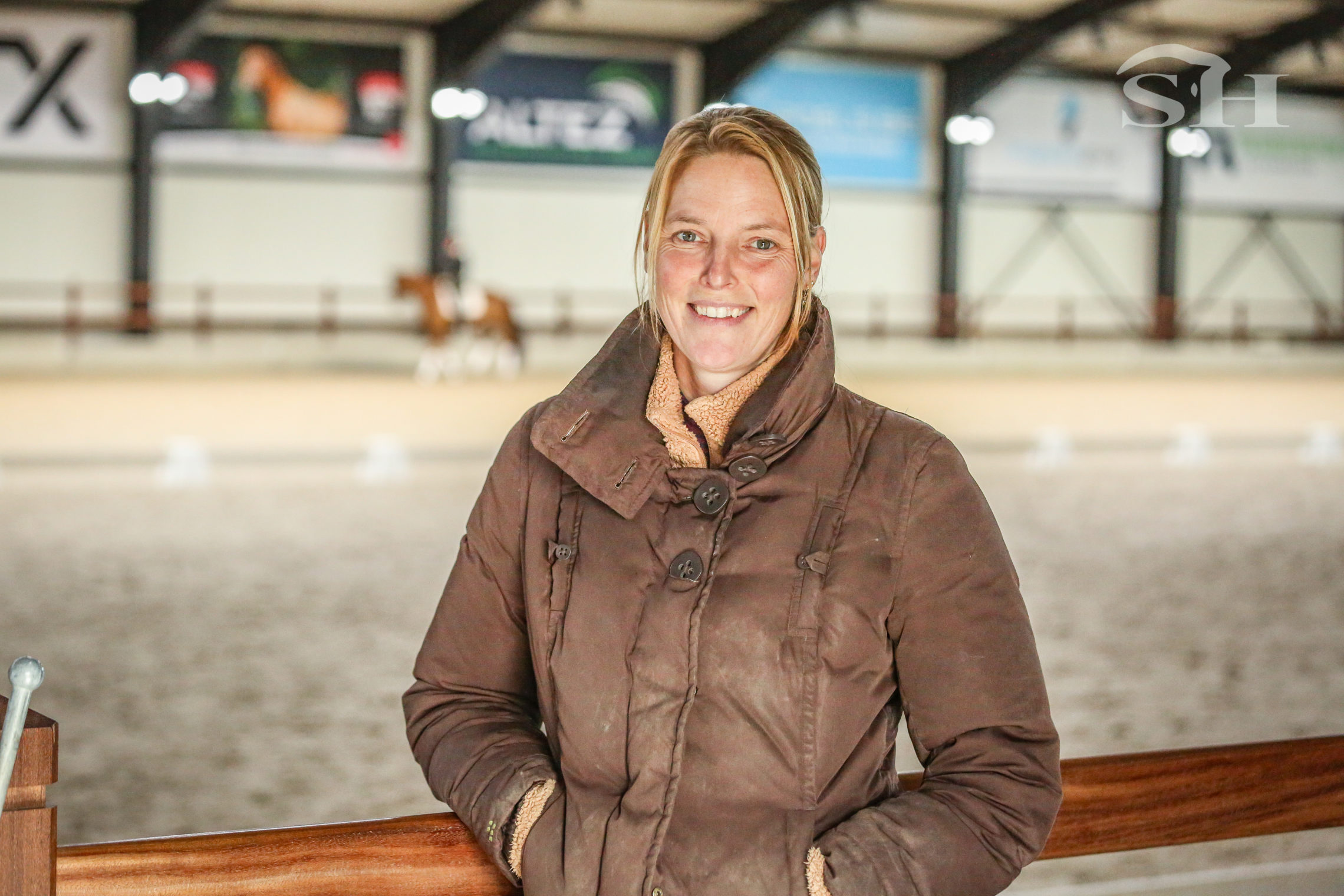
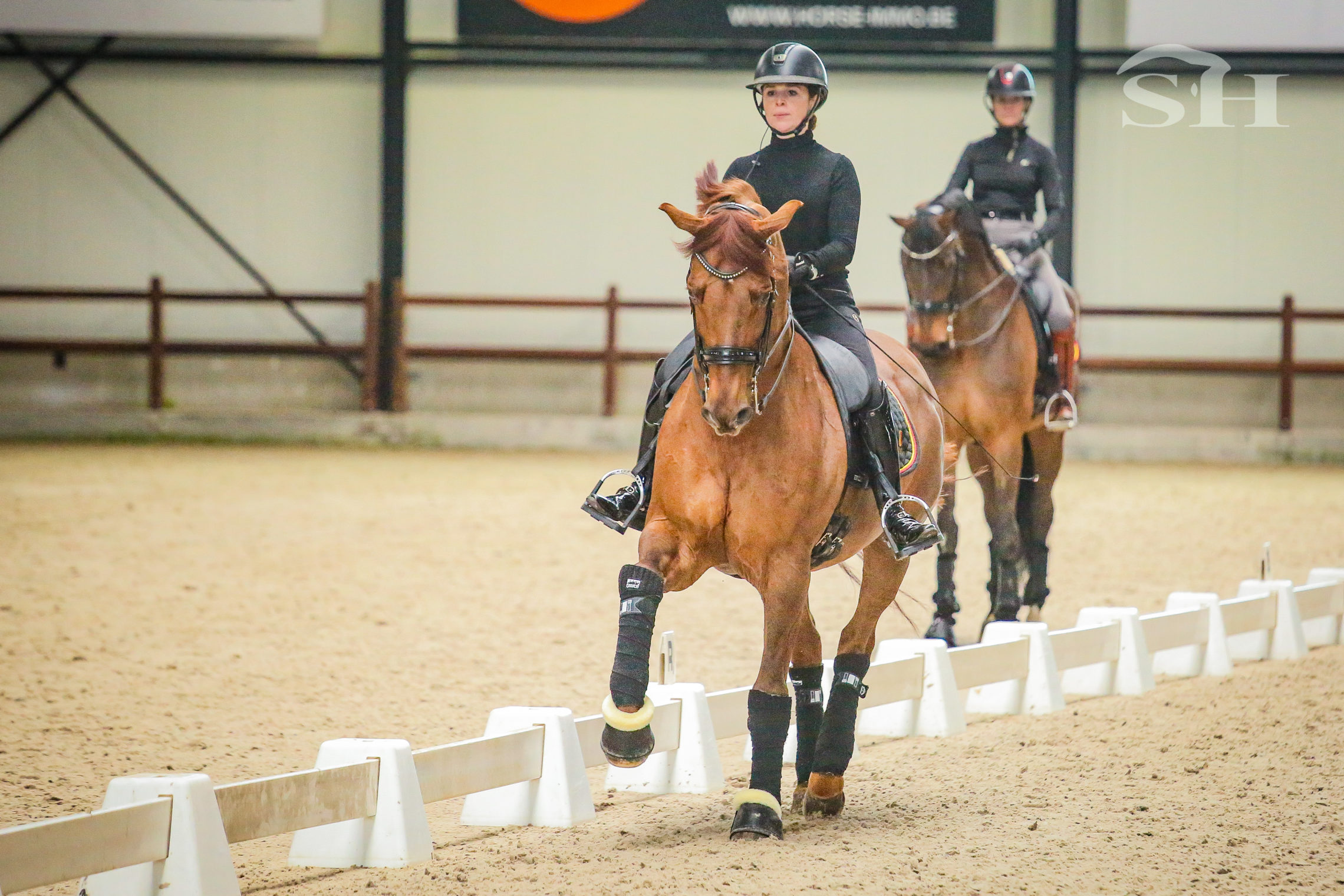
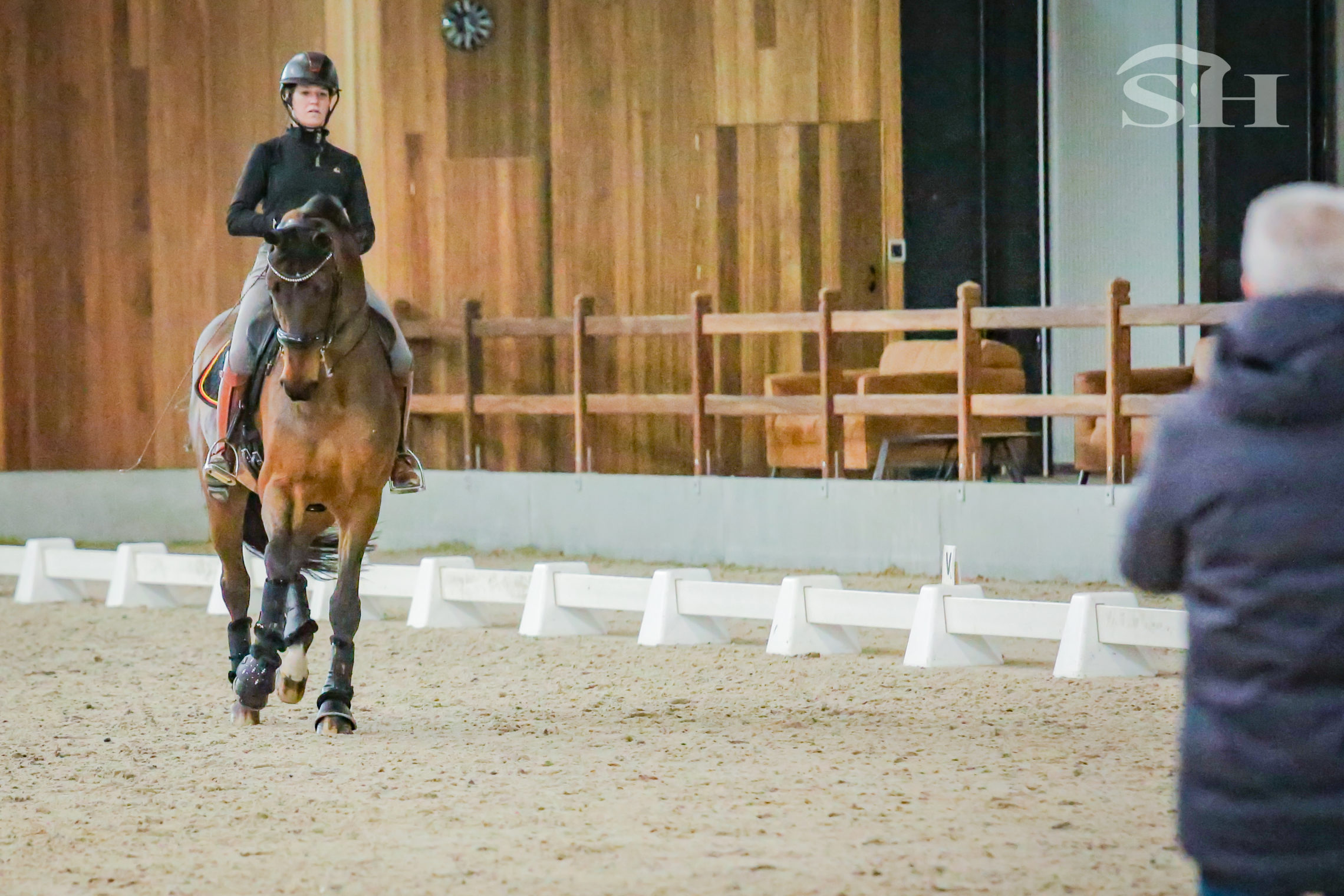
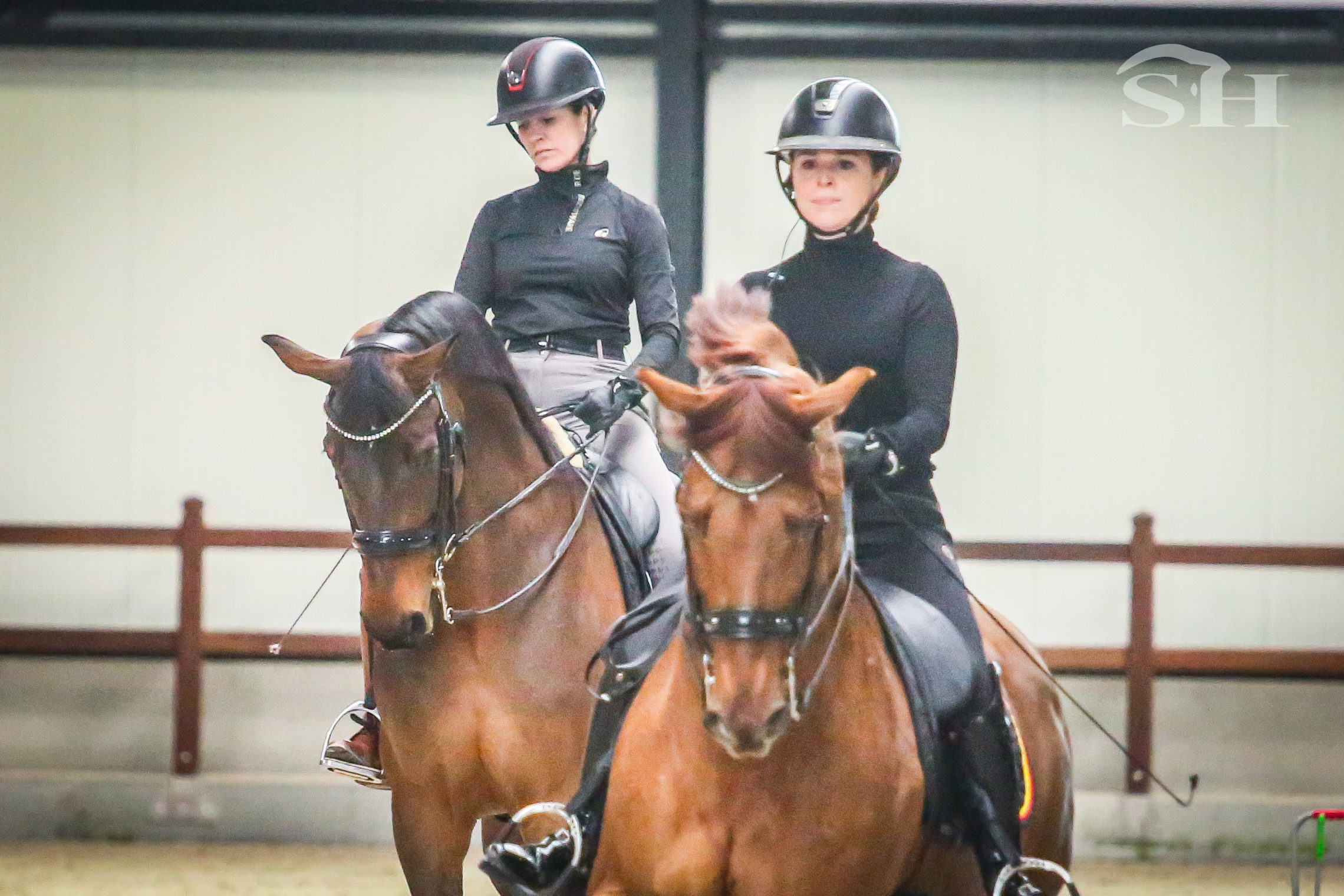
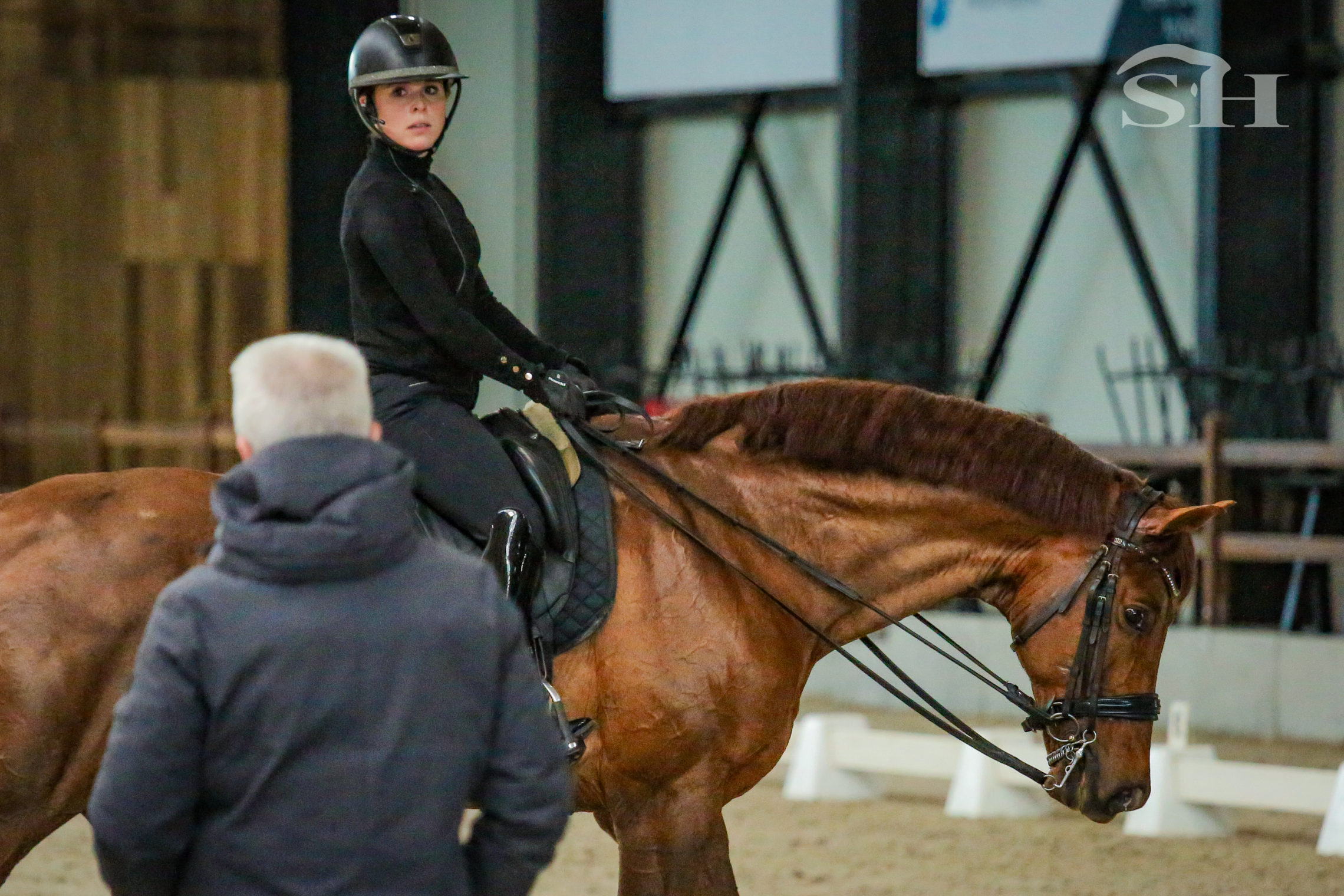
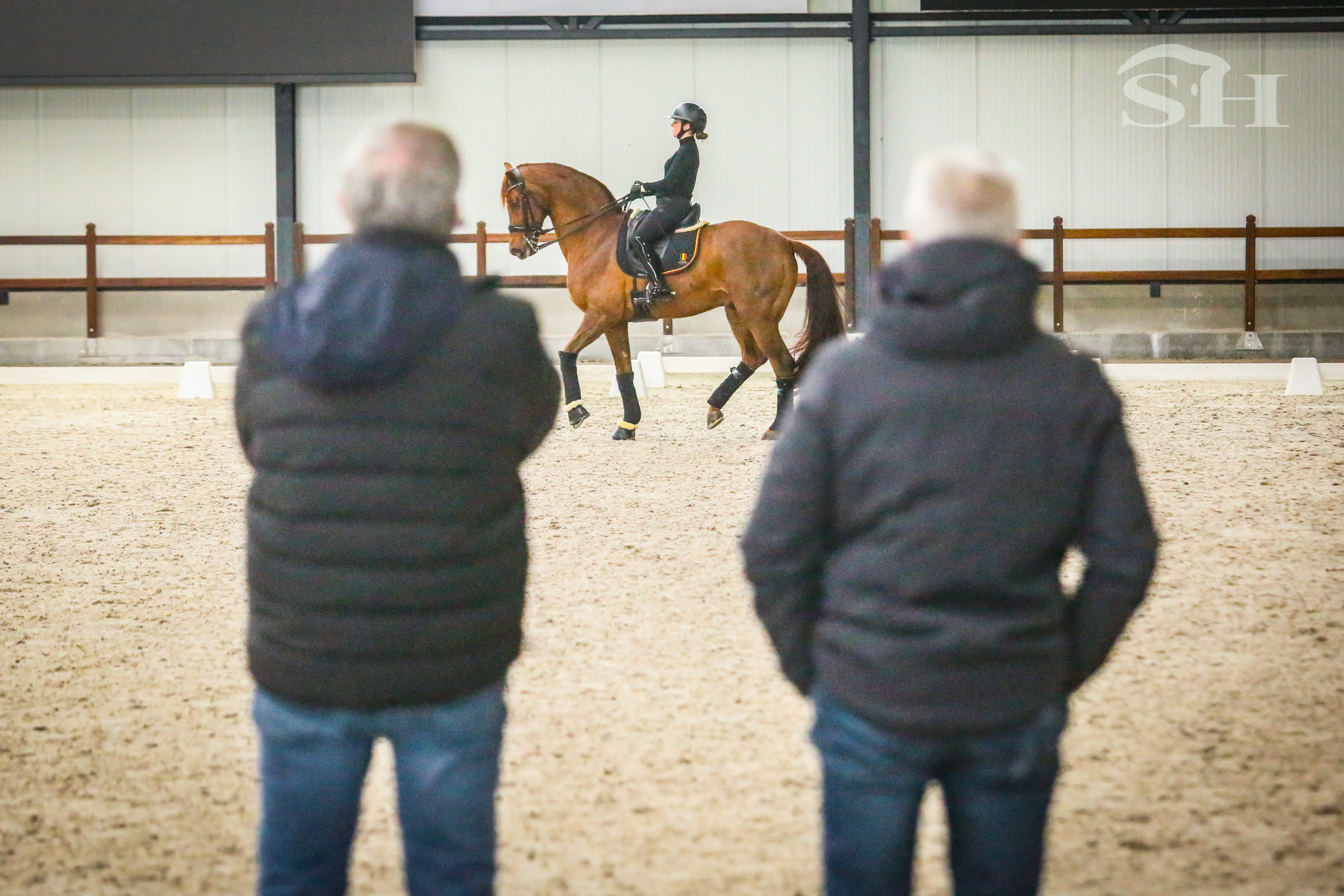
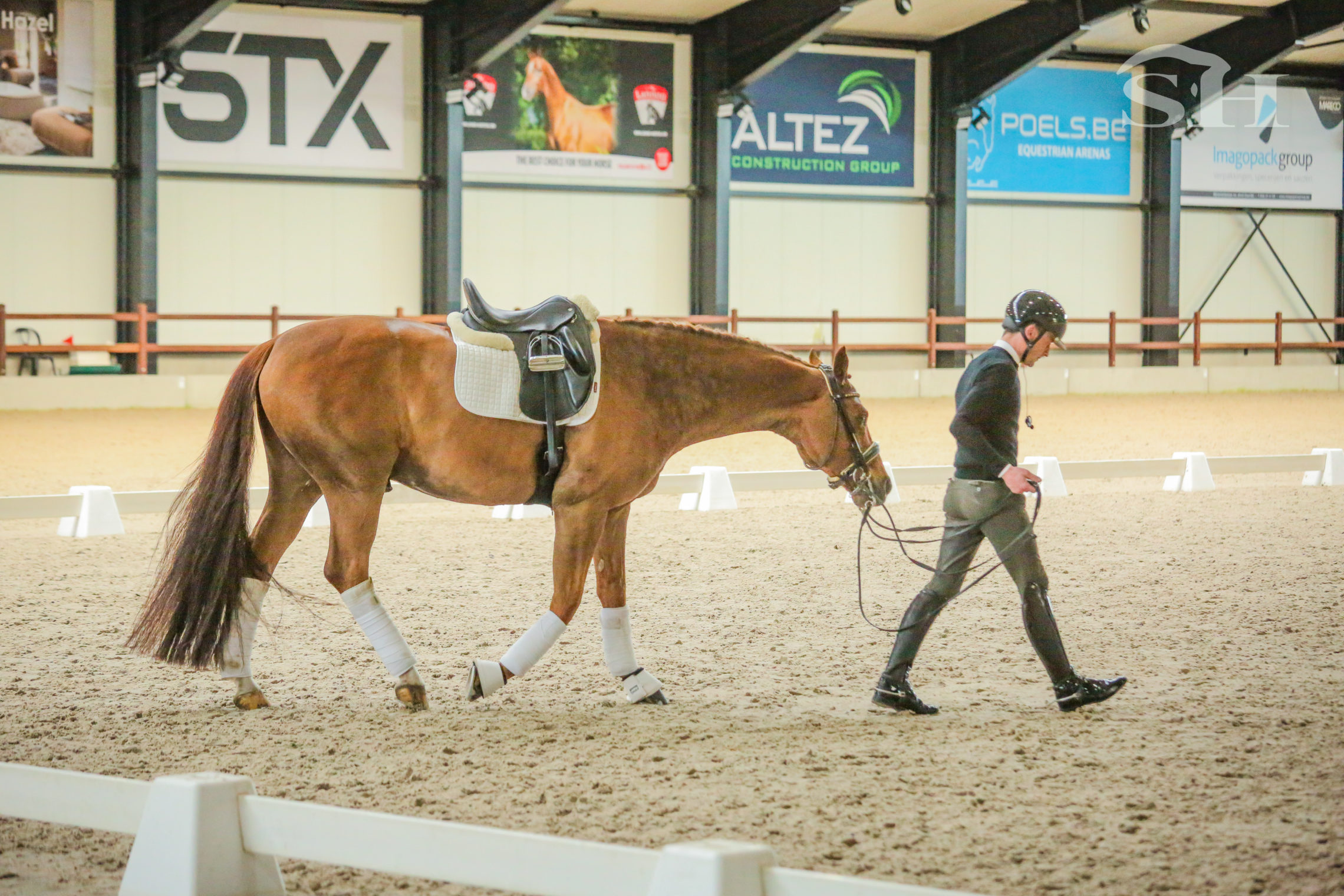
No grandstand. No sound system. No ribbons to hang. At the Vanderhasselt stables in Ternat, there was no grand event or international competition that day. Just something better: a working day. A real one. The kind where Belgian dressage is built far from the spotlight—around an arena, a team manager, a technical advisor, top-level riders and horses alongside others still developing, and one simple idea: progress together. For three years now, this monthly gathering has become much more than a training session. Almost a method.
Belgian dressage, workshop version
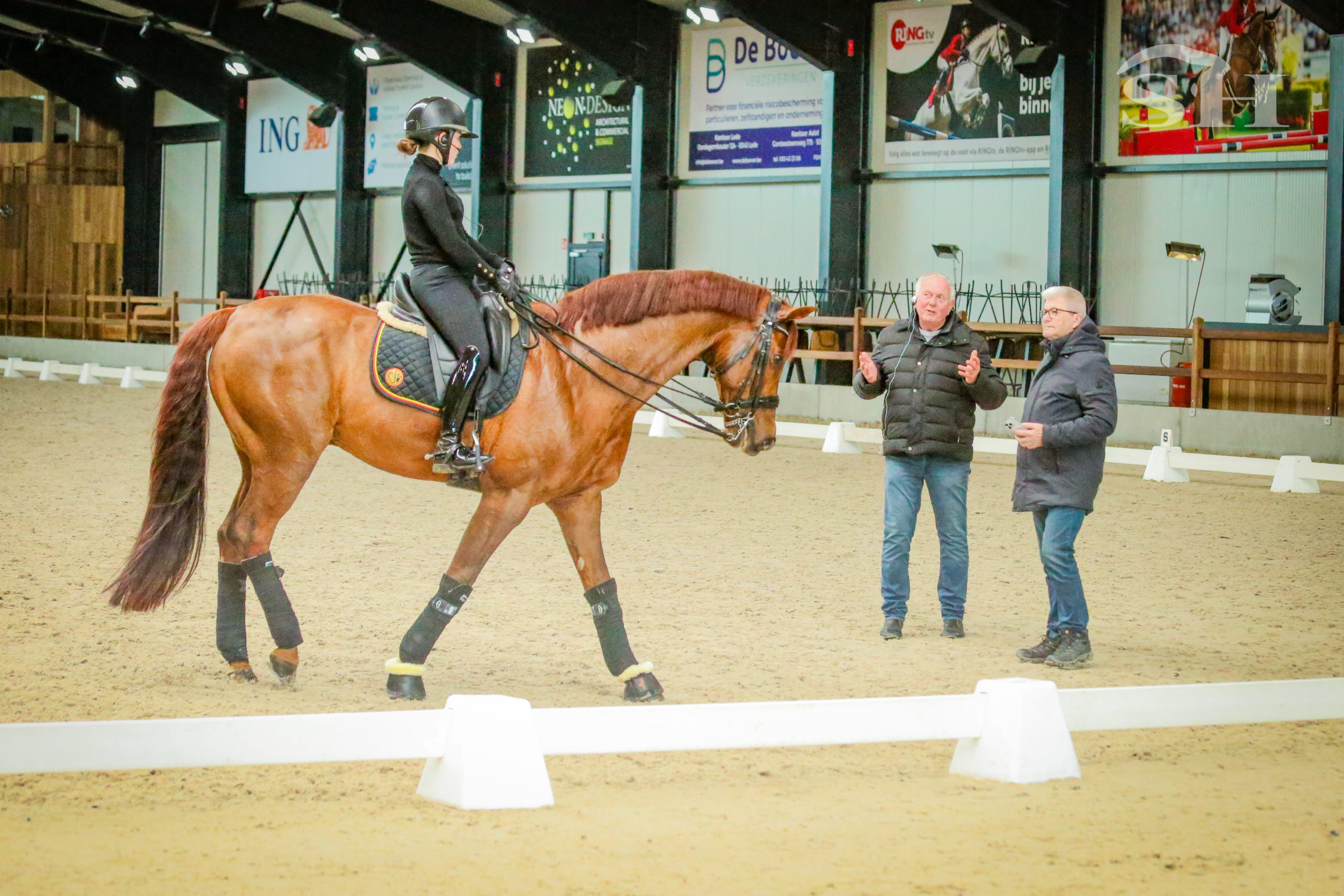
In Ternat, you don’t come to make up the numbers. You come to work. Under the guidance of national chef d'equipe Jeroen van Lent, Belgian dressage riders meet each winter month for a collective session that looks less like a demonstration and more like an indoor laboratory.
Around the arena, the lineup says it all about the ambition: Jeroen van Lent, Jan Nivelle in the center of the ring, veterinarian Mélanie de Schaetzen, representatives of elite sport units such as Elise Va Gysel pour la LEWB ou Eddy de Smedt for the Belgian federation, and in the saddle or ringside, notable names: Justin Verboomen, Larissa Pauluis, Charlotte Defalque, Wim Verwimp, among others.
The setting is simple. The idea, much less so. It’s not just about bringing the best together. It’s about circulating perspectives, sensations, experiences. About seeing the horses. All the horses. The leading ones, of course. But also those coming up behind. The young ones. Those being tested. Those being prepared. Those expected to emerge tomorrow.
The secret? Maybe just seeing each other more often
In individual sports, the word “team” can sometimes sound like brochure talk. During these sessions, it gains real substance. Because here, riders come and go, observe, stay ringside, exchange ideas, and return. Each rides for about half an hour. The rest of the time is spent watching, discussing, comparing, learning.
And according to Jeroen van Lent, that’s no minor detail. It may even be the core of the system.
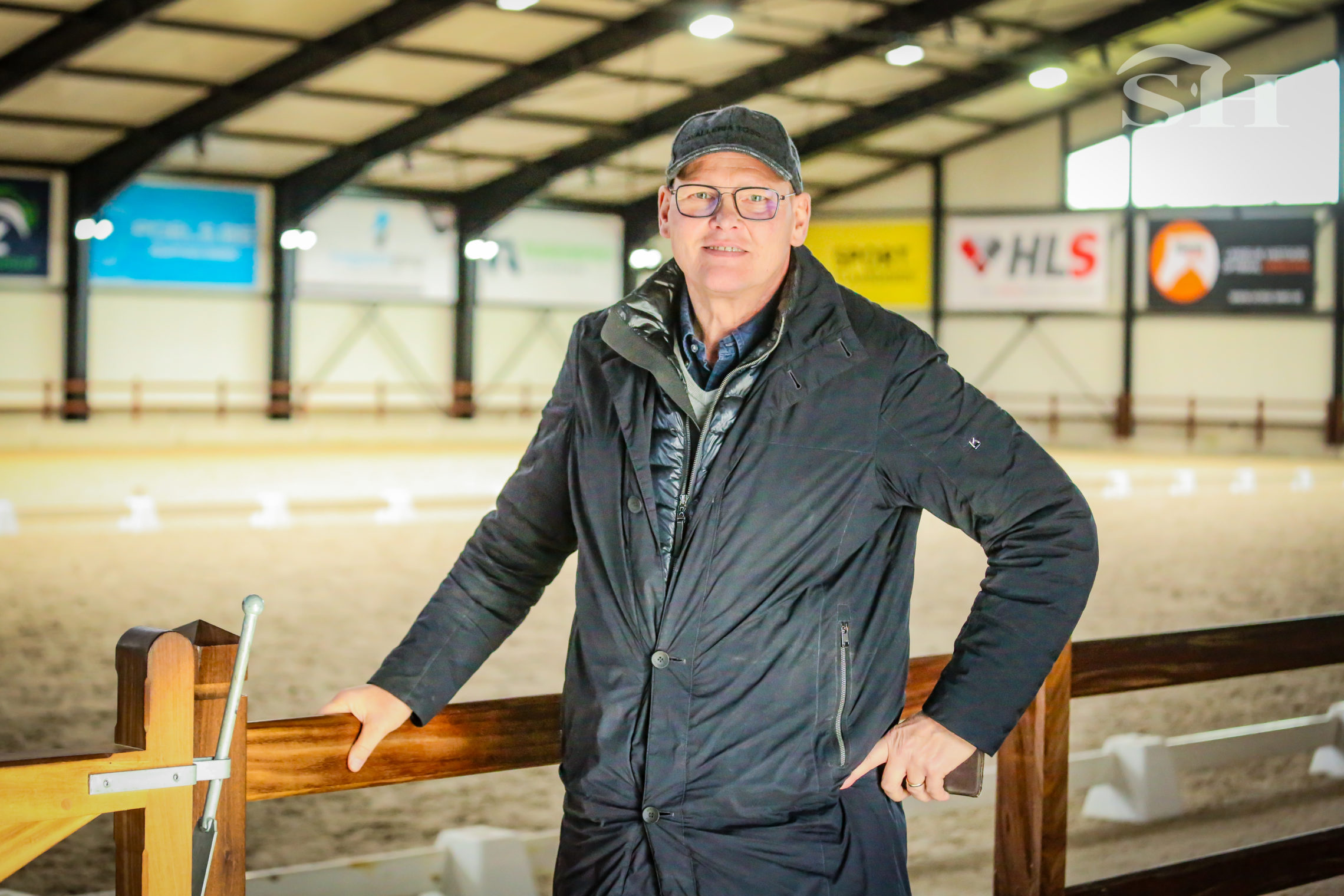
“These are training sessions we hold every month in winter here in Ternat or sometimes elsewhere. They’re open to all Grand Prix riders who have scored at least 67% twice. They come depending on their availability.
At some point, we have to select because the days are limited. We’re usually around ten.
We work with coaches or judges we invite to improve things. We also invite the riders’ personal trainers. I think it’s important to have a group, a team between trainers and riders, with open discussion to improve.
And it works. It has worked well in the past, and we continue like this. This is already the third year.
In summer, we also go out: to my place or other arenas.
But above all, it creates a team atmosphere. When I see the progress we’ve made, it’s thanks to that team spirit.
Riders work together, coaches work together, the federation as well. We get along well with everyone: veterinarians, trainers, high-performance structures.
Even off the arena, we talk: ‘What do you think? How do you do it at home?’ These are small things, but they help enormously.
Before, riders were more in competition. Today, they work together. When one wins, the others are happy for them.
And I like being present. Seeing the horses in real life, talking with them. Results are not always the whole truth. Being there allows for simpler, more direct contact.”
That’s probably the turning point. Before, they crossed paths. Now, they build. Belgian dressage no longer trains horse by horse alone—it also thinks collectively.
Changing locations to better understand a horse
One of the main benefits of these gatherings is taking horses out of their routine. Bringing them elsewhere. Confronting them with different walls, sounds, and references. Not yet the pressure of major competitions, but already something beyond home.
Justin Verboomen sums up the usefulness of the system well: this type of session is not just a rehearsal—it’s a revealer.
“It’s an opportunity to bring horses into other facilities. For new horses, it’s interesting to see their reactions to a different environment and to learn to know them better.
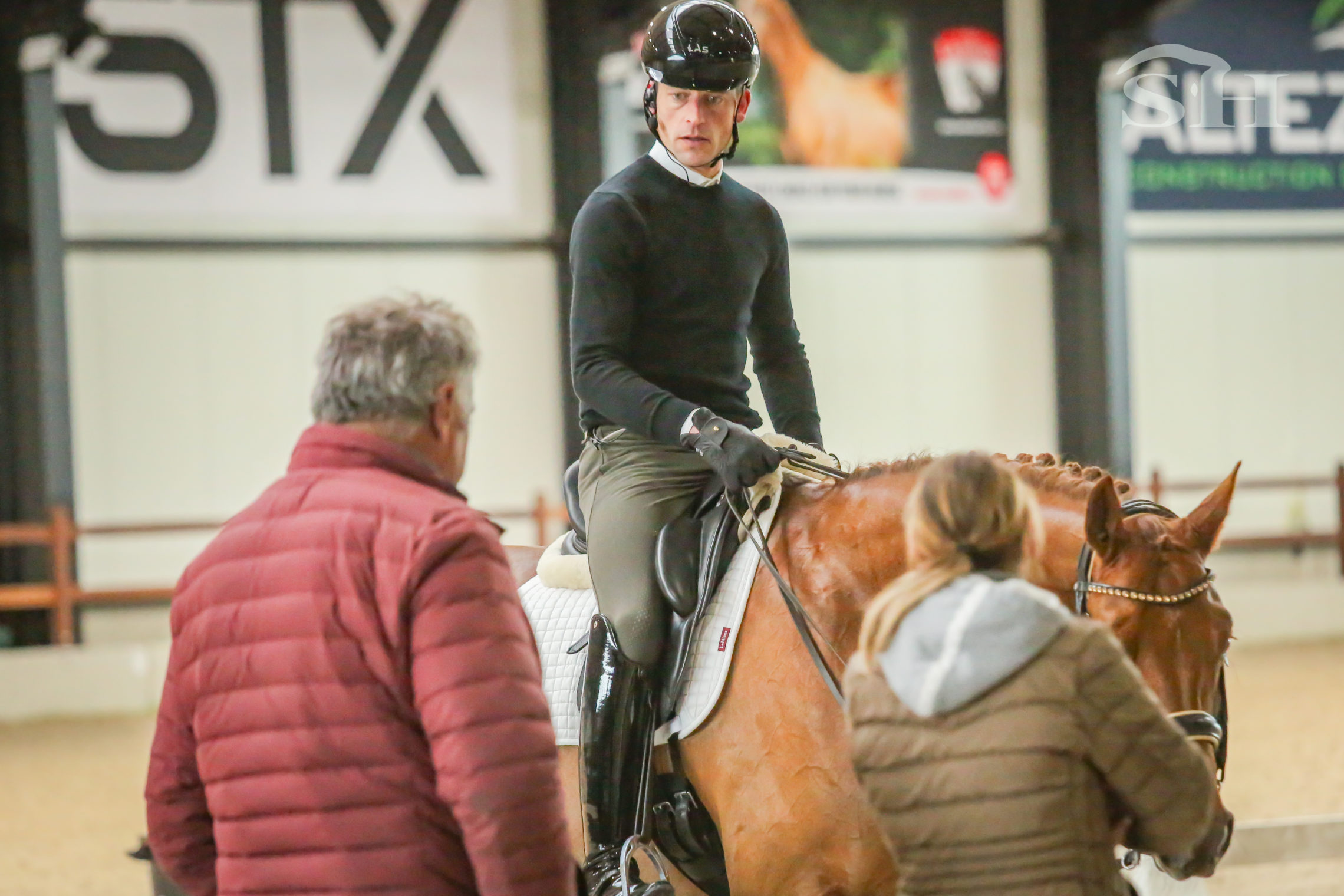
And then we work under Jan’s eye, who is an expert. We exchange constantly with him. He supports us in almost all competitions.
It’s always valuable to show him new horses and benefit from his advice.
And there’s also the atmosphere. We meet, we all get along very well. It’s always very pleasant.”
At the heart of it is this: knowing horses, yes—but knowing them outside their bubble. Because a calm horse at home is not necessarily the same when moved. And because performance often begins there—in the ability to read a reaction before it becomes a problem.
Dressage: the sport where the invisible rules
From the outside, a session like this may seem quiet. Almost opaque. Not much spectacular to the naked eye. And yet, this is perhaps where everything happens, in the invisible, the minute, the subtle.
Jan NivelleJan Nivelle, who regularly works with Belgian riders, puts this precision work into words:
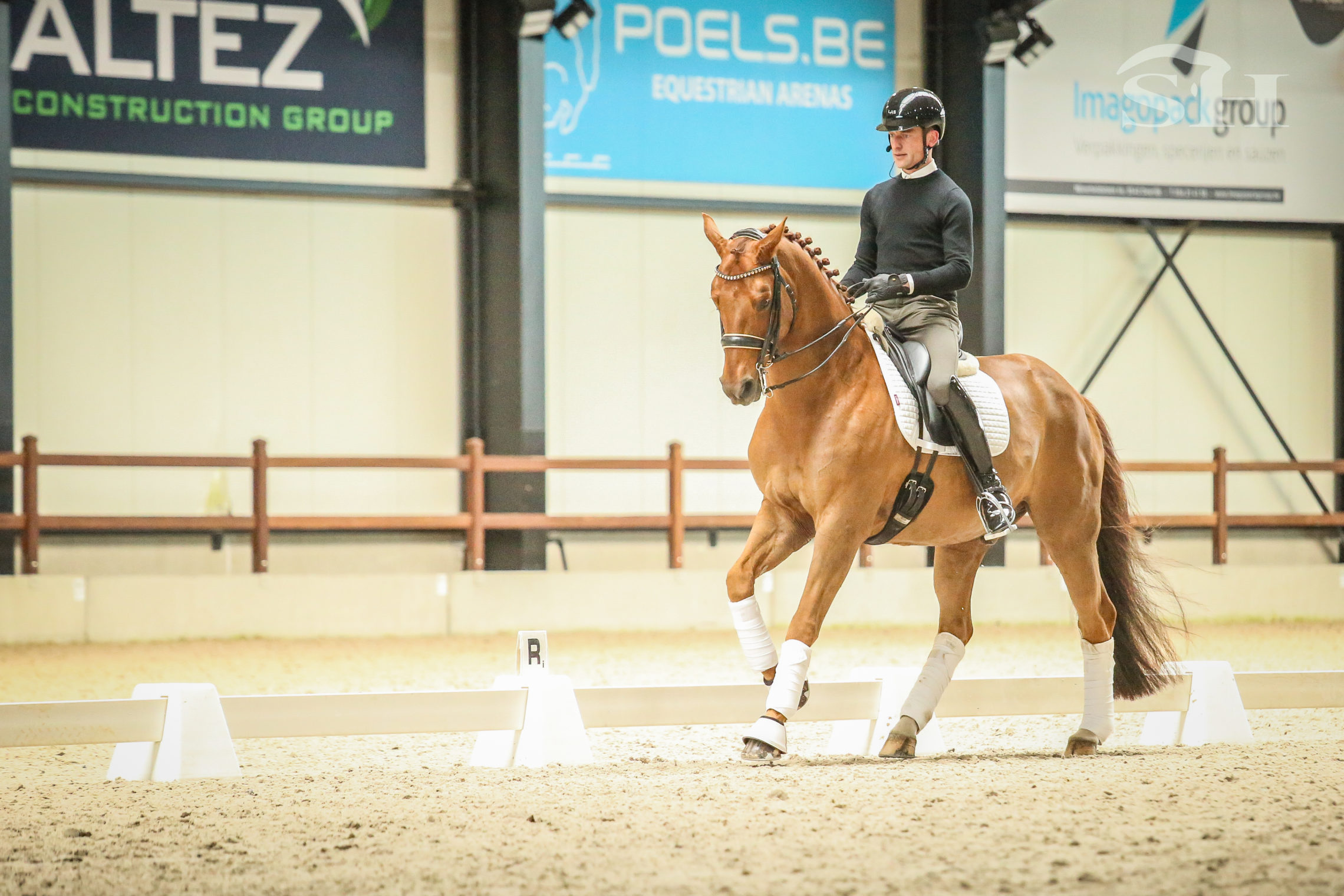
“We start with the horse’s natural movement. Everything must go through the back, with a good balance between the legs, posture, and back muscles. Everything must work together.
Then we gradually work to put more weight on the hindquarters, change the balance, lift the withers. These are very subtle things.
At first, many things are invisible. But they settle into the horse. And when they are all there, one day, they become visible.
We don’t work in pure obedience, but in the functionality of the aids. It’s communication with the horse.
We move from physical work to emotional work. The horse must enter the desire to perform. Then into understanding. It’s a progression—a kind of staircase of intelligence.”
And is it easier to work with the world number one than with a developing rider?
“We try to work with everyone in the same way. But the more a rider develops intuition and feel, the more subtle the work becomes. And you see that in the best riders.
Timing is essential. For example, a half-halt at the wrong moment pushes the horse forward. At the right moment, it rebalances.
Feeling and timing are the key to progress.”
That’s the paradox of dressage: the cleaner it is, the less you see it. At this level, it’s no longer just about technique, it’s about timing, feel, communication—almost mounted microsurgery.
Performance, yes, but not without monitoring
Another benefit of these sessions is that they’re not only about improving a test. They also allow monitoring, anticipating, preventing. And in a sport where biomechanical detail matters so much, that changes everything.
Mélanie de SchaetzenMélanie de Schaetzen, present for veterinary follow-up, also observes what happens under the saddle:
“For me, it’s mainly monitoring horses that will take part in Nations Cups, but also horses with future potential.
I observe their training, I check for lameness or abnormalities in movement.
If I see something, I discuss it with the rider so they can follow up with their own vet.
It also allows me to anticipate: to know which horses might show irregularities in competition.
And if an issue appears during competition, we can go further in analysis and make decisions to avoid forcing the horse.”
In other words: these days are not just about doing better—they’re about doing right.
Young horses also have a voice
What makes this format particularly smart is that it’s not reserved only for current top performers. Riders can also bring younger, less experienced, less ready horses—but already closely observed. It’s one of the most interesting aspects of the Belgian system: thinking about the season without forgetting what comes next.
Larissa Pauluis Larissa Pauluis fully embraces this logic:
“It’s extremely educational, both for young horses and Grand Prix horses. It’s important to take them out of their usual environment to observe their behavior.
Here, I chose to bring younger horses. I have a seven-year-old I see as the next generation.
He has enormous qualities, he learns very quickly. But he’s still very hot, with lots of energy.
He needs to learn to calm down and shift more weight to the hindquarters.
These sessions are very useful because we put them in a situation close to competition, in an unfamiliar environment.
Their behavior is very similar to what it will be in competition. So it’s extremely educational.”
Translation: it’s not just about preparing the next outing—it’s about preparing the next cycle. The next top horse. The continuation of the story.
A flexible system, but not without structure
The system may be flexible, but it’s not vague. Everyone comes according to their schedule, goals, competitions, and their horses’ stage of development. But the framework exists, and it produces results.
Charlotte Defalque Charlotte Defalque describes it as a useful transition between home and competition:
“It’s really great to take horses out of their routine and usual environment. It allows us to condition them and especially to benefit from advice from external trainers or judges, which is valuable for progress.
The dynamic is very positive. We meet, we watch each other work, we exchange.
It’s very important for team cohesion.
The goal is to come with your top horse to prepare the season, but also to gradually integrate young horses for the future.
Participation remains flexible. Everyone organizes according to their schedule and competitions.”
Nothing is overplayed here. No grand speeches. No forced storytelling. Just riders riding, horses being tested, technicians observing, veterinarians monitoring, and a collective slowly taking shape.
The real luxury: work
Belgian dressage may be progressing like this: without unnecessary noise. One meeting per month. With experienced horses, others in development, shared perspectives, and a little less ego than before. It’s not the most visible part of the sport. It’s not the one that fills a trophy cabinet in an afternoon. But it may well explain the momentum currently carrying Belgian dressage forward.
The kind of day that makes no noise—but can deliver results. A lot of results.
Watch Equi TV’s video on the Belgian dressage team training here: