

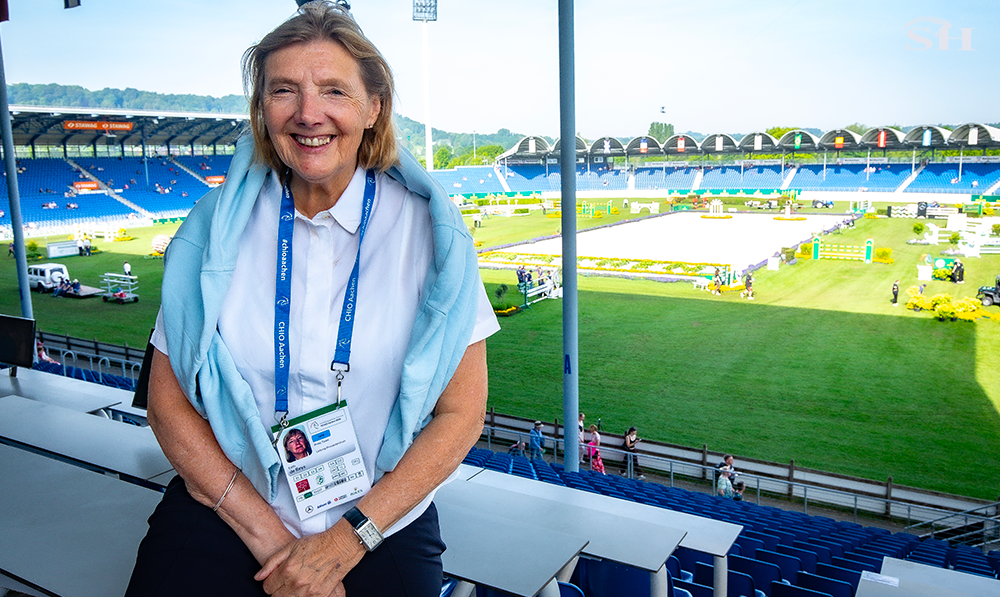
For forty years, Edith de Reys has experienced the biggest events on the planet from a place the public never really sees: the press room. Mechelen, Antwerp, Brussels, the Olympic Games, the World Equestrian Games, World Cup Finals, Herning and, above all, Aachen. She has seen champions, photographers, journalists, crises, shared coffees and even a hurricane come and go. On the eve of the FEI World Championships 2026 in Aachen, this is the portrait of a woman whose job essentially consists of making sure everyone else can do theirs.
In Aachen, there are those who arrive early.
And then there are those who arrive even earlier, like Edith de Reys.
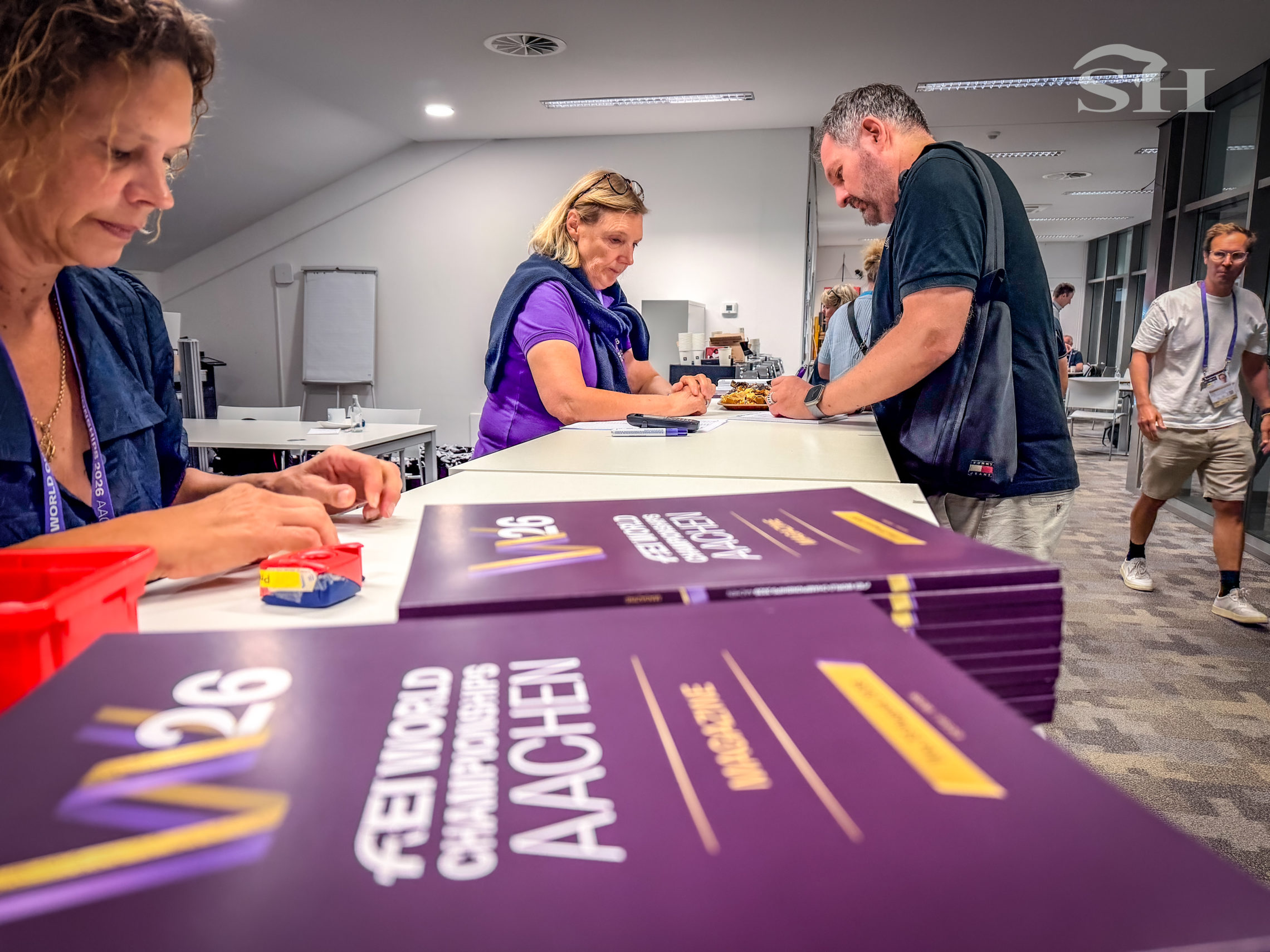
When the stands are still silent, when the first laptops are just starting to come out of bags and the coffee has not yet had time to cool down, Edith is already there.
It is not a habit. It is a philosophy.
« I think that when you are the ‘boss’, you have to be the first one there. You have to open up. »
That’s it.
You could almost stop the portrait here.
Because in just a few words, there is already a lot of Edith de Reys: being there before the others, knowing who does what, checking that everything works and, if necessary, finding a car at four in the morning because a journalist has to get to the airport.
The kind of job where, when everything goes well, nobody talks about you.
And where, when something goes wrong, everyone suddenly knows your first name.
It all started in Mechelen
Before the World Championships, the Olympic Games and international press rooms, there was a regional newspaper.
The Gazet van Mechelen.
Edith wrote there as a freelancer. No major championships yet, no global stars and no press conferences broadcast to the four corners of the planet. She would go to regional shows around Mechelen and write about what she saw.
« It was a bit of a hobby for me to go and watch the shows and write about the small regional competitions. »
It must be said that she knows horses. Edith is also the wife of Paul Mais. Together, they are at the head of Van de Helle Stud...
Then she met Eric Wauters.
The story begins almost like every long career: with someone noticing that you are always there.
Wauters was organising Green Grassland at the time. After one edition in Putte was generously watered by the rain, he decided that outdoor shows were quite enough, thank you. He found an indoor hall and asked Edith to take care of the regional press.
She accepted.
Then Mechelen found the Nekkerhal.
The show grew.
So did Edith.
« They started a small international show with four invited riders, friends of Eric’s. And I took care of the press. »
That small international show would become what we know today.
And the woman who used to write about regional shows gradually found herself on the other side of the barrier: no longer just writing the story, but organising the conditions so that others could write it.
One show leads to another
n that world, the best CV is still doing good work in front of the right people.
In Mechelen, organisers from the Jumping of Antwerp saw Edith in action.
« Wouldn’t you like to do Antwerp too? »
So she did Antwerp.
In Antwerp, others saw her work.
« Wouldn’t you like to do Brussels? »
So she did Brussels.
Little by little, the phone started ringing from further away.
Max Ammann, then a major figure in the international equestrian press and the father of the showjumping World Cup, also spotted her. Edith recalls that he offered her the chance to come and work with him at major championships.
Destination: Stockholm.
- The first World Equestrian Games.
A ticket into another dimension.
« With Denise van der Net, we went there and worked for the organisers. »
And after Stockholm?
Pretty much everything.
European Championships. World Championships. World Cup Finals. Olympic Games. World Equestrian Games.
« I should count one day ” she says when asked how many.
At this stage, it would probably be safer to bring a calculator.
It is easier to say that she has worked at every World Equestrian Games since Stockholm.
And then there is Aachen. Always Aachen.
Aachen, the house next door
Ask her which show holds a special place and the answer does not require fifteen minutes of reflection.
« Aachen is still special. »
She has worked there for around thirty years.
For thirty years, the official CHIO media guides have already listed her as responsible for the Main Press Centre and press conferences, proof that this relationship is not exactly a summer fling.
Why Aachen?
Not just because of the stadium.
Not just because of the packed stands, the Nations Cups and the horses who seem to know themselves that they are competing somewhere a little different.
What Edith especially likes is the way the people who tell the story of the event are treated there.
« I think that in Aachen, they take very good care of journalists and photographers. »
She talks about the infrastructure, the meals shared with riders, the working conditions.
nd then she adds a sentence that says a lot about her understanding of the job:
« It is not a VIP show where the VIPs are well treated and the rest do not exist. »
In the world of premium sport, where an individual’s importance can sometimes be measured by the colour of their wristband, Edith chose her side a long time ago.
The guy with his laptop and three deadlines also has the right to eat.
Revolutionary.
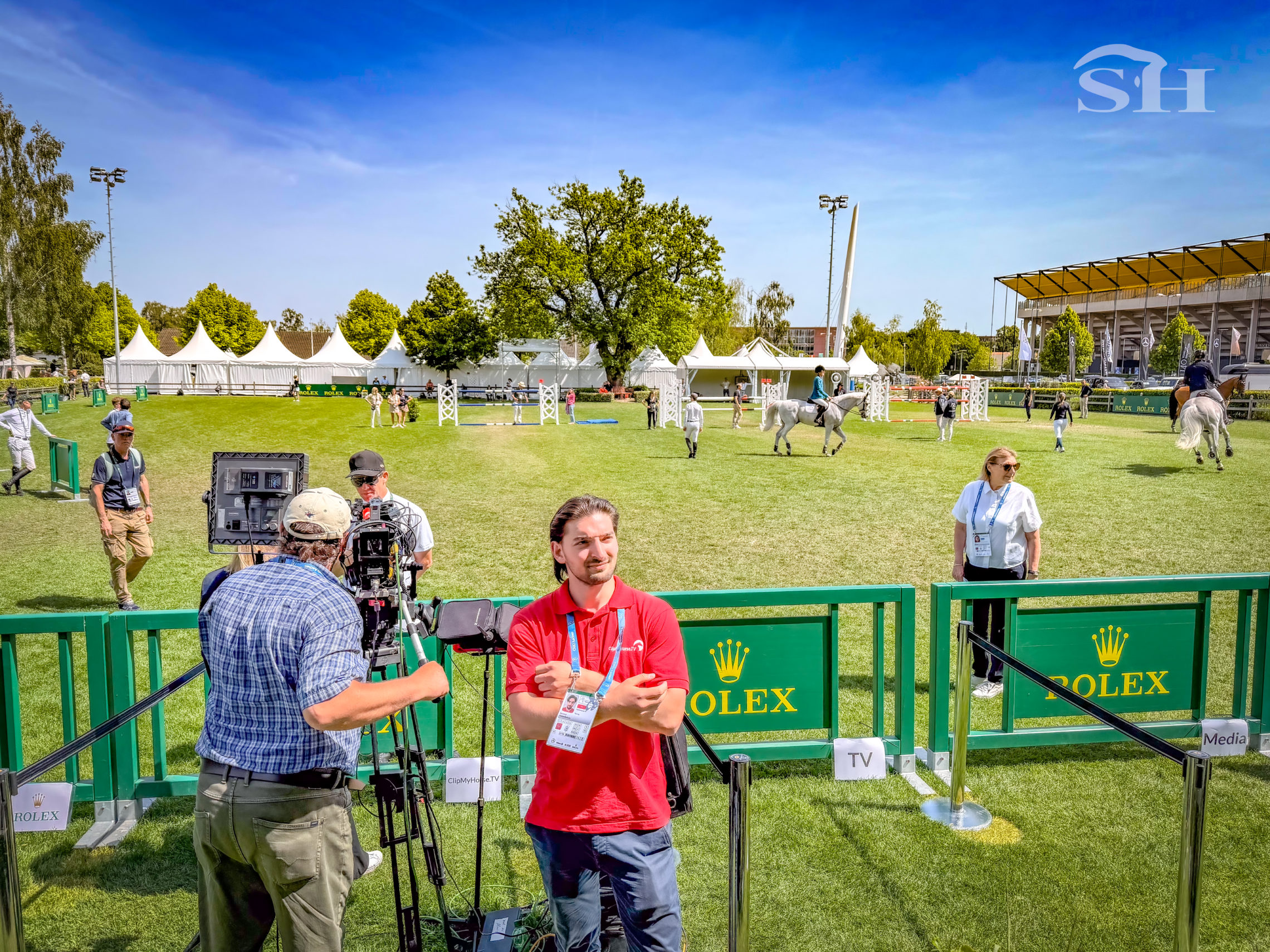
Coffee as a working tool
Her real job, however, cannot be found on an organisational chart.
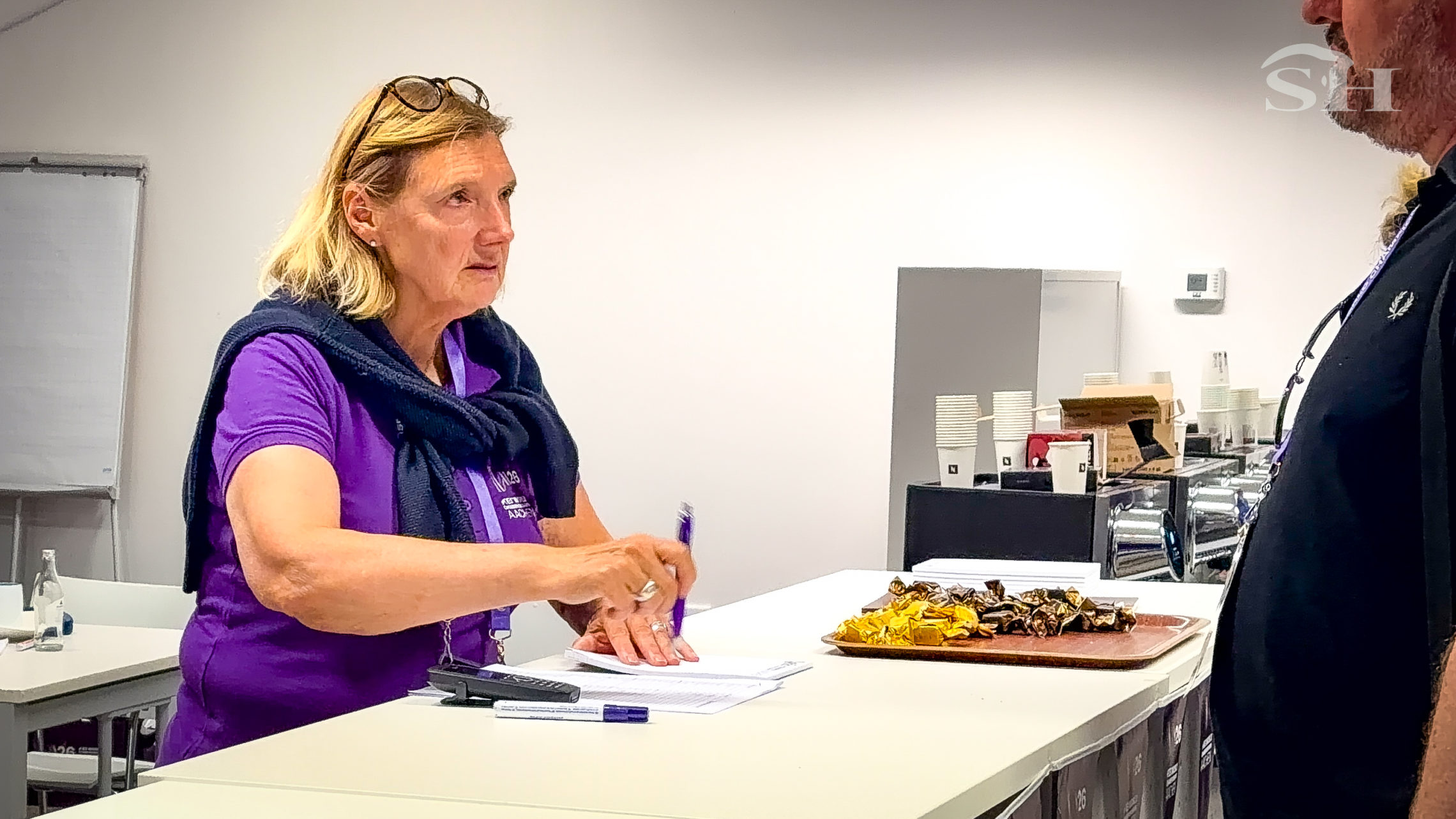
Edith connects people.
Between a rider who has just missed his round and a journalist who would still quite like to ask him three questions.
Between a photographer who needs to stand somewhere and an organiser who would prefer him to be somewhere else.
Between the urgency of some and the bad mood of others.
And sometimes, all it takes is a coffee.
« I think people have to respect each other. »
Her rule is simple.
Journalists have to understand that a rider does not necessarily want to talk thirty seconds after a sporting disaster.
But riders also have to understand that being a professional athlete comes with certain obligations.
« If you take part in a show, it also means that you are available to the press. Otherwise, you should stay at home riding and have fun. »
That is Edith. Not especially brutal. Not really negotiable either.
« It is part of the job. »
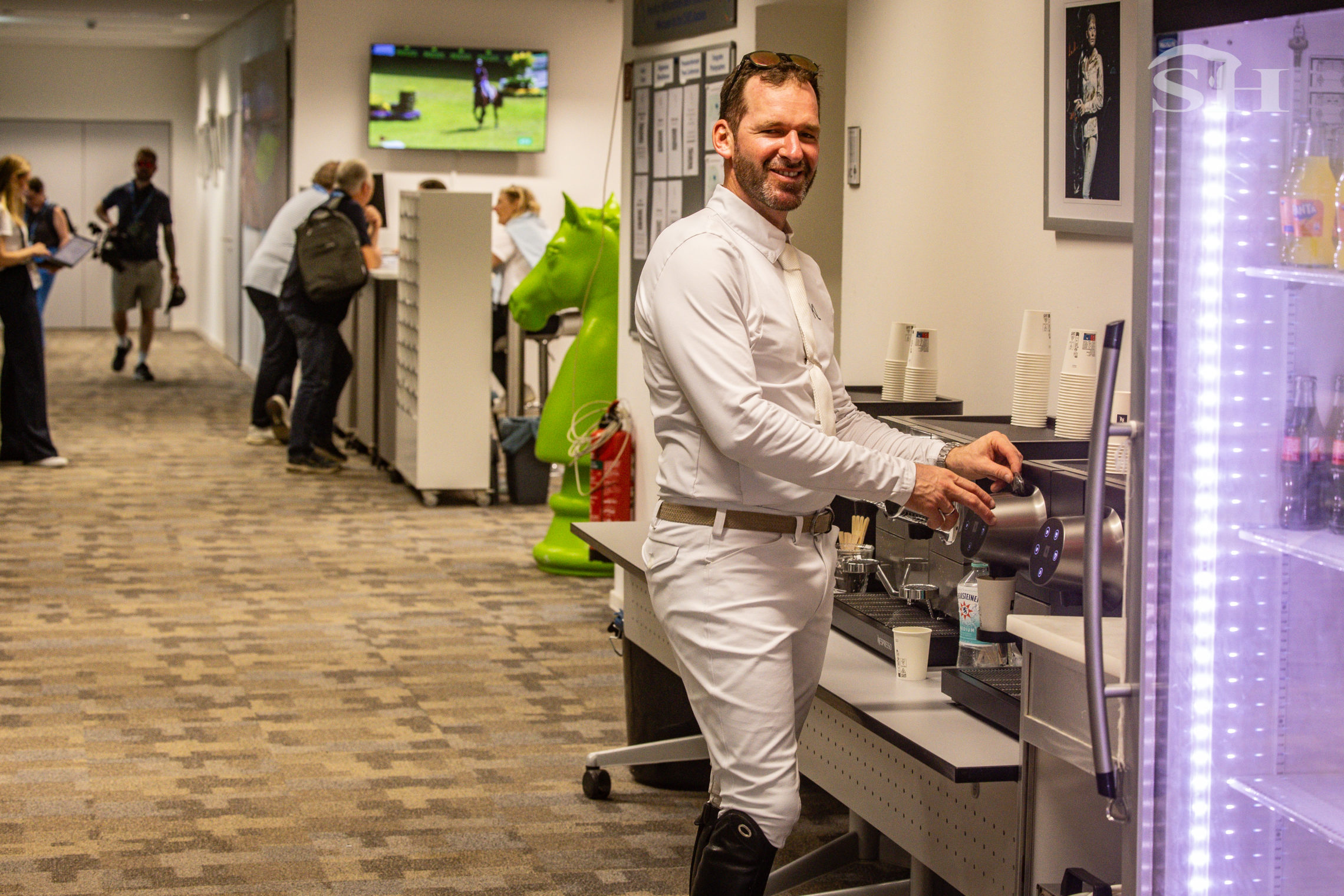
And she cares deeply about this particular closeness in equestrian sport.
In an Aachen press room, a champion can push open the door, grab a coffee, sit down for five minutes and start talking.
Not necessarily to give an official interview.
Just to talk.
« “I think that is important. »
Because sometimes, that is where the best stories are born.
The ones nobody gets from a four-paragraph press release approved by six people.
Here, champions can still push open the door
Edith worked for a while in tennis and golf.
And she saw the difference.
In professional tennis, she explains, getting access to a player involves an entire organisation. Request, intermediary, approval, time slot.
In equestrian sport, the world number one can sometimes end up sitting two tables away from you.
« Journalists do not always realise how lucky they are. »
In Aachen, the Riders Club reinforces that closeness even further. Riders and media cross paths all day long.
« All day, they have the opportunity to speak to the riders. And that is still unique in our sport. »
She compares it to football.
No need to elaborate.
Just try walking in spontaneously to have a coffee with a Real Madrid starter after the match.
In equestrian sport, some doors have not yet been completely closed.
Edith intends to keep them slightly open.
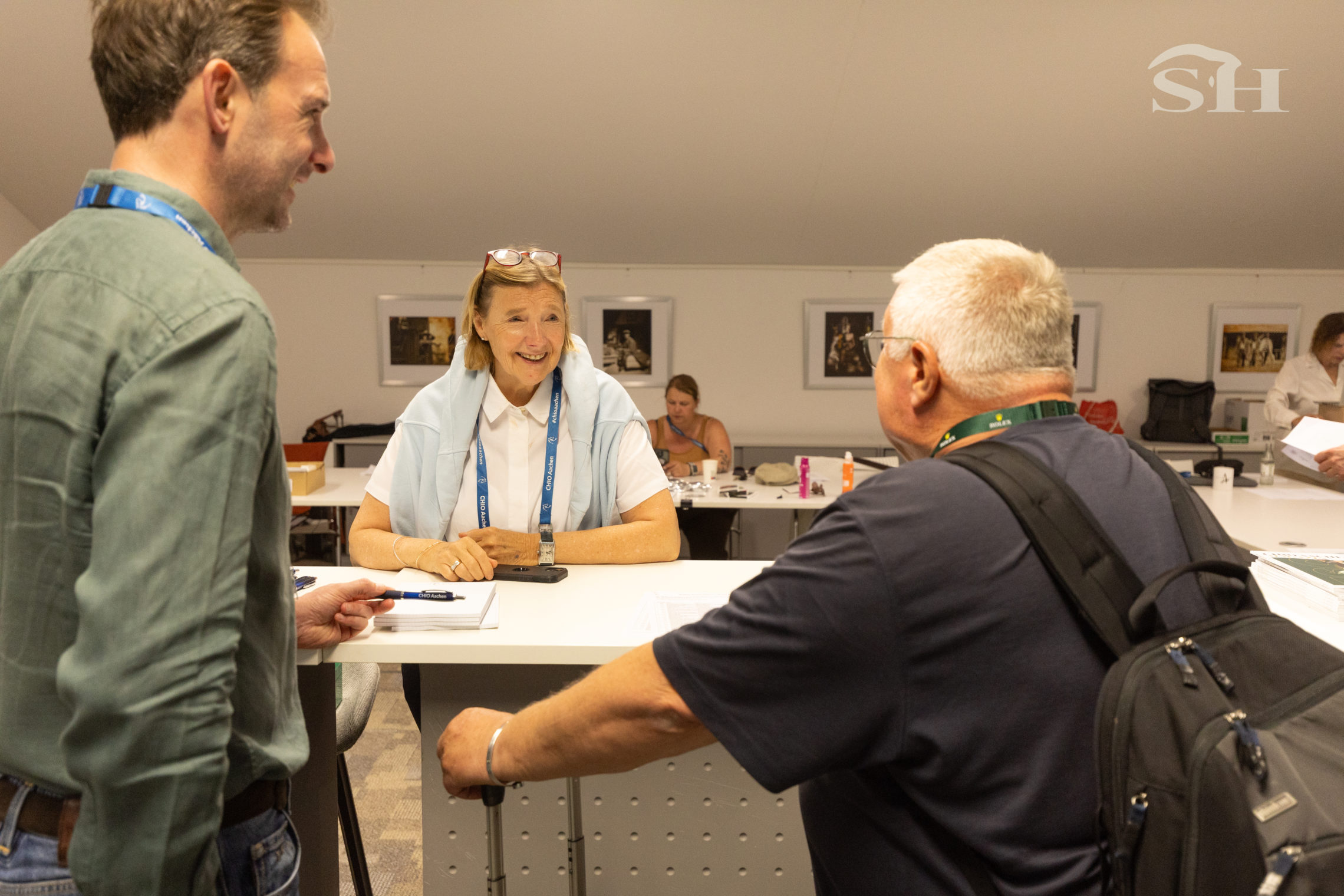
Forty years and a few slightly complicated situations
bviously, forty years of international shows eventually produce a few stories.
Starting with that World Cup Final in the United States where the airport shuttles stopped running.
Problem: the journalists had to get home.
Edith de Reys solution: rent a car.
“I drove people, I think, from four in the morning until the moment I left myself.”
Press room manager. Driver. Switchboard. After-sales service.
The job description is relatively flexible.
Then there was Tryon 2018.
There, even Edith could not organise anything against the weather.
Hurricane Florence was threatening North Carolina and the World Equestrian Games schedule had to be adapted. Edith particularly remembers days spent stuck at the hotel.
« For two days, we had to stay in the hotel. It was really quite special. »
The scene is easy to imagine.
Dozens of journalists used to complaining about a slightly slow Wi-Fi connection, locked together for two days.
The hurricane may not have been the main danger.
Then social media arrived
In forty years, Edith has seen horses change, formats change, media change and, above all, the way an image can now leave a paddock.
Before, a scene might be seen by fifty people.
Today, five seconds filmed on a phone can travel around the world before the rider has even taken the saddle off.
Edith is not naïve.
« You really have to be aware that you are visible. »
And above all, respect the horse. Always.
But she also warns against images stripped of their context.
A horse may show dangerous behaviour. A rider may be forced to intervene to protect the people or horses around him. If filmed from the following second, the action can tell a completely different story.
« People sometimes film seconds that will be taken out of context. »
Which is obviously not a blank cheque.
More a rather journalistic reminder: an image shows something.
It does not always tell everything.
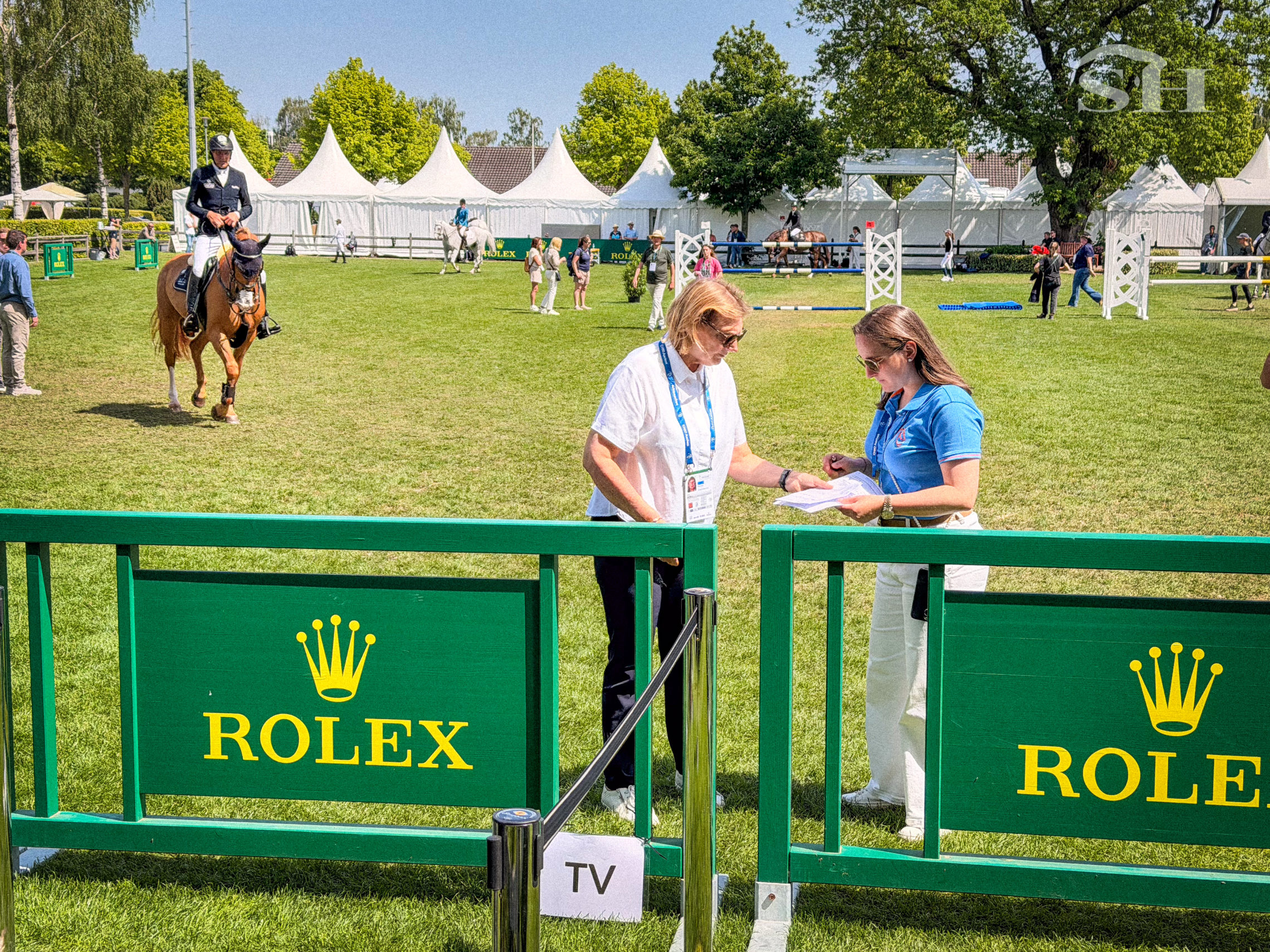
ournalists against Influencers?
The population of the press room has also changed.
Journalists, photographers and television crews have been joined by content creators and influencers.
Edith is not opposed to them on principle.
When they know horses and work seriously, no problem.
But she also sees the limits of a system governed by audience figures and the search for reactions.
They earn their money with that. So they need people. And they put themselves forward. Not the horses, not the sport.
Her concern is mainly about the selection of images and facts to serve a narrative that has already been decided.
In forty years, the press manager has therefore seen the job move from the printed newspaper the following morning to the vertical video published before the prize-giving has even taken place.
Not exactly the same tempo.
Not exactly the same rules either.
Finding the right person in the right place
And yet there is one thing Edith seems to enjoy almost as much as the shows: building a team.
In Aachen, six or seven people work around her during a classic event.
For the 2026 World Championships, she is managing a much larger team.
Her way of working has nothing to do with a management manual bought in an airport.
She observes.
She listens.
Then she tries to understand what each person is good at.
She tells, in particular, the story of a young volunteer in Herning whom she did not really know where to place at first. The young woman explained that she worked at breakfast in a hotel.
Very good.
She took responsibility for the small catering area in the press centre.
The result?
""She did it really well."
nd beware anyone who tried to put away a sandwich in her place.
Behind the anecdote lies her whole philosophy.
Give someone responsibility.
Explain why.
And above all, do not treat a volunteer as an interchangeable pair of hands.
“Just because someone is a volunteer, it does not mean you should tell them: you are only going to put the drinks in the fridge.”
For fifteen days, for free, incidentally.
So Edith explains everything to everyone.
“That way, if I am in the toilet and a journalist arrives, they do not have to say: ‘We don’t know how to answer.’”
Major international management summed up by a pee break.
Hard to make it more concrete.
Stockholm–Aachen, one way
And here we are in 2026.
Thirty-six years after Stockholm, the FEI World Championships return to Aachen from 11 to 23 August for showjumping, dressage, para-dressage, eventing, driving and vaulting.
For Edith, the appointment obviously has something special about it.
One more world championship in a career that is starting to look like a complete collection.
Pressure?
“No, not really. Because it is in Aachen and we have already done it.”
A magnificent sentence.
Hundreds of horses. Dozens of nations. Two weeks of competition.
Journalists from all over the world.
“We have already done it.”
Goodnight.
The lady knows where the keys are.