


As the French Championships are in full swing at the Printemps des Sports Équestres in Fontainebleau, the Pro Elite division has already started to raise the pressure. Olivier Perreau took the lead in the speed class with Himalaya du Temple, ahead of Julien Anquetin and Julien Épaillard—but the real decider is still to come..
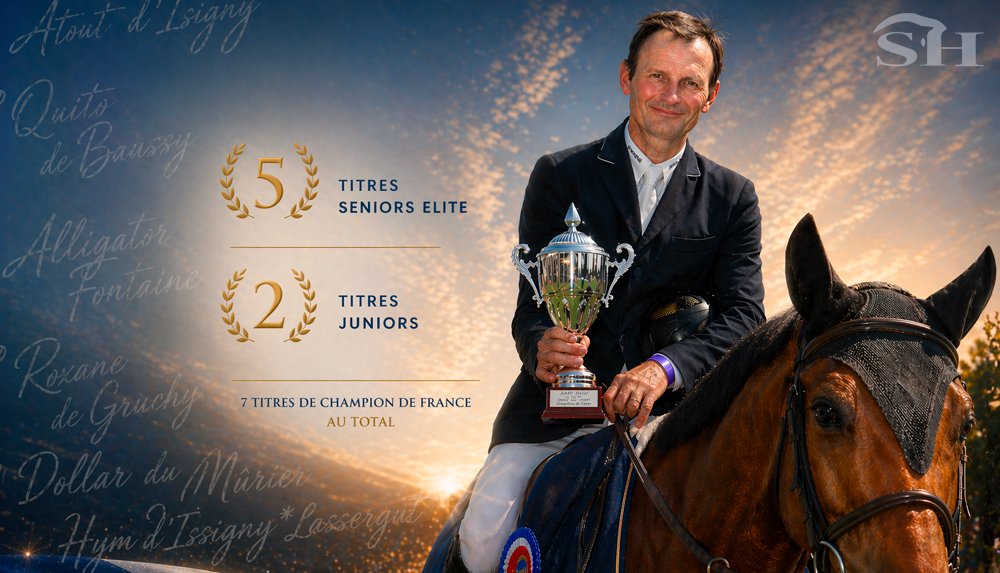
While title contenders are carefully measuring every stride, Éric Navet watches it all with the calm eye of someone who’s been there before. Seven national titles. An era, great horses, victories—and a certain vision of what a national championship should be.
A championship that truly mattered
For Éric Navet, the French Championships were never just another line on a résumé. They were a milestone. A defining moment in a rider’s career.
« It meant something important. Being French champion once—or several times—was a big deal. I remember the championships at Fontainebleau, every year, with so many riders and such a big crowd. When I was very young, the rotating final still existed on the last day. There was always a lot of excitement and passion from the public. »
Back then, Fontainebleau wasn’t just a venue, it was the epicenter of French show jumping.
« When I was a junior watching the senior championships, all the best riders were there. It was a real championship. Everyone came with their best horses. It was the one event top riders couldn’t miss. »
A national championship, in his view, deserved a special place.
« At one point, there was talk of organizing all national championships on the same day across countries. Unfortunately, it never happened. That’s a shame. »
It was an idea with real character.
Two junior titles, five senior titles, no coincidence
Before reaching the top level, Navet claimed two junior national titles, just to stay patient.
Then came the peak years. Five senior titles. And notably, five wins with five different horses.
« Five victories with five different horses—that means something to me. It’s important not to be successful with just one horse. A horse’s career is shorter than a rider’s. »
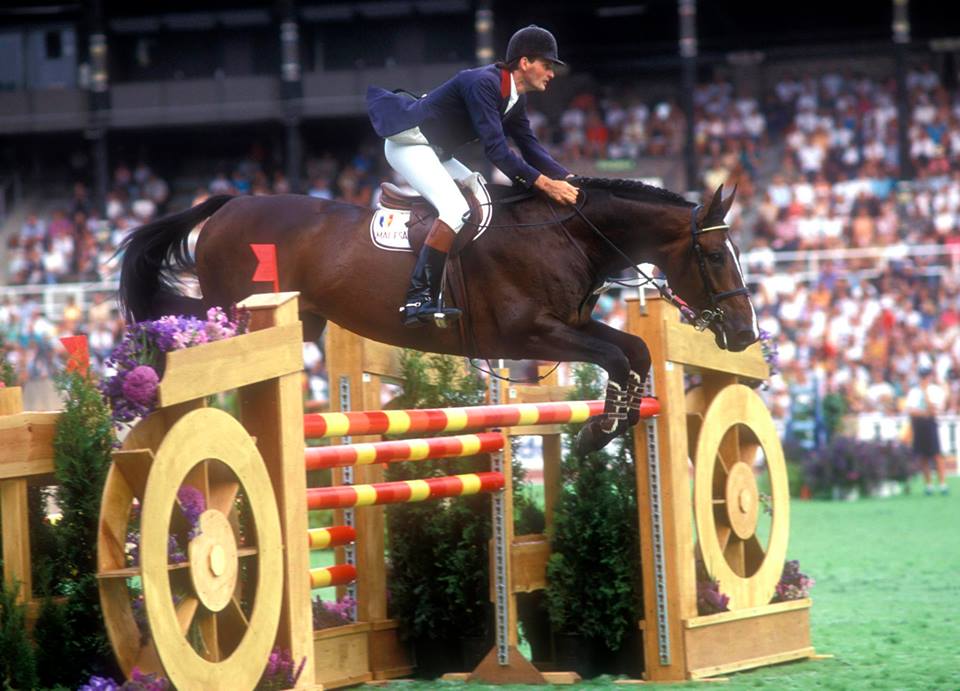
A clear sign of longevity and adaptability.
From Roxane de Gruchy to Hym d’Isigny* Lassergut via Dollar du Mûrier, each title tells a different story.
His first came in 1992 with Roxane, while Quito de Baussy was competing at the Barcelona Olympics, winning team bronze.
« My first French title was in 1992 with Roxane de Gruchy. Quito went to the Barcelona Olympics that year and won team bronze. So I entered Roxane in the championship,and she won. It was great. She was competing at the same level, so it wasn’t really unexpected. Both horses were at the top level, so much so that both were selected for Aachen. It was a real headache for the national coach, Patrick Caron, who didn’t know which one to pick for the Games.»
Then came the winning streak: 1997 with Atout d’Isigny, 1998 with Alligator Fontaine, nearly a third in 1999 (runner-up), before Dollar du Mûrier in 2004 and Hym d’Isigny in 2007. Five titles. Job done.
Hym d’Isigny: the title from the heart
In a career like his, there are exceptional horses—the obvious stars. And then there are the ones that stand apart because they give more than expected.
Hym d’Isigny belongs to that second category.
« That title with Hym d’Isigny really stayed with me. He gave me everything. He didn’t have huge scope, but he was incredibly generous. I never thought he could jump what was required in an elite championship. And not only did he do it, he won. »
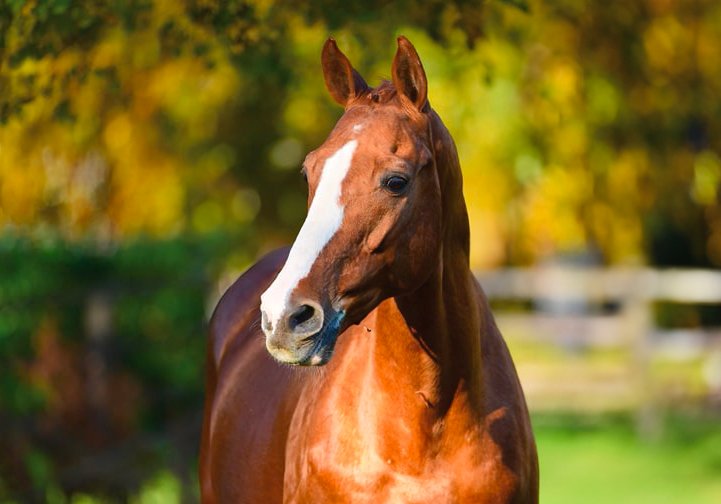
Navet adds:
« He didn’t have massive potential, but with his generosity, his huge heart, and the work we put in, we achieved great things, including that French title. It was something special. »
In other words: sometimes the championship doesn’t reward the most spectacular horse—it rewards the partnership that holds together over three demanding days.
Back then, the best all came with their top horses
Navet doesn’t fall into the trap of saying “it was better before.” But he observes the changes. The calendar has evolved. Modern top-level sport can feel like a nonstop highway.
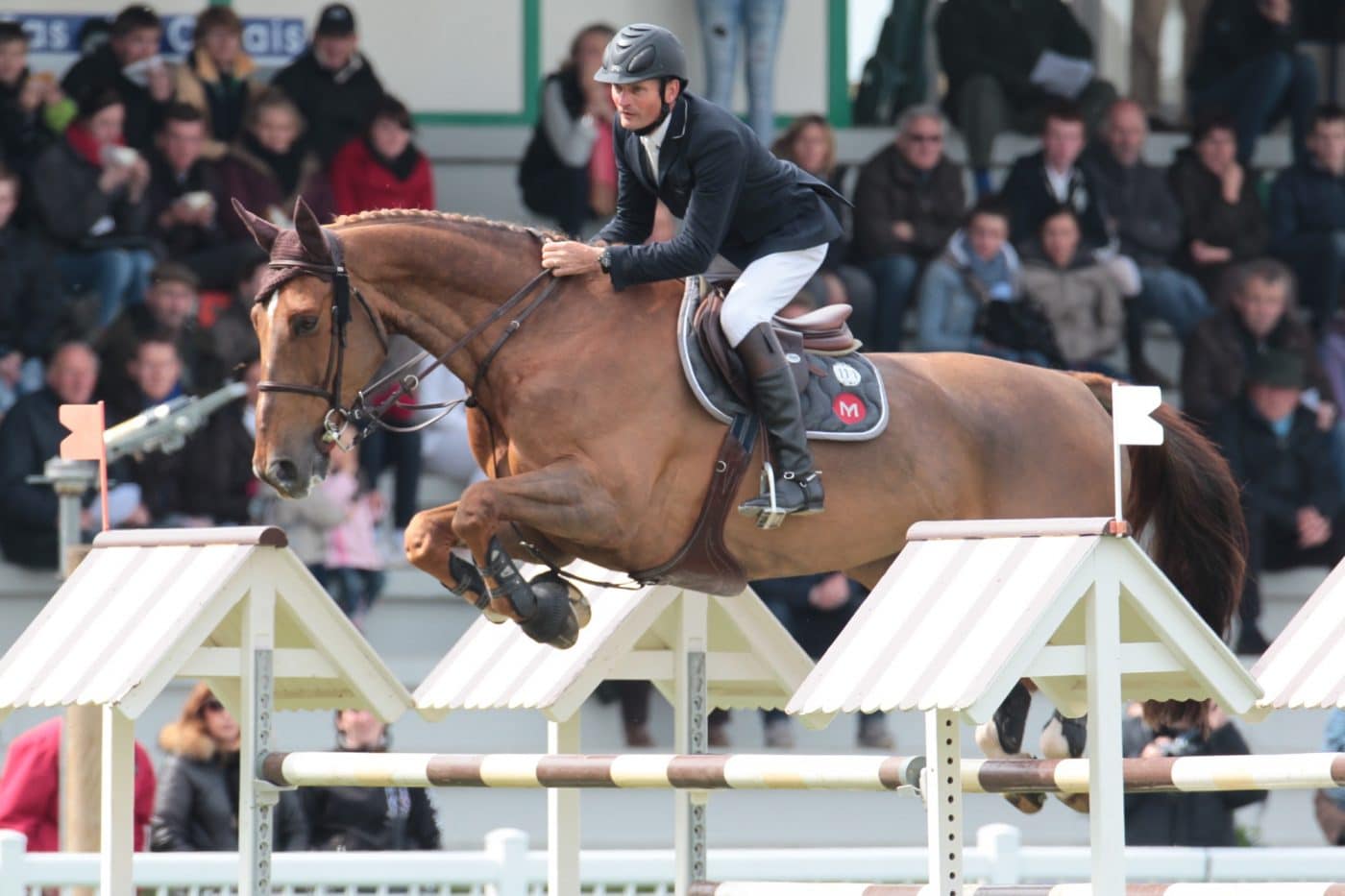
« Now there’s such a packed schedule of top-level competitions, especially five-star shows. Top riders are competing every week. Their goal is to collect as many FEI points as possible to access five-star events. Whether we like it or not, you have to chase points to be among the top thirty in the world. »
The consequence: the best horses aren’t always present, or not fully focused on the championship.
« Il y a toujours un cinq étoiles avant, il y a un cinq étoiles après, et les meilleurs chevaux sont sur le circuit cinq étoiles. Ça dévalorise un petit peu le championnat, mais ça le rend aussi un petit peu plus ouvert. Ce qui n’est pas non plus une mauvaise chose pour les cavaliers suivants. Ça leur donne une chance. »
That’s the modern paradox: less of a royal gathering, but more unpredictability.
A benchmark for the French team
With the championship now scheduled earlier in the season, it has regained practical importance: evaluating horses and riders ahead of major international events.
« Having the French Championships early in the season is a good indicator for the national team selector. The main events come quickly in the summer. It allows you to assess how horses and riders perform in a championship setting. »
This year, the Pro Elite at Fontainebleau takes place less than four months before the World Championships in Aachen, making every round closely watched.
And now? Perreau leads, but nothing is decided
After the first round of the 2026 edition, Olivier Perreau leads with Himalaya du Temple. Behind him, two Juliens are waiting: Anquetin with Blood Diamond du Pont, and Épaillard with Hard’Rock Queen HJD. Hardly a quiet queue.
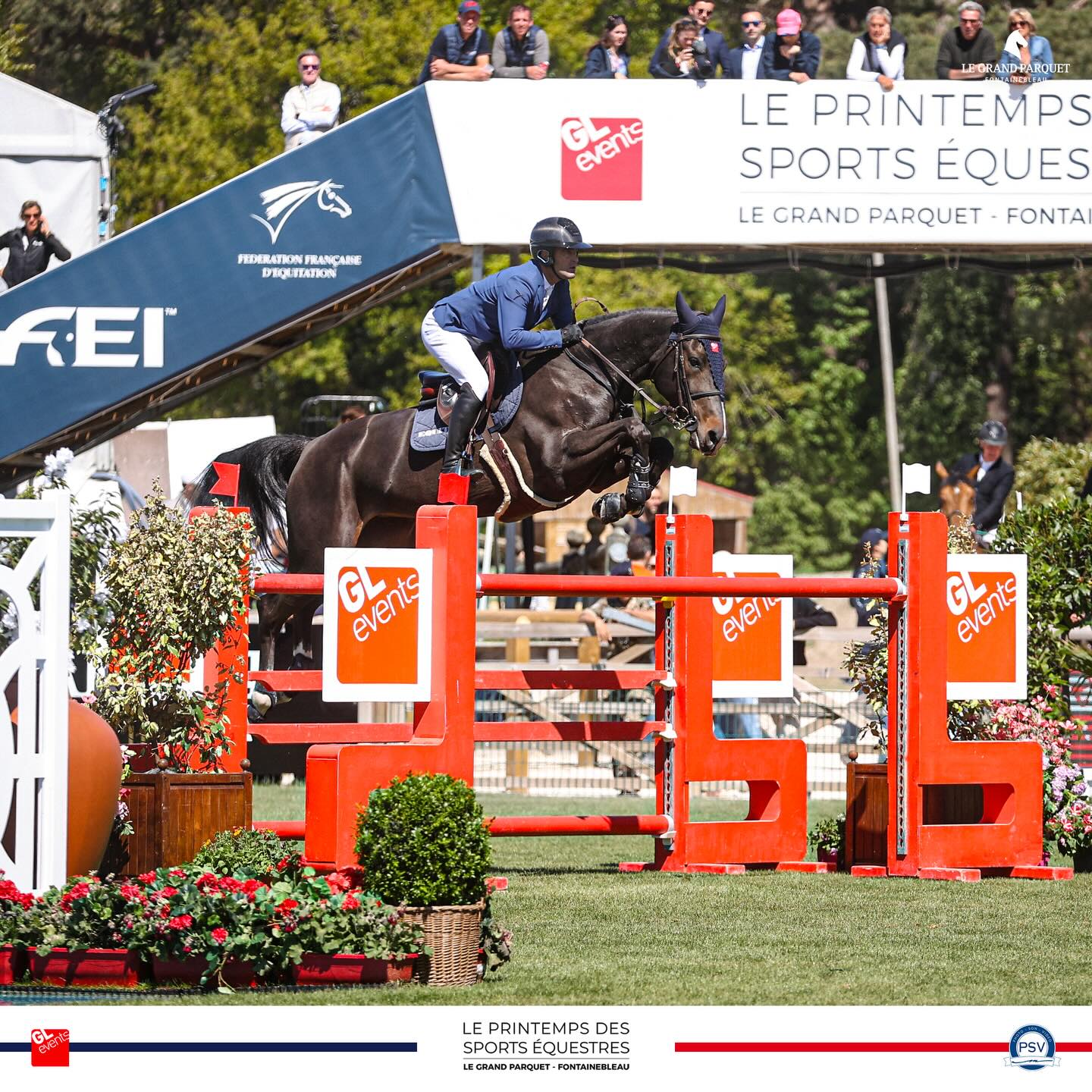
Navet’s prediction is simple:
« There are still two rounds to go in the final. »
Short. Clear. Classic Navet. The French Championship, especially in Fontainebleau—is never won on first impressions. It’s won when legs get heavy, when horses must repeat their efforts, and when the crowd senses everything could shift.
Éric Navet knows that better than anyone. Five titles don’t make you nostalgic. They make you hard to impress.
Find the full results of the first round of the French Pro Elite Championship here